9 Different Refrigerator and Freezer Types Explained

In the past, the only real choice that a buyer of a refrigerator or freezer was based on the size of the appliance that they needed. But, those days are gone, and there are now many types of these appliances to pick from. Manufacturers have created a number of innovations that present a host of design, technological and efficiency features. In this article, we will look at nine different refrigerator and freezer types to help you make an informed purchasing decision.

  1. The Side-by-Side Refrigerator

Many people have a need for an appliance that’s equal parts refrigerator and freezer. Both needs are met with a side-by-side refrigerator where the fridge and the freezer are both the full height of the appliance. The organizational aspects may be lacking a little when comparing this type of model with a french door refrigerator (more on this below). But, it’s still possible to adjust the shelves, and the best models have useful door storage options. A side-by-side refrigerator is a great fit for a narrow kitchen because the doors have a smaller door swing. Another key benefit to this type of refrigerator model is the freezer configuration if you eat a lot of frozen dinners. This is because the freezer has a lot of easy to access space compared to other refrigerator styles.

  1. The French Door Refrigerator

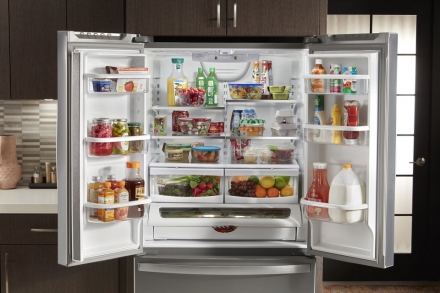
If you like the idea of a side-by-side refrigerator, but you don’t want the freezer to get in your way, you may find that a french door model suits your needs better. This type of refrigerator has French doors at the top, making it easy to store larger items such as pizzas and platters. There are 3, 4, and 5 door units, which make it simple to find a model that has the storage features that you need. Many French door refrigerators have a freezer mounted at the bottom, and door options are located at counter-height for added convenience. This type of refrigerator is also a stylish option, and many have extensive temperature control features. If you want plenty of storage and you have a spacious kitchen, a french door refrigerator maybe your best option.

  1. The Counter-Depth Refrigerator

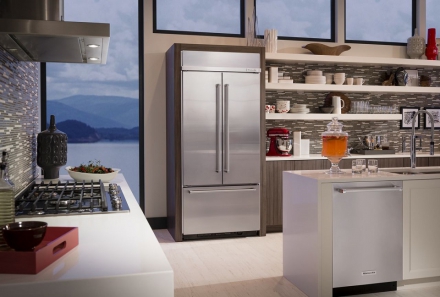
This is a feature that you may find on French door and side-by-side refrigerators, but it’s worth exploring as a separate section. When an appliance has a shallower profile that matches the depth of the counter, it has a number of advantages. Firstly, the refrigerator will not protrude beyond the counter, and this will give the appliance a sleek and seamless look. In a smaller kitchen where space is at a premium, it can be helpful to reclaim every inch of space to make it easier to get around. If you’re interested in improving the aesthetic appeal and functionality of your new refrigerator or freezer, consider a counter-depth model.

  1. The Wine Refrigerator

This type of appliance is a specialized variant of a compact refrigerator. A wine refrigerator is specifically designed for the efficient cooling and storage of wine and other beverages. It’s easy to set a wine refrigerator to keep your white wine at an optimal 49º-55º, or you can store your sodas there too. Most wine refrigerators are compact models, but if you’re serious about wine, there are larger models on the market. There are serious wine refrigerators that can store hundreds of bottles of wine at the same time. If you enjoy wine, consider a model with a multi-zone temperature feature to store different types of wines at their optimal temperatures.

  1. A Top or Bottom Refrigerator/Freezer

For most of us, this is the common style of refrigerator that we have become accustomed to over the years. The freezer is located at the top or bottom of the fridge in a number of different sizes. Generally speaking, these types of refrigerator/freezer combo models are a cost effective option. The freezer section typically takes up half to a third of the food storage space, and this is sufficient if you don’t need a lot of stored food on hand. Some people purchase an appliance like this if they need a second fridge because they are cheaper than other types on our list.

  1. A Compact Refrigerator

These types of refrigerators are smaller variants of a larger and more traditional model. They are often found in studio apartments or dorm rooms, and they are a great addition to a home office or bar. Some models have a small freezer section at the top, which makes them a viable option for smaller spaces. One of the best things about these types of refrigerators is their portability. They are a flexible option if you need a cooling solution on the go.

  1. A Freezerless Refrigerator

As the name would suggest, this is a refrigerator that has no freezer compartment. This type of refrigerator is sometimes known as a larder refrigerator, and it’s a fantastic option if your focus is on fresh food. Many people have a refrigerator like this if they have a dedicated freezer, and this is a viable option if you have the space.

  1. A Chest Freezer

A dedicated chest freezer is a freezer without a refrigerator, which makes it the opposite of the freezerless refrigerator mentioned above. A chest freezer can store a high volume of food under optimal conditions, but they do have a larger footprint. The design of the chest freezer reduces the chances of freezer burns, and cold air doesn’t escape easily because heat rises. This makes a chest freezer more efficient than an upright freezer, which we will cover next.

  1. An Upright Freezer

This dedicated freezer type has a smaller footprint when compared to the chest freezer above. They also have a door, and many models include some clever storage options to make the most of this space. It’s also common to find adjustable shelves and storage bins to organize your frozen foods efficiently. The main drawback to this type of model is that it can allow cold air to escape when you open the door. If you’re not sure about what kind of freezer to buy and you don’t have much space, this may be the best solution.

If you’re thinking about upgrading your refrigerator, explore your options with our online refrigerator and freezer collection or speak to our home appliance specialists for further assistance.


Tips to Prepare Your Kitchen For Your Small Gatherings

Regardless of the occasion, the kitchen is always the hub of any gathering. While the COVID pandemic has meant that the size of our gatherings has had to shrink, this doesn’t mean that you can’t still celebrate. Even if you’re planning a small gathering, your kitchen will still need a little care and attention to get ready. So, here are some tips to help you prepare for your small gathering.

Have a Checklist:

Preparing for any event is difficult if you don’t know what you need and what you should be doing. So, start with a checklist. Since the kitchen’s focus is food, create a list of the necessary ingredients for what dishes you plan on serving. Think about what plates, utensils, and serving dishes you will need for the meal. You will also need to consider if you will reheat the food or cook everything fresh. Jot down all these details on your checklist, so nothing is left to the last minute and forgotten.

Clear the Clutter:

Since your kitchen is likely to be the busiest room in your home, it is also likely to be the one place where clutter rapidly accumulates. Whether it is pieces of the kid’s schoolwork on the table or bills, keys, and other items left on the countertop, you won’t want all of these things around when you’re entertaining. So, ensure that all the surfaces are clear of clutter, and everything is tidied away.

It is also a good idea to clear the clutter from inside your refrigerator. When you’re having a gathering, refrigerator space will be at a premium. So, get rid of any old food. You could even plan a few leftover meals in the days before your event, so you can free up more refrigerator space. Even if you’ve not asked guests to bring food items, they may bring a bottle of wine out of courtesy. So, it is a good idea to have some extra space in your refrigerator.

Do Your Prep Tasks:

Preparing foods and doing some cooking the night before your event can help you to have everything ready. It will also mean that you don’t need to spend most of the time in front of the stove rather than chatting with your guests. Additionally, if you’re running around at the last minute to finish cleaning, setting up, and cooking, you’re sure to feel overwhelmed.

There are a variety of tasks that can be done ahead of time. Since kitchen space will be precious, you’ll want to maximize your serving space. This is far easier when you’ve done most of the cooking and clean up in advance.

Once your guests arrive, and the party has begun, you’ll be able to focus on your family and friends and enjoy the inviting space you’ve created.

Cook Something Tried and Tested:

While you may want to wow your guests, a gathering is not the time to experiment with new dishes. When you’re serving a larger number of people, stick with dishes that you’ve already tried and tested. You want to prepare something that you feel confident cooking. If it is something that you make on a regular basis, you’ll feel far less stress during the meal prep.

If you’re planning on serving buffet style rather than a sit down meal, it is a good idea to label the dishes. This will help to avoid guests constantly asking what something is or what ingredients are in it. You can print labels or get crafty and create unique or fun designs. It is also a good idea to label foods if you know some of your guests have food allergies or dietary restrictions. This will allow these guests to feel confident you are aware of their restrictions and have accommodated them, so they can also relax and enjoy the party.

Consider the Temperature:

Another important aspect of hosting in your kitchen is to make sure the space is at a comfortable temperature. Before your guests arrive, open up the windows. Once your range is on, it’s likely to get warm quickly, particularly when there are more people filling the space.

Create a Happy Hour Atmosphere

Food isn’t the only important feature of a good gathering. You’ll also need to provide great beverages. Whether you’re serving wine or making a fresh cocktail, once everyone arrives, you’ll have little time to prepare anything.

Your guests will want to catch up with you and find out what’s been happening in your life. So, ensure everyone feels their thirst quenched by having drinks ready to serve and chilling in the fridge.

Don’t Forget Your Playlists:

Regardless of the size of your gathering, you’ll need some music to create the right ambiance. Music can bring guests together, but only with the right playlist. You’ll want music that compliments the theme of your party. It also needs to be set at the level where you can still talk and hear each other. So, think about your playlist before the event. That way, you can just set it and forget it.

Set Up a Kids Area:

Finally, if you have children and your guest will be bringing their kids, set up a kids area. Even if you’re having a sit down meal, children will quickly get bored and want to leave the table. So, it is a good idea to have a designated area with some coloring books, crayons or a few toys. This will keep the children occupied and allow the adults to relax.

The kitchen is often the heart of the home. Guests are often drawn to the relaxation and warmth of a kitchen, regardless of the size of party. With these tips, you will have your kitchen ready to host your next gathering.

If you’re unsure if your refrigerator can handle the demands of a party, it may be time to consider an upgrade. You can explore your options with our online refrigerator collection. If you need additional guidance, speak to one of our home appliance experts, who would be delighted to help.

Tips for Saving Energy On Your Appliances During Winter

When winter arrives, many homeowners have concerns about their utility bills. Since you’re likely to spend more on heating your home, you may want to make savings elsewhere. So, here we have some tips for saving energy on your appliances during winter.

Refrigerator:

The simplest way to waste energy is to keep opening and closing your refrigerator door. Each time you open the door, cold air can escape, and your appliance will need to work a little harder to compensate for this.

The ideal solution for this is to have a glass door refrigerator or smart fridge with an interior camera. However, if this is not feasible, try to limit how often you open the door. Try to avoid browsing the contents with the door open. Instead, have a clear idea of what you need before you open the door.

Oven Range:

Rather than heating your entire oven to reheat any leftovers, use a microwave or toaster oven. These smaller countertop appliances use less energy than a conventional gas or electric range.

Additionally, if you’re cooking in the oven, look through the door to check on the progress of your dish. Use the oven light rather than opening the door. The internal temperature can drop by 25º each time that you open the door.

Washer:

While it may be tempting to just run a wash cycle with only a few items, this wastes water and energy. So, you should only wash full laundry loads. You can also save as much as $60 each year by washing your laundry in cold water. Although some laundry detergents are designed to work best with warm water, most modern products can perform just as well in cooler temperatures. Additionally, washing winter knits in cold temperatures can cause less fraying. So, your clothing will last longer.

Dryer:

In addition to saving energy, you can reduce the risk of a fire by cleaning the lint filter on your dryer regularly. It is also a good idea to check the tubing to ensure there isn’t an accumulation of lint. Run your vacuum cleaner nozzle down the tubing to clean out any stubborn particles.

If you want to save additional energy, try to air dry where possible. Use drying racks if you can’t hang your laundry outdoors due to adverse weather conditions.

Dishwasher:

Like your washer, you should only run your dishwasher if you have a full load. Many dishwasher models may feature a light load function, but this often still uses more water when compared to washing a similar number of dishes on a full load.

Another way to save water and energy is to avoid using “rinse hold” during the cycle. This feature can use as much as seven times more hot water per use. Additionally, avoid using a rinse precycle. This not only uses more water, but it can also compromise the detergent performance. Most modern detergents are designed to work with particles of food debris. So simply scrape your dishes before loading.

Finally, consider air drying your clean dishes rather than using a drying cycle. This can reduce the energy use of your dishwasher by 15 to 50 percent.

Watch Out For Energy Spikes:

While it is inevitable for your energy bills to increase over winter, be aware of any spikes in usage. These may indicate that one of your appliances is no longer operating efficiently. As appliances age, they need to work harder to perform correctly. This increases energy use. So, if your energy bills have increased more than expected and one of your kitchen appliances is getting to the end of its lifespan, it may be time for an upgrade.

If your kitchen appliances can no longer handle the demands of your household, you can explore your options with our online kitchen appliance collection. Alternatively, speak to one of our home appliance specialists for expert help and guidance.

3 Kitchen Appliance Trends You Can Get Excited About

Many sources make the claim that the kitchen is the true heart of any home. This is a broadly true statement if the kitchen is used for cooking, baking and socializing. But, sadly, many people don’t spend much time in their kitchens, and they may be packed with out of date appliances. If the kitchen isn’t an efficient and pleasant place to hang out, can it be the heart of your home? In this article, we will look at three exciting kitchen appliance trends that may inspire you and help you to get more excited about making the most of your kitchen.

  1. Improved Efficiency

If you want to enjoy cooking in your kitchen, it’s a great idea to have efficient appliances. A good kitchen layout, a place to stash your cookware and utensils when they are not in use, and handy central island are all beneficial. But, if you don’t have the right appliances, cooking can be a real chore and a time suck. Investing in smarter and more efficient appliances simply makes good sense if you want to enjoy your kitchen more. Every appliance from a modern range to your refrigerator can be controlled via a handy app on your favorite mobile device these days. Energy efficient appliances are also easier on your bank balance, and you will see a significant drop in your energy bills.

  1. Changing Appliances to Meet New Needs

One of the best things about a modern kitchen is that it’s relatively easy to change your kitchen appliances when you decide on a change. Perhaps you want appliances to match your kitchen remodel decor, or you’re looking for a new style. There are plenty of options to consider, and some outlets offer great deals on premium grade appliances. But, there may be practical reasons why you need to change the appliances in your kitchen. As an example: if you want an area for kids to heat food themselves without adult input, but you lack space for a countertop microwave oven, you could install and over range microwave instead. Another great option is a “French style” oven door that opens from the side rather than the front like a typical oven. These oven doors offer easier access, which is fantastic for people with smaller kitchens or problems bending over to reach into an oven.

  1. Upgraded Cooking

Many top chefs now espouse the benefits of an induction range for precise and efficient cooking. An induction range uses an electromagnetic field to heat a cast iron or special pan to cook your food faster. The actual induction cooktop produces no heat at all, and you can even place your hand there when cooking! Induction cooktops offer a great deal of control over the heat that you can only find with a gas cooktop. Another cool option is counter depth refrigerator that’s easier to access without diving deep into the appliance. Many modern refrigerators now have a full complement of clever storage solutions to efficiently store a wide variety of food safely. This helps the user to stay organized, and if the refrigerator is smart, it can even update you on the contents and suggest grocery items to put on your shopping list.

In the past, many of these features were beyond the reach of most people. But in recent years they have become more affordable, and they offer a great deal of functionality. If you want to get excited about your kitchen again, any or all of these options would be a great place to start.

If you would like to explore the latest trends in kitchen appliances, you can check your options with our online collection. You can also speak to one of our home appliance experts for additional help and guidance.

Common Wine Refrigerator Questions Answered

Many people are now drinking more wine at home rather than visiting their local bar or restaurant. The way we consume wine is very different from only a few years ago, and daily wine drinking is now more popular than ever. If you’re thinking of getting more into wine or you’re already a convert, it may be time to get a wine refrigerator. This will help you to enjoy your wine with a little more panache, and it’s sure to impress your non-wine drinking friends. Let’s take a look at some of the key features that you need to look for when buying a new wine refrigerator.

Where Can I Place a Wine Refrigerator?

Are you planning on storing your wine fridge in the living room or kitchen or dining room? The best small wine refrigerators use a thermoelectric cooling system instead of a compressor that you would find on a standard domestic refrigerator. A thermoelectric cooling system is preferable because it is dependable, quiet in operation, and an energy efficient option for your wine. A wine refrigerator doesn’t tend to vibrate, so you can place it pretty much anywhere without worrying about background noise.

Are There Any Special Placement Requirements?

The only real drawback to placement is that you need to locate your refrigerator where it will have access to fresh air. This is how your wine refrigerator will prevent temperature and humidity fluctuations that could affect your wine. There is no need to hide your wine refrigerator behind a door, so airflow shouldn’t be a problem. After all, a wine fridge is a stylish appliance, so why would you want to cover it up?

Why Are Wine Refrigerators More Expensive Now?

Wine coolers were relatively cheap up until 2016 when new EPA regulations came into force. The cost rose when new testing became mandatory to improve energy efficiency. But, a wine refrigerator is still an affordable appliance, and there is a wide range of prices depending on your chosen make and model.

How Do Humidity and Racks Work?

In a standard refrigerator, the appliance is designed to keep the moisture out. A wine refrigerator is very different; it’s designed to keep the humidity inside to protect your wine. The humidity will be kept at a consistent level; this keeps the corks, bottles, and wine wet to slow down the aging process and preserve your wine for longer. The racks in a wine cooler are specifically designed for wine bottles, unlike the racks found in standard domestic refrigerators.

Is the Door Design Important?

Yes, the door design is extremely important, and the best wine refrigerators have a solid door finished in steel, a wood finish, or tempered glass. A solid door prevents ultraviolet (UV) rays from affecting your wine as it’s stored. This is an important aspect of wine storage that many people forget. Many people like to look at their wine through the door, and this narrows down the choice to a tempered glass door. This will still prevent the UV rays, and you can admire your wine at the same time.

Are There Any Other Design Features?

Yes, when you start to look at wine refrigerators, you will notice that they are available in a wide range of colors and styles. If you look carefully, you’re sure to find one that suits the style and decor of your home. As a luxury appliance, your new wine refrigerator should make a bold design statement.

If you’re considering a wine refrigerator, you can explore your options with our online collection. Alternatively, speak to one of our team members, who would be happy to answer any queries or questions.

4 Appliance Features that will Wow Your Visitors

Many homeowners want a kitchen with that wow factor that will make their space the talk of the neighborhood. Aesthetic appeal aside, the best modern kitchens are efficient spaces where cooking is a joy, and you can even entertain at the same time. If you’ve not looked at kitchens for a few years, you may be amazed at some of the available options. But, once you’ve used these features for a while, you may wonder how you ever managed without them. Let’s take a look at four appliance features that will make your kitchen a special place to work, eat, and entertain.

  1. Adjustable Refrigerator Shelves

Many of us struggle to use our refrigerator storage effectively because we try to live with the spacing limitations. But, many modern refrigerators now have easily adjustable shelves that allow you to make the space work best for you. This may not be the most exciting appliance feature on our list, but it can be a lifesaver when you’re entertaining. Let’s face it, most of us creatures of habit, and when we cook at home, we fall into a routine. But, if you want to entertain more, you cannot serve the same meals every time, and you need variety. Having adjustable refrigerator storage will allow you to store foods that you wouldn’t normally buy easily.

  1. A Commercial Range

Many people shop for a commercial range at a restaurant supply store, but this is not necessary. Many homeowners now have access to these ranges at their favorite appliance stores due to the popularity of certain cooking shows. A commercial range is a powerhouse when you’re cooking, and as an added bonus, they look fantastic. The only real drawback to this type of range is that it can take up more space than you might imagine. If you have a smaller kitchen or limited space, make sure to check the dimensions carefully before you make a final commitment to buy.

  1. An All-in One Coffee Machine

We have come a long way from the standard drip coffee machines that we used on our countertops. We’re not talking about pod or espresso machines, the current in-vogue trend is the all-in-one coffee maker. These coffee machines can meet several needs, and they are a fantastic time saver in a busy kitchen. When you choose your all-in-one coffee maker, look for a machine that can filter water and manual controls. The best machines can even grind coffee beans, and they look fantastic on a countertop. If you love to serve coffee to visitors, an all-in-one coffee machine is a great investment.

  1. An Immersion Blender

A standard blender is a bulky item that can take up a lot of kitchen storage space. A better and more up to date alternative is an immersion blender. Many people that have made the switch will never go back to a standard blender. Immersion blenders are easier to use and clean than a series of standard blender attachments. The only thing that you need to remember is to unplug the appliance before you take it apart for cleaning. The immersion blender attachments are usually dishwasher safe making cleanup a breeze.

If you add one or more of these appliance features to your kitchen, you will notice an immediate difference. These appliances do add a great deal to the aesthetic appeal of your kitchen, but they are very practical too. They will certainly make your kitchen more efficient and fun to use when cooking or entertaining.

If you would like to learn more about the latest appliance trends, be sure to speak to one of our home appliance experts, who would be delighted to help.

3 Ways to Integrate a Microwave in Your Kitchen

When you’re designing or upgrading your kitchen, it can be tricky to integrate your microwave oven. We have come to rely on our microwave ovens because they fulfill a unique role in our kitchens. But, they can be bulky, they take up a lot of countertop real estate, and they can be tricky to store and move around easily. So, is it possible to integrate the microwave oven in some way and take back that valuable space for other purposes? The short answer is yes, and we will show you three clever ways to integrate your microwave oven in your new kitchen design.

What Type of Microwave Oven do You Have?

Before we look at the three available options, it’s important to know what kind of microwave you have or you’re thinking of buying. A smaller countertop model can be housed up on a shelf or kept on a counter without taking up too much space. But, if you want to keep those areas clear, you may want to look at a unit that can be wall mounted. Some people now install their microwaves in a drawer unit that can be placed at any desired height, and this is a great option if you have a smaller kitchen. The final options is an over the range microwave that can share the light and ventilation of the oven and range located below. When you choose a new microwave, consider where you want to place it first, consider the dimensions, and you can narrow your suitable choices.

3 Microwave Integration Options

  1. A Microwave Drawer

We’ve already mentioned that a microwave oven in a drawer unit is a great space saver. But, there are other good reasons to integrate your microwave in this manner. If you’re going for an ultra-modern sleek kitchen, aesthetic drawer storage units are certainly the way to go. The microwave can be placed in a drawer below the countertop, or you could install it in a center island. The microwave can be placed inside a cabinet with a front sliding door that’s the same design and color as the surrounding cabinetry. This is a very minimal and tasteful way to store your microwave, and yet it’s still easy to access and use. This is a great way to free up your countertops for cooking prep and plating up meals.

  1. Wall Mounted Microwave

Perhaps you have some extra wall space form a closet or garage where you could recess a microwave oven into a wall opening. This is another clean solution, and it certainly makes the best use of the available space in your kitchen. When your microwave is mounted in the wall, you have a convenient appliance that doesn’t protrude into the kitchen. This is a solution where you can see the microwave door and panel, but it doesn’t look unsightly. If you trim the mounting area with a matching paint trim, you can easily blend the area into the rest of your kitchen.

  1. A Cut-out in Cabinetry

If you build a cut-out in a convenient cabinet for your microwave oven, you can make it look like it belongs in that location. If the microwave is a snug fit, this looks even better, but you can get trim kits from certain manufacturers that could be helpful. Use the trim kits to fill in any gaps if you want that uniform and seamless appearance.

Any of these three options will allow you to access, use, and clean your microwave without any problems.

If you’re considering upgrading your microwave, you can explore your options with this online collection or speak to a member of our team for additional guidance.

Is That Food Safe? Your Guide to Shelf Life

Most of us have experienced the scenario where we open up the refrigerator to find something moldy looking back at us. These items are often lingering at the back of the refrigerator. Still, even when it is full view, it can be difficult to determine the optimum food shelf life inside your refrigerator. Here we’ll explore a few basic food storage standards to save you from upset stomachs and wasting money on spoiled foods.

Basic Food Safety Tips

Before we delve into the optimum shelf lifespans for all the items inside your refrigerator, there are some basic safety tips to help preserve your foods.

  • Avoid Crowding: To keep your foods properly chilled and at the correct temperature, cold air must be able to circulate around the items. While keeping your refrigerator full is more energy efficient, you should avoid crowding or overpacking.
  • Immediately Wipe Up Spills: Wiping spills quickly will not only help to avoid bacterial growth, but it will also help to prevent cross contamination. Many spills are often drips from thawing meats or other raw foods that can easily contaminate cooked dishes that will only be reheated.
  • Keep Everything Covered: All foods inside your refrigerator should be in sealed storage bags or in covered containers. Of course, this doesn’t mean that you can forget about everything, so be sure to check leftovers each day for signs of spoilage.
  • Monitor Food Expiration Dates: If any item has passed its “use by” or “best before” date, it is a good idea to discard it. If food looks questionable, it is best to err on the side of caution and throw it out.
  • Put Groceries Away Within the Hour: When you return from the grocery store, you should act quickly to ensure all your refrigerated items are properly stored. If the temperature is above 90ºf, there is a one hour limit before foods can spoil.
  • Refrigerate Leftovers Within Two Hours: There is a common misconception that you shouldn’t put hot food in the refrigerator. Unfortunately, allowing food to sit on the countertop for hours can encourage bacteria. If you have any leftovers, they should be refrigerated or possibly frozen within two hours. If you’re concerned about hot food, divide leftovers into smaller portions, so they can cool more quickly.

Shelf Life Guidelines

Most foods can be divided into groups, which can help you to determine the optimum shelf life.

Miscellaneous:

  • Opened condiments: Up to 6 months
  • Tuna: 2 to 4 days

Dairy:

You’ll need to use your sense of smell. Dairy items tend to develop a bad smell when they go bad, so anything that has a bad smell should go straight into the garbage.

  • Milk: Up to 7 days
  • Soft Cheese: Up to 7 days
  • Eggs: 3 weeks
  • Yoghurt: 7 to 14 days

Fruits:

Fruits can go soft and mushy when they start to go bad, but you may notice some items start to go black.

  • Bananas: 2 days
  • Melons: 1 week
  • Avocados: Up to 10 days

Vegetables:

Like fruits, vegetables can start to go mushy or change color.

  • Fresh lettuce: Up to 5 days
  • Tomatoes: Up to 1 week
  • Cucumber: 1 week
  • Onions: 2 months

Leftovers:

Leftovers tend to be pushed to the back of your refrigerator, so you need to ensure you keep a good eye on what is lingering there.

  • Meat Leftovers: Up to 4 days
  • Pizza: 3 to 4 days
  • Gravy: 1 to 2 days

Meats:

In addition to developing a bad odor, the most obvious sign of bad meat is changing color.

  • Chicken: Up to 2 days
  • Steak: Up to 5 days
  • Fresh Hamburger: Up to 2 days
  • Pork Chops: 3 to 5 days
  • Fresh Fish: Up to 2 days
  • Bacon: Up to 7 days
  • Fresh Sausage: Up to 2 days
  • Lunchmeats: Open- 3 to 5 days, unopened up to 2 weeks

If your refrigerator is struggling to keep your produce fresh, it may be time for an upgrade. You can explore your options with our online collection or speak to a home appliance expert for further help and guidance.

How to Organize Your Refrigerator

Food waste is a serious issue, and most instances can be avoided with proper fridge management. Unfortunately, many people struggle to organize their refrigerators. So, here we’ll explore some tips and tricks to not only help you to keep track of your foods, but also keep your foods fresher for longer.

Keep the Right Foods in the Door

The first place to start organizing is the door. While many people use the door for quick reach items such as milk and juice, this can be a mistake. The door of your refrigerator is usually the warmest place inside your fridge, particularly if the door is opened and closed a lot in your home. This means that you should avoid putting temperature sensitive items such as milk or dairy it the door as they are more likely to spoil.

Instead, reserve the spots in the door for condiments, soft drinks, and other items that can cope with the temperature fluctuations.

Read Your Appliance Manual

Many people throw the appliance manual in a drawer and never look at it again after it has been installed. This is a massive mistake, as every appliance model is different. Your manual will detail the manufacturer’s recommendations and the features that can help you make the best use of your new refrigerator. This could include egg containers, dairy enclosures, crisper drawers, and other things that will make a noticeable improvement in the performance of your appliance and the lifespan of your foods.

Manufacturers design the best storage options for specific foods, with the optimal temperatures for the compartments, so you need to check the manual to take full advantage of these features.

Know Your Cold Spots

The temperature can vary in different areas of your refrigerator. If you have an older model, the area around the lights tends to be warmer than the rest of the shelf. So, it is important to know where the coldest areas of your refrigerator are. This will allow you to put the most temperature sensitive foods, such as milk, dairy, and meat in the coldest area.

Block Your Shelves

Many of us struggle to find items in a full refrigerator, but it doesn’t mean that you’re a bad housekeeper, you just have the wrong organizational system. Try implementing the block system, which is used by retailers around the world. This will not only help your refrigerator to look highly appealing, but it will help you to keep on top of your ingredients, so nothing gets forgotten and expires. Blocking your shelves involves putting smaller foods and containers at the front and keep a space at the back for your taller items.

Rotate

Many of us want to get our groceries put away as quickly as possible when we return from the store. Unfortunately, this often leads to putting all of the newer items at the front, and older items are pushed to the back. Although you may have good intentions to hunt around for the older items when you’re making dinner or looking for a snack, it is almost inevitable that some items will be left to expire.

So, it is essential to rotate all of your items. This involves pulling older items to the front and placing your newly bought items towards the back.

Fill Your Freezer and Conserve Energy

Finally, you can boost the efficiency of your refrigerator by ensuring the freezer compartment is full. If you have leftovers, you may not eat in the next few days, put them in a freezer safe container and stick it in the freezer. This will not only save energy, but also reduce your food waste.

If your refrigerator is still struggling to maintain the optimum temperature for your items, even after you’ve reorganized, it may be time to look for a new appliance. You can explore the options with our online collection or consult one of our appliance experts for further help and guidance.

Top Tips to Survive a Kitchen Remodel

For many people planning a kitchen remodel is an exciting time. Unfortunately, when reality sets in and the work starts, you need to think about how you will manage without a fully functional kitchen for days or even weeks. There is no avoiding this inconvenience, but with a little planning, you can make it easier for your whole family. So, here we have some top tips to help you to survive your kitchen remodel.

Create a Substitute Kitchen

Eating out can not only get tiresome after a few days, but it can also significantly increase the costs of your remodel. Even if you love your local take out joint, you’ll still need somewhere you can brew coffee, pack a lunch or just pour a bowl of cereal. So, it is a good idea to create a substitute, temporary kitchen.

Ideally, this should be somewhere away from the construction area, but you’ll need some kitchen basics. If you’re lucky enough to have a guesthouse, this should not be a problem, but if not, you’ll need to pick a spot. This could be a corner of your basement, a workroom or even part of your garage. You can set up a couple of folding tables, standalone shelves and a couple of chairs. You can even relocate your existing appliances, such as your refrigerator and microwave to this area.

Pare Down Your Kitchen

During your kitchen remodel, it is inevitable that there will be disruption to your cooking and eating routine. Regardless of how much you like to cook and whether you’re a Masterchef worthy home cook, it will be a challenge to tackle and ambitious menu.

So, you should look to simplify and pare down your kitchen. You should only move essentials into your temporary kitchen, to save stress and space. Think about whether you will actually need your waffle iron, stand mixer, or food processor? Put all non essentials into storage and just keep the things you really need close at hand.

Plan Small Appliance Meals

Since you’re not likely to have your full size oven and stovetop in your temporary kitchen, try to plan meals that can be made using your smaller appliances. Hotplates, microwaves, electric griddles, toaster ovens, and slow cookers can be crucial for coping with the disruption of a kitchen remodel.

Think about what meals you can make without your large kitchen appliances, and set your menu accordingly.

You can even think outside the box and fire up your grill. You can use your grill to roast meats or prepare veggies. Furthermore, a grill can be used to bake pizza, make skillet pies, and even pans of rolls or biscuits.

Stock Up on Disposables

Since your usual spot for washing dishes or even your dishwasher will be out of action, you’ll need to get a little creative. So, you can make your life a little easier with disposable items. There are biodegradable or recyclable cups, plates, utensils, and napkins. These will make clean up easier and reduce the stress of your kitchen displacement.

Stock Up On Non Perishable Snacks

In a temporary kitchen, even preparing a snack can be stressful. So, when you or your kids are hungry, it is a good idea to have a stock of non perishable snacks on hand. Crackers, peanut butter, fruit leather, trail mix, dried fruit, and more can offer a quick snack when you need it.

Keep Thinking About the Big Picture

When you’re tearing your hair out, and your family is complaining about your latest thrown together dinner, try to think about the big picture. While it seems like your new kitchen is taking forever, in a matter of days or weeks, you’ll be enjoying your brand new kitchen and cooking up a storm.

If you’re planning a kitchen remodel and need to upgrade your appliances, you can explore your options with our online collection. Alternatively, you can get further help and guidance from one of our home appliance experts.