Making the Most of Your Refrigerator Crisper Drawer

The crisper drawer is one of the most overlooked features of a refrigerator. In many homes, these little drawers seem to be the dumping ground for anything from cans of beer and yogurts to kids’ treats. While a drawer may seem like a great place for these smaller items that don’t seem to have a place on the shelves, your crisper drawer actually serves an important role in keeping your food fresh. So, here we’ll explore how you can make the most of your crisper drawers.

The Crisper Drawer Basics

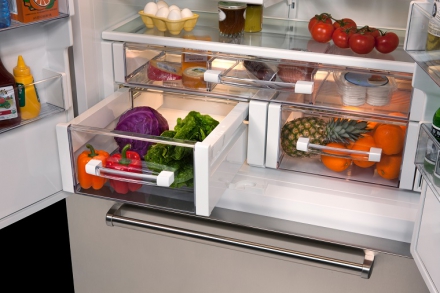
In basic terms, the crisper drawer is a sealed off area that is set to a higher or lower humidity than the rest of the refrigerator cavity. Some models of refrigerator feature several drawers with pre-set humidity levels, other refrigerators have drawers that allow you to manually adjust the humidity level as needed. This adjustment mechanism tends to be deceptively simple; a little vent in the drawer closes when you set it to high humidity, sealing the drawer shut. When the humidity is set lower, the vent is opened to allow some moisture trapped out of the drawer. What is a little more complicated is deciding what foods should go where.

What Should be Stored in Your Crisper Drawers

While you can keep anything in your crisper drawer, they are designed to keep your produce fresher for longer. When you’ve taken the time and money to shop at farmer’s markets or quality grocery stores, it is waste when those beautiful vegetables wilt or soften in only a day or two. Crisper drawers can provide the optimum conditions to help maintain those lovely organic vegetables and fruits to save your dinner plans and your wallet.

Unfortunately, it is not as simple as throwing all your produce in the crisper drawer, as different types of produce have different needs. Some vegetables need higher humidity, while others prefer lower humidity and putting these items in the wrong conditions can compromise their lifespan. The good rule of thumb is that items that rot need low humidity while wilting items need high humidity, but we’ll explore this in more detail now.

Low Humidity Items

Foods that rot as they go bad need to be kept in low humidity conditions to optimize their lifespan. Produce in this category emit gas as they ripen and age, so opening the crisper drawer vent allows the gas to escape to keep your items fresher for longer. Some examples of items that should be kept in low humidity conditions include peaches, grapes, apples, pears, and avocados.

High Humidity Items

Wilting vegetables and foods don’t release any gas as they are stored, but they are prone to losing moisture. This means that these items should be kept in a high humidity crisper drawer to maintain their freshness. These foods include broccoli, cucumbers, carrots, strawberries and leafy greens such as lettuce, spinach, and kale.

Keep The Drawers Full

Finally, if you want to get the most out of your crisper drawers, it is worth considering that they work best when they are almost full. Although you still want to allow some airflow around your items, you can pack your crisper drawer with fruits and veggies, and you’ll be surprised at how well they last in the right conditions. So, next time you’re at the farmer’s market, go a little crazy, just remember to eat all of them!

If your refrigerator lacks crisper drawers and you’re considering an upgrade, you can explore your options with this refrigerator collection or speak to a home appliance expert for further help and guidance.

Exploring Luxury ADA Compliant Dishwasher Options

When shopping for appliances, it can be reassuring to see an ADA compliant label. Whether you’re renovating your kitchen or just looking to update your dishwasher, here, we’ll explore some of the best luxury, ADA compliant options on the market today.

The ADA Standards

The Americans with Disabilities Act or ADA is based on the Uniform Federal Accessibility Standards. In order for manufacturers to have appliance models to conform to the ADA standards, it must be operable for differently abled users. Universal Appliance and Kitchen Center boasts a full range of ADA compliant dishwashers and other luxury appliances. The ADA dishwasher standards include:

Controls and operating mechanisms need to be operable with one hand and not require pinching, tight grasping or twisting of the wrist.

The force needed to activate the controls should be less than five pounds.

All rack space needs to be accessible from the front of the appliance for both loading and unloading dishes.

A maximum height forward reach for the operating mechanisms and controls of 48 inches, with a maximum low forward reach of 15 inches.

Miele G6880SCVI

This dishwasher is from the Lumen series and has all the features you would expect from a Miele luxury model. The G6880SCVI has 12 wash programs and a 16 place setting capacity. The ergonomically designed basket has handles to make it easier to load and unload, while the Knock2Open feature allows automatic door opening with just a light tap.

The lower basket features a MultiComfort area to accommodate different sized items including larger pans and pots, while the adjustable cutlery tray provides optimal cleaning conditions.

In addition to the ergonomic features, the G6880SCVI also showcases Miele’s superb cleaning capabilities including EcoTech to save energy and water and SaniWash that uses a higher wash temperature to get your items hygienically clean.

SMEG STU1846

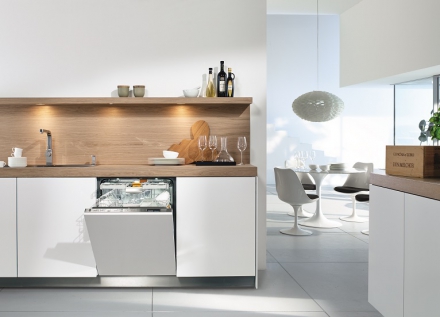
This fully integrated 18 inch built-in dishwasher is narrower than the standard 24 inch configuration, but it still offers a 13 place setting capacity with five wash programs. The SMEG STU1846 also has a number of features contributing to its ADA compliance including self balancing door hinges that allow the door to remain open at your desired angle for versatile loading and unloading. Additionally, the upper basket has height adjustment, while the lower basket features a folding rack.

Fisher Paykel DD24DAX9N

The dish drawer dishwasher is a specialty of this brand, and it makes opening and loading easy, particularly for those with issues of fixed mobility. Despite the unusual configuration, the Fisher Paykel DD24DAX9N has an impressive 14 place setting capacity, and there is a genuine half load capacity for significant energy savings. Additionally, each drawer can be used independently with a choice of 6 wash programs for excellent flexibility. For example, you can use one drawer for heavily soiled items such as pots and pans while you wash fine glass or crystal in the other drawer on a delicate program.

Bosch SGV68U53UC

The Bosch SGV68U53UC is part of the 800 series and features the RackMatic system to allow superb loading flexibility with nine rack positions. The silverware basket can also be adjusted to create two halves that can be placed in different lower rack positions to increase loading flexibility.

The location of the ActiveTab Tray in the middle of the dishwasher improves the dissolving of the detergent tablets rather than being in the standard door position, and the operating noise level of 44 dBA, makes this model one of the quietest on the market.

If you’re interested in these or any other new dishwasher models, you can explore your options with this collection of ADA compliant dishwashers, or speak to a home appliance specialist for further help and guidance.

Appliance Trends to Consider in 2019

Many homeowners find the new year a prompt for making some improvements, particularly when it comes to updating kitchens. If it’s been a while since you’ve been appliance shopping, you may be surprised at the innovation and styles of new appliance designs. 2019 is set to offer some hot trends that will take kitchens by storm, so before you start shopping, here are some new trends that are worth serious consideration.

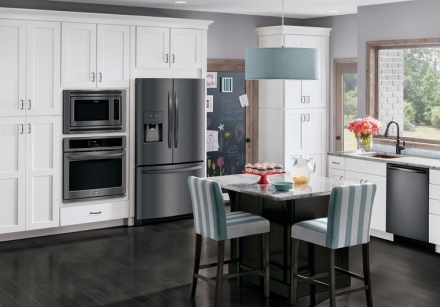
Black Stainless Steel

Stainless steel has been around for years, acting as a mainstay in kitchens, but some appliance shoppers find the look uninviting and cold. So, if you want to move away from this shiny metal, you are sure to be interested in the bold and warm look of black stainless steel. Black stainless steel has started to become offered by appliance manufacturers, and this trend is likely to pick up greater momentum in 2019. This stunning finish works well with many kitchen styles, adding sophistication and glamour to the aesthetic. So, if you want to update your kitchen appliances, start building a gorgeous black stainless steel collection to complement your kitchen decor.

Smart Appliances

Smart technology is becoming a vital component in many areas of the home, and the kitchen is no exception. Almost every major appliance brand today offers at least one smart model and this number is expected to grow in 2019 and beyond. Smart appliances allow you to control your settings from anywhere in your home using Google Home or Amazon Alexa, or even using your smartphone outside the home. Smart appliances are designed to make cleanup, mealtime and your everyday living simpler and more manageable while boosting energy efficiency.

Under Counter Appliances

Appliance trends and home design ideas are often very closely connected. This principle is exemplified by the 2019 trend of under counter appliances. One of the most significant 2019 kitchen design trends was minimizing or possibly eliminating upper cabinets, and appliances are adapting to match this trend.

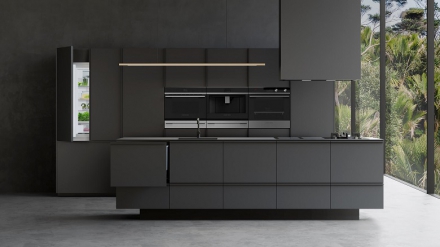
Under counter appliances such as refrigerators can be placed under an island countertop or be built in to create a sleek and sophisticated look.

Alternate Opening Ovens

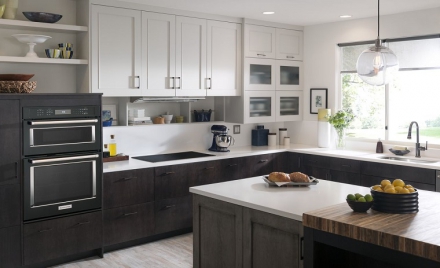
The bottom hinge oven door is more than over in 2019. So, rather than bending over to reach into your oven, while worrying about the door swinging shut on your fingers, you can opt for a reimagined oven. Several brands have evolved traditional wall oven designs to make them easier to use. GE French door ovens and Bosch’s side opening models are center stage of this trend for very good reason. These oven designs are far easier to use, particularly for people with coordination problems or accessibility issues, but they also look sophisticated and sleek. It is anticipated in 2019 that more brands will release alternative opening designs for home use and it is sure to be a major trend.

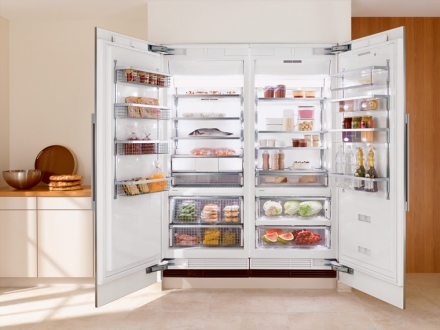
Column Refrigerators

2019 is about custom kitchens, and column refrigerators are a great way to create a kitchen just the way you want it. Column appliances allow you to mix and match your fridge and freezer configuration. You can have additional fridge space when needed and design your appliances to seamlessly blend with your cabinetry. Column refrigerators are also available with the latest technology such as temperature zones, odor seals and much more. This technology is likely to continue to get even better this year, so look out for the latest models and designs.

If you’re considering upgrading your appliances for a fresh, new look in your kitchen, you can explore the options with this online collection, or speak to a home appliance specialist for further help and guidance.

The Right Way to Use Refrigerator Drawers

Many of us give little thought to our refrigerator drawers, but the likelihood is that you’ve been using them wrong for years. There is actually a right way to use your crisper drawer, and it can impact the lifespan of your fresh produce.

It’s Not Just Extra Space

Whether it’s holiday season or during the summer, refrigerator space is almost always at a premium. So, it can be tempting to cram anything and everything into your refrigerator drawers. Unfortunately, if your refrigerator drawer contains vegetables, fruits and even cans of beer, it can impact performance. Getting the best use of your refrigerator drawer can extend the lifespan of your produce significantly. This will not only save money on your grocery bill, but it can ensure that your fruits and vegetables taste super fresh.

It’s About Airflow

The vents on your refrigerator drawer are designed to control the airflow to extend the lifespan of your fresh produce. Most refrigerator or crisper drawers feature adjustable humidity vents that allow you to create more humidity by closing off the airflow or open it up to create a low humidity environment. If your crisper drawers lack controls, it means that your refrigerator has high humidity drawers.

The Importance of Low and High Humidity Drawers

The most efficient way to use your crisper drawers is to create one low and one high humidity drawer. The general rule of thumb is that low humidity drawers should be used for items that rot easily, such as pears, melons, avocados, stone fruit, and apples. A high humidity drawer is ideal for fruits and vegetables that will wilt, such as leafy vegetables and thin skinned vegetables such as asparagus.

You can also use your high humidity drawer for any items that are sensitive to ethylene gas. Ethylene gas is a hormone that is ripened when certain fruits ripen. This gas can help if you want to quickly ripen something such as an avocado, but it can have a detrimental effect on lettuce and other sensitive items. The high humidity drawer traps the ethylene gas so that your produce won’t be discolored or prematurely softened.

The Correct Fill Level

Crisper drawers are designed to work at two thirds full. This means that you shouldn’t overfill or underfill your crisper drawers. When the drawer is overfull, your items will be too tightly packed in, and they won’t be able to breathe. Additionally, the weight of your heavier items may damage more delicate items.

Rotate Your Produce

Even if you have every item placed in the right crisper drawer, it can still be easy to forget about certain fruits and vegetables. So, it is important to rotate your produce, to ensure that everything is eaten when it’s at its best. Most refrigerator drawers are transparent, so you can see the contents, but it is still easy to forget about that avocado tucked in the back or those fresh herbs lingering under your lettuce. Therefore, it is a good idea to rotate the produce in your refrigerator drawers. Bring older items to the front and put any fresh groceries at the back of the drawer.

Upgrade Your Refrigerator

If you’re doing everything right and you still can’t enjoy fresh produce from your refrigerator, it may be time to upgrade to a new appliance. Fortunately, there are lots of fantastic models available with variable low and high humidity crisper drawers and other great features, which offer high energy efficiency. Although you may not relish the prospect of investing in a new refrigerator, just think how much you’ll save by not wasting all that delicious, fresh produce.

If your crisper drawers are no longer providing the optimum conditions for your fruit and vegetables, you can explore your options with this online refrigerator collection, or speak to a home appliance expert for a more specialist service.

How to Choose the Best Convection Microwave

Convection microwaves or combination ovens are one of the most versatile tools in the kitchen and can be crucial if you have limited space. Whether you have a holiday home, caravan, studio apartment or simply a kitchen that cannot accommodate a full sized oven, a convection microwave can provide an excellent solution. Here we’ll explore this topic further, so you can learn how to choose the best convection microwave for your home.

The Advantages and Disadvantages of Convection Microwaves

A convection microwave combines two different appliances. It can be used as an oven, microwave or in a combination, to allow bake and grill functions. This can be a very convenient and fast method of cooking, particularly when high temperature cooking such as pizza, pastries or roasts. You can quickly preheat to oven temperatures of up to 240ºc for speedy reheating, browning or toasting. While convection microwaves are smaller than a conventional oven, most models can accommodate a large pizza or roast, making them suitable for small families. There are some models with two shelf positions for more versatility. Convection microwaves are also cheaper to run compared to a conventional oven, so you can enjoy energy cost savings.

Unfortunately, it is not all positive as there are some potential disadvantages to convection ovens. They tend to have a smaller cavity compared to conventional ovens, so you’re likely to be limited to cooking one type of food at one time. They can also be more challenging to clean. The oven cavity needs to be adequately cleaned following each use as any grease or residue will be baked on during the next use. This can also slow down microwave cooking as the residue will be cooked along with your dish. Most models feature a stainless steel interior, which can make it more difficult to clean. Oven splashes can leave difficult to remove grease marks. Fortunately, there are some simple tips and tricks to aid cleaning.

Characteristics to Look For

To choose the best convection microwave, there are a number of characteristics to look for. These include:

  • Ease of Use; Good instructions on display and easy to use controls will make using your new convection microwave a breeze. You don’t want to choose a model where you need to keep digging out the instruction manual to perform any cooking.
  • Easy Clean; As mentioned above, cleaning convection microwaves can be a challenge, so it is a good idea to look for a model that is easier to clean. Look for any seams, crevices or gaps that could trap grease or food, and smooth coatings that are easy to clean. While stainless steel can look great, remember that it will require some attention to keep it looking free of smudges and fingerprints.
  • Size; You should check that your usual cooking dishes will fit in your new convection microwave. Your oven will also need clearance for ventilation, so you’ll need a couple of inches at the sides and rear, with between five and 12 inches above.
  • Time Adjust; This feature will allow you to decrease or increase your programmed time without pausing cooking.
  • Delayed Start; This will allow you to start cooking at your programmed pre-set time, but you’ll still need to be careful not to leave your dish in the oven too long, or it may spoil.
  • Sensor Cooking; This feature takes automatic functions a step further using sensors to measure cooking vapors to monitor and control your cooking time.
  • Multi-Stage Cooking; Models with this feature allow programming to perform a sequence of cooking functions. For example, you can defrost, cook and then allow to stand without needing to intervene in the cooking process.

If you’re considering a convection microwave, you can explore your options with this online collection or speak to a home appliance expert for a more specialist service.


Top Tips to Save Energy When Cooking and Preparing Meals

Most homeowners are keen to save energy, but one way you may not have considered is saving energy in your kitchen, particularly when you’re cooking and preparing meals. Understanding your cooking habits will help you to make the best use of your energy efficient appliances to help you save on your energy bills and enjoy a greener home.

Use the Right Size Pans

When you’re cooking on your stove, it is crucial to use the right size pan or pot. Estimates suggest that a six inch pan being used on an eight inch burner can waste 40% of the heat produced by the burner. You should also keep lids on your pans or pots to trap the heat inside and allow you to use less energy. Although these may seem like small choices, it can add up to significant energy savings.

Regularly Clean Your Stovetop

Your burner efficiency can be dramatically reduced if your burner pans have been blackened from heavy use. You can avoid wasting energy by keeping your stovetop sparkling clean and shiny. Regular cleaning will prevent a build up, and you may find it more enjoyable to use.

Reduce Your Overall Cooking Time

The less time spent cooking, the less energy typically used, so try to choose energy efficient cooking methods and plan ahead to reduce your cooking time. Defrost dinner in the refrigerator overnight rather than using your microwave. Try to wait until the last few minutes to preheat your oven and try to stagger multiple pans to improve the airflow and reduce your cook time. You should also avoid opening your oven door frequently to check your food, it is not only poor general cooking practice, but it wastes a great deal of energy.

You can also reduce your cooking time and make your life easier by making additional portions. Cooking a double batch will use similar amounts of energy, but they can be used another day or frozen for later use. Frozen home-cooked meals also provide a great alternative to take out, as they are less expensive and tend to be healthier.

Upgrade Your Cookware

Research shows that a warped pan can waste 50% of stovetop heat, whereas a flat pan can use almost all the energy produced. Additionally, high-quality cookware made using highly conductive materials can allow you to use 25% less heat. An excellent choice for oven cookware is ceramic or glass, while copper bottom pans are highly efficient for stovetop cooking.

Love Your Leftovers

Leftovers need not be tired food from the day before. When you cook in bulk, you can freeze single serving portions such as pasta sauce that can be reheated in your microwave or toaster oven. While this may use more energy, the shorter cook time will make it more energy efficient. Just remember to coat your pasta in olive oil before you save it in your refrigerator to avoid needing to boil a fresh pot of water.

Choose the Right Appliances

There is a balance between choosing a microwave, toaster oven and oven. Smaller appliances can allow you to use less energy to prepare a smaller meal. If you do use your full-size oven, you can bake a cake at the same time as cooking dinner.

Depending on the dish you’re preparing, you may find a countertop appliance offers greater energy efficiency and convenience. For example, a pressure cooker or rice cooker could make it easier to prepare your food and avoid using a larger, energy-sucking appliance.

If you have concerns about the energy efficiency of your kitchen appliances and are considering upgrading, you can explore your options with this online collection or speak to a home appliance expert for a more specialized service.

5 Great Ways to Save Energy in Your Kitchen

The kitchen is one of the most important rooms in the home. You start your day in the kitchen, with breakfast and a hot cup of coffee, it is a place to gather for family dinners and can even be the venue for entertaining friends. While you may not consider saving energy when you’re preparing a meal, the abundance of appliances and frequent activity means that when you can make energy savings, it can have a big impact on your home. So, here we’ll explore five great ways you can save energy in your kitchen.

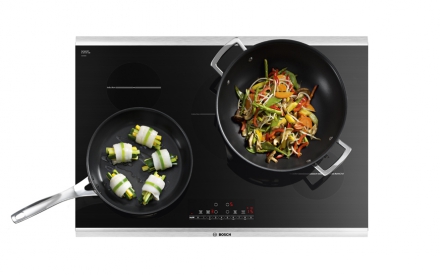
Upgrade to an Induction Cooktop

Induction technology uses magnets to directly conduct heat through pots and pans. This differs from the focused heat produced by a conventional cooktop burner. Each induction burner has a coil that generates a magnetic field that directly heats a ferromagnetic pot or pan placed on top of the surface. This provides more concentrated heat, and according to Department of Energy research, induction is 12% more efficient compared to a standard cooktop.

Keep Your Refrigerator Stocked

Refrigerators top the list of the most energy hungry appliances in the average home. This is logical as a refrigerator needs to continually run to keep your food cold. Unfortunately, this continuous use takes its toll, so you need to ensure your refrigerator is not outdated. According to Energy Star, if your refrigerator is fifteen years old or more, it is likely to be highly inefficient and using excessive amounts of energy.

Even if you have a brand new refrigerator, you can boost its efficiency by keeping it well stocked. While you don’t want to overstuff your refrigerator, the more items stored, the less air to be chilled. You also need to be wary about keeping the refrigerator door open, as this will allow warm air to enter, which requires energy to cool.

Fill Your Dishwasher

Dishwashers are another type of appliance that can use a great deal of energy. Federal standards continue to reflect new efficiency demands for dishwashers, so each model uses as little amount of energy and water as possible. This has lead to modern dishwashers being highly efficient compared to ones from ten or twenty years ago. Modern dishwashers use 4-6 gallons of water per cycle compared to 10 gallons on a model from the 1990s.

Unfortunately, even the most efficient dishwasher can waste energy and water if it is not full during a cycle. You can avoid wasting water and energy by only using your dishwasher when you have a full load, or using the half load setting for smaller loads.

Use Your Oven Convection Setting

Data from the California Consumer Energy Commission highlights that an oven convection setting can use 20% less energy compared to bake settings. Most modern ovens feature a convection setting that can save energy and produce more even cooking. The convection fan blows hot air throughout the oven cavity to cook food more evenly, efficiently and faster.

Identify Your Energy Vampires

Your kitchen is likely to contain a number of appliances that use “phantom loads” of energy. This means that these appliances draw power even when not in use. These appliances are known as “energy vampires” can cause a significant energy drain over time, so they should be identified and unplugged. Good examples of these appliances are toaster ovens, microwaves, and portable coffee makers.

Identifying an energy vampire appliance can be tricky, but you should look for appliances that have lights, a blinking indicator or a digital clock. You can also use a kilowatt meter to test the energy use of appliances not in use. According to Department of Energy estimates, a houseful of energy vampires could add up to $200 in energy bills each year.

If you would like to improve the energy efficiency of your kitchen, you can explore your options with this collection of High Efficiency kitchen appliances, or speak to a home appliance expert for a more specialist service.

Considerations When Choosing a New Range Hood

Having the right range hood provides more than just avoiding setting off the smoke alarm in your kitchen. A good range hood provides vital ventilation for your kitchen, to avoid steam and food particles damaging your cabinetry and preventing cooking smells from permeating into other areas of your home. With such a vital role, it is essential that you choose the right model for your kitchen, so here we’ll explore considerations to help you make your purchase decision.

Assess the Exhaust System

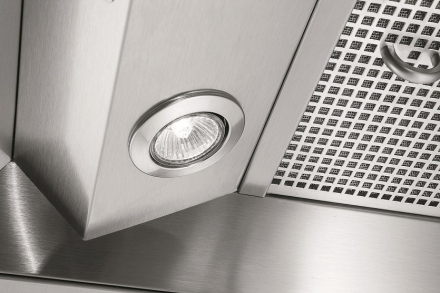
When choosing a new range hood, you’ll find that there are several options for exhaust systems. As the name suggests, ducted or vented systems use ducts to channel the air away and out of your home. This means that you shouldn’t vent into an interior space inside your home, such as an adjacent room or attic. Ducted models require mounting the hood to an exterior wall for shorter and more efficient ducting. If you need to take the ducting further, it will make the installation and potential future maintenance more complicated and expensive.

Duct-free or non vented systems filter, clean and return the air to your kitchen. These systems are typically less efficient compared to a ducted system, and they require regular filter replacement and cleaning, so you’ll need to be prepared for maintenance tasks.

Your Kitchen Layout

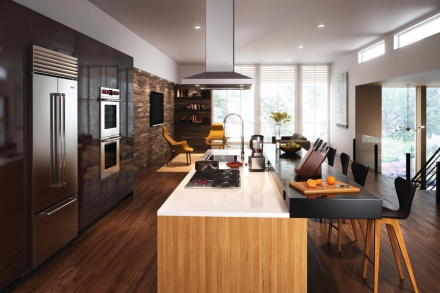
The kitchen layout is a primary consideration for choosing a new range hood. You’ll need to know the space you’re working with and whether the hood should be wall mounted, incorporated into the cabinetry, suspended from the ceiling or made part of an overhead canopy. A general rule of thumb is to mount the hood 24-30 inches higher than the cooktop, but you should always check the manufacturer recommendations.

Calculate Your Fan Power

The size of space will dictate the power requirements of the exhaust hood fan. You need sufficient power to clear the air and prevent strong cooking odors lingering. The calculation to determine your fan power requirements is based on the volume of your room, so multiply the length, width and ceiling height of your kitchen. Ideally, choose a range hood with the capacity to clean or replace the air in your kitchen volume eight times every hour.  The exhaust fan will be labeled with the CFM rating, which is cubic feet per minute. So, if your exhaust fan has a 1,000 CFM rating, it can remove the air from a 10ftx10ftx10ft kitchen in one minute. Multiply this figure by 60, and you will determine how much air can be moved in an hour.

Consider Noise

While you may think that the most powerful range hood is the best option, if it sounds like a jet engine in your kitchen, you’re not likely to use it very often. Home appliance experts suggest choosing a model that draws air towards the perimeter or edges of the hood, rather than over a large area. This makes the hood more efficient and also reduces the noise level. If possible, test the hood in the showroom to check how noisy it will be in your kitchen.

Choose the Right Style

Range hoods are available in a fantastic variety of styles, so it is relatively simple to choose one to suit your kitchen decor. It is worth thinking about whether a material is easy to clean or will need special maintenance, whether it is more costly than a simpler model and whether it complements the general architectural style of your kitchen and home. The right style of range hood can seamlessly blend into your kitchen or make a bold statement, but you’ll need to decide which look you prefer.

If you’re thinking about a new range hood, you can explore your options with this online range hood collection or for further help contact a home appliance expert.

Top Tips to Revitalize Your Laundry Room

Your laundry room is likely to be the most functional room in your home, but at it’s best, it is an efficient place to complete chores, but often laundry rooms are disorganized and cramped. You may even find that you avoid your laundry room, dreading when you need to go in there to complete a laundry load.  Fortunately, there are lots of ways to revitalize your laundry room to make it not only functional, but an inspiring place to get those annoying tasks done.

Update the Walls

Painting the walls can immediately revitalize a room. If your laundry room has limited natural light or lacks space, consider painting the walls in a lighter color. This will create a more airy feel in the area.

Add Some Countertops

If your laundry room doesn’t already have countertops, now is the ideal time to add some. Countertops not only provide a place to fold laundry, but they can help when sorting or allow you to keep stain remover and other products handy when you’re getting a wash load ready. Remember that you can add a sense of cleanliness and style with your choice of countertops, white quartz is an excellent example for a modern look.

Add Storage

In order for laundry rooms to function well, you’ll need access to lots of everyday items. Many homeowners keep more than laundry detergent in their laundry room. You may have products for spot and stain removal, cleaning products and even hangers for items that can’t be put in the dryer. So, it is vital that you have adequate storage. Open shelves near your washing machine can allow you to have detergent handy, but you may also need cabinets or large storage drawers for all your other laundry room essentials. You may even find baskets are a useful storage item. You can separate your laundry into different baskets, so you’ll know when you have a full load of whites or enough hand wash items to tackle this type of load.

It is a good idea to plan out your storage needs in advance so that you can tailor your storage solutions. For example, you may prefer to have a separate bin for each of your children, so they can collect and fold their own laundry, saving you an annoying task. Remember that if you have small children, it is a good idea to have detergents, and any other potentially toxic materials kept out of reach. So, if you can’t have high storage, consider a lockable cabinet that only adults can access.

Install Hanging Spaces

Your laundry room is more than a place to wash clothes, and it can also be vital for all those post laundry chores. In addition to having countertops for folding, consider installing a hanging rail to dry items or hang up items after drying to minimize ironing. Make sure that you have plenty of hangers on hand, so you can put freshly ironed items straight on a hanger and avoid creasing.

Consider Moisture

Finally, it is inevitable that there will be moisture in your laundry room. All that washing, drying, drip drying, and ironing creates moisture, and if you want to avoid musty smells, you need to think about moisture resistance. Choose moisture resistant materials such as plastic panels and ceramic tiles, but don’t forget about ventilation. Even cracking a window in your laundry room can avoid stuffy smells and unpleasant odors.

If you’re considering upgrading your laundry room, you can explore the options with this online collection of laundry appliances or speak to a home appliance expert for a more specialist service.

5 Ways to Creatively Hide Your Kitchen Appliances

Many of us have kitchen appliances in our homes to make our lives a little easier. These gadgets can be a great time saver, but they are not good space savers. Storing kitchen appliances can be difficult if you have collected a number of them over the years. A useful as they are, most of us want to use our gadgets, clean them and then store them out of sight until we need them again. Counter clutter can make your kitchen space less efficient to work in, so we need to find a way to store our gadget in a way that is discreet and functional. Let’s take a look at five ways that you can hide your kitchen appliances and gadgets.

  1. Get a Built-In Fridge and Freezer

Now, this may seem strange when talking about kitchen appliances as most people will be thinking of smaller devices, such as microwave ovens and coffee grinders. The largest appliance in most kitchens is the refrigerator, and it will consume a large chunk of your available space. This doesn’t have to be the case; an entire refrigerator can be concealed behind useful coverings that could match your cabinetry. This will create visual harmony, and it will make selecting a new refrigerator simple.

  1. Install an Appliance Hutch

An odd looking, mismatched set of smaller appliances, such as microwave ovens, blenders, and old toasters, will look far more unsightly than a single large appliance. If this sounds familiar, it may be time to consider installing an appliance hutch to corral your smaller devices into an easy to access area. Once this decision has been made the only remaining choice to make is what door you will use to conceal these items? A flip-up door that matches your existing cabinetry is a solid choice, or you could install a roll up door if space is tight.

  1. Place the Microwave in the Pantry

A microwave is not an aesthetically pleasing device and left out it will eat up counter space in your kitchen. A built-in microwave is a good option, but it will need a venting frame, and this can collect greasy dust. This is hard to clean, and you will soon be finding ways to avoid using your microwave oven altogether. Instead, consider installing the microwave in your cupboard or walk-in pantry. It will be easy to access, no venting is required, and it is hidden when not in use. The only caveat here is that you will need an electrical outlet installed if one is not already available.

  1. Install a Kitchen Island

When you install a kitchen island, your appliance storage capacity can double. A kitchen island can be added at any time if you have the kitchen space available. Some islands are available pre-built, and the configuration can be adjusted to suit your specific needs. Always consider your appliances, how they are used and where they are stored. Ideally, you want to use your appliances without moving them at all. A great addition that you could consider is a stand mixer lift that will conceal your mixer and then lift it to counter height when you need to use it.

  1. A Freestanding Armoire

A freestanding armoire is a cost effective storage solution for those that don’t want to renovate. Essentially, this is a closet for your kitchen that you can use to store your smaller or medium sized appliances. If you cut a cavity in the back, you could even wire your appliances and use them in the armoire. Group similar devices together to minimize chaos and create a dedicated space for the smallest appliances. Once you’re finished, close the armoire doors, and the kitchen looks nice and tidy again.

If you’re considering integrated appliances, you can explore your options with this online collection or speak to a home appliance expert for more specialist service.