How Quiet Should Your Dishwasher Be?

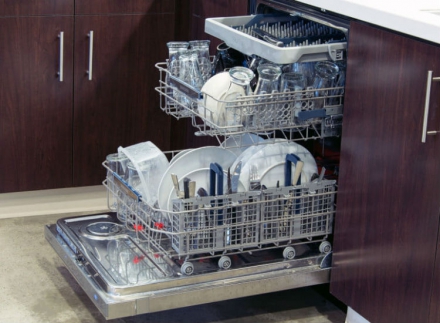
Most of us take our dishwashers for granted. They are an essential appliance in many kitchens, but this doesn’t mean that they can’t be unobtrusive. Some dishwasher models can be so noisy that it is difficult to watch television if the cycle is running in an open plan kitchen. So, how quiet should your dishwasher be?

Measuring the Noise of Your Dishwasher

Dishwasher manufacturers often advertise how quiet their dishwashers are and label them with a dBA rating. A dBA number is an expression of the weighted decibel level in human context for how quiet or loud the sound is to our ears, since humans perceive differences in sounds less sensitively at extreme volumes. Dishwashers in the marketplace have a noise output that ranges between 37 and 64 dBA, but what does this actually reflect in terms of how quiet it operates, and how much of this is simply hype?

Human speech is approximately 60 dBA, while light rainfall is approximately 50 dBA. A night in a quiet suburb is 40 dBA and whispers is 30 dBA. So, when a dishwasher manufacturer says their appliance is whisper quiet, it must be in the low 30s range when operating.

Modern Dishwashers 

In the past, you could expect a dishwasher to produce noise of 65 dBA on average. These days, many dishwasher models are far quieter, operating between 40 and 55 dBA. This means that they produce noise that is somewhere between scattered showers and dinner table chatter. This is a vast improvement and means that using a modern dishwasher doesn’t mean that you need to leave the room.

The quietest models tend to operate within a dBA or two. This difference is barely noticeable with some models operating at 37 dBA when using an Extra Quiet program, but there are other dishwashers that operate between 38 and 42 dBA in normal programs.

The choice of program is not the only factor that can influence the noise output of your dishwasher. Some experts argue that the soil level of your dishes can lead to louder operation. If you have dirtier dishes, the dishwasher needs to work harder to complete the cycle. This can lead to an increase in appliance noise output, but it is rarely more than 3 dBA, which is barely perceptible to human ears.

Determining Your Choice of Dishwasher

In the real world, a difference of a noise output up to 10 dBA is rarely noticeable. At the 10 dBA range, this is the point where audible sound doubles, you’re likely to start noticing the difference.

So, with typical dishwasher models operating between 40 and 55 dBA, there is very little difference in the noise output for the average household. If you’re deciding on a new dishwasher model, you need to assess whether you need a dishwasher to be whisper quiet or if you don’t mind a rainfall noise level. You need to think about your home layout and the types of activities in your everyday life. If you like to homeschool your children while sitting at your kitchen counter or have an open plan kitchen where the family likes to watch television, you may need to consider a dishwasher that has a quiet program. If you don’t tend to carry out important tasks in the kitchen, you should take the noise ratings into consideration with the performance and price to determine the best option for your home.

If you’re having difficulties with your dishwasher and are considering an upgrade, you can explore the options with this online collection of dishwashers or speak to a home appliance expert for a specialist service.

Tips for Positioning Your Oven Shelves for Perfect Baking

Baking is part science and part art form. Even if you’re following a recipe completely, you can still get unexpected results from your oven. If you want to perfect your baking skills, you may need to rearrange your oven racks or shelves. Most types of electric oven have a heating coil in the bottom to generate heat. This means that placing your racks too close can cause uneven baking and you could end up with sunken cakes and burned pastries. So, here are some tips to help you get your oven shelving placement correct for perfect baking results.

Consider What You’re Baking

Generally, the middle of your oven is the best place for baking. This provides the ideal position for air circulation and more even results. Remember that heat rises, so top and low rack positions can be very hot, as a result, your baked goods may get burned. Try to position your shelf in the middle rack position for the best results, unless you need a browned bottom on your dish. For example, while you may want an even bake on a cake, a fruit pie can be prone to a soggy bottom. So, while a cake is better in the middle of the oven, a lower shelf position is better for a pie. Just be sure to keep an eye on it to avoid it becoming overbaked.

Plan for Multiple Bakes

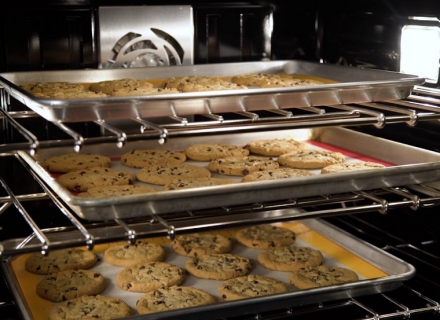
If you need to bake several items simultaneously, you will need to plan in advance. Don’t just place your pans and cookie sheets where they will fit. You’ll need to reorganize the shelves for the best results before you start to preheat the oven. If you are baking two cakes, ideally, both pans should be on the middle shelf. If you want to bake trays of cookies, bake one at the top and one at the bottom, but keep a close watch on them to avoid burning. Items such as meringues can benefit from being placed at the top of your oven, as the hot position allows the meringue to color quickly without the filling heating up.

Check for Hotspots

All ovens are different, and some may be prone to hotspots. This can create uneven baking results if you are unaware where the hotspots are. You can easily check for hotspots using a cookie sheet and some slices of bread. Lay the bread on the sheet and bake until the slices start to brown. The browning pattern will indicate the hotter and cooler areas of your oven.

Watch and Rotate

Even if you have the ideal oven shelf placement, you can’t simply put your baking in the oven and forget about it. For perfect results, you’ll need to watch it and be prepared to rotate your cake pans, pie dishes or cookie sheets. If you’re baking an item for 30 minutes, set your timer for 10 or 15 minutes so you can rotate midway through baking. This will allow a more even browned finish and delicious results.

Repositioning your oven racks can improve the quality of your baking, for more even browning and avoiding scorching. With the correct rack placement, you can ensure that the recipe you follow creates picture-perfect results.

If you want to enhance your baking, you need to ensure that you have the right oven. By choosing an appliance that offers great flexibility, you can adjust your oven racks correctly for the best results

If you’re looking for a new oven, you can explore the options with this online collection of ovens, stoves, and cooktops or speak to a home appliance experts for a specialized service.

Tips for Organizing Your Kitchen Like a Professional Chef

If you have ever eaten at a chef’s table, or enjoy watching cooking shows, you may have admired the organization of a professional kitchen. This level of organization can allow the average cook to look like a talented professional, as command of your workspace will make food preparation easier. So, if you want to improve your kitchen prowess, here are some tips for organizing your kitchen like a professional chef.

Eliminate Excess Steps

The first step of organizing your kitchen like the PROS is to eliminate excess steps. Professional chefs set up their workspace to reduce movement during a dinner service. Eliminating the excess steps between your refrigerator, prep area or stovetop and pantry will help you to feel more organized and improve functionality.

Create Stations

In a commercial kitchen, there are different stations for different tasks. Not only are there several cooking stations, but there is a prep area and a dishwashing station. This can be recreated in your kitchen by creating spaces for prep, cooking, cold and dry storage and where you plate food. You may also have a beverage station where you prepare your coffee and a seating area. By designating each area, you can plan what you need and where you need it for a more efficient work area.

Create the Right Flow

Efficient food funnels are the key to a successful professional kitchen. Food is moved from storage to prep to line to the pass. This can be emulated in your own kitchen to create the right flow. Virtually every kitchen is designed around the triangle connecting the sink, range, and refrigerator. This promotes good flow, but it can be enhanced. Facilitate efficient movement by keeping anything not used for cooking outside your cooking triangle, but near where they’re needed. Dishware should be near the table, glasses near the water dispensing refrigerator and cups near your coffeemaker.
Group together the items needed for key processes to enhance the kitchen flow. For example, place your dishwasher on one side of the sink and your trash on the other, so you can scrape, rinse and fill with ease.

Equip All Your Stations

Once the areas of your kitchen have been designated for specific tasks, they will need to be equipped accordingly, so the correct tools are within easy reach. You won’t need knives near your stove; they should be stored with your cutting boards near your prep area. The storage near your stove should be reserved for pots and pans, but remember you will need seasoning within easy reach.

Master Food Storage

The most important aspect of feeling like you have the ingredients you need at your fingertips is proper storage. Proper labeling and stacked storage will help to keep your pantry clean and organized. Stackable plastic containers can be used in your pantry, refrigerator, and freezer so that all your ingredients are easily visible in the least amount of space.

Once you’ve filled your containers, remember to label everything. Although you may think you’ll remember what you’ve put in that plastic tub, after a week in the freezer, it may be difficult to identify. Ensure that all your containers have a label facing out, so you can see at a glance the ingredient you need.

Keep It Clean

Finally, if you want to feel like you’re working like a professional chef, you need to ensure that you keep your kitchen spotless. It can be a real challenge to prepare a gourmet meal if you need to keep moving keys, letters and other detritus off your countertops.

Finding the Right Appliances for Your Kitchen

A modern kitchen isn’t complete without the right appliances. Now that you know how to create a kitchen a professional chef would be proud of, you are in the ideal position to make an informed decision to find the right appliances for your new kitchen. Consider starting your search with this collection of kitchen appliances. For further help, contact a kitchen appliance expert.

Survival Tips for a Kitchen Remodel

A kitchen remodel can be an exciting prospect, but unfortunately, it is not all about choosing shiny new appliances. The reality is that you may have to live in chaos for weeks or even months as your kitchen is out of action. Fortunately, there are some survival tips to help you get through the process.

Triage Your Kitchen

If you like to have your front load washer and dryer side-by-side, but want easier access to your appliances, then you may As you are packing up your kitchen for the remodel, you should sort all your gear into categories. You will need to place your items in boxes marked up for storage, recycling or donation and a temporary kitchen. The boxes for storage should contain items that you will need in your new kitchen, but won’t be used until later. These should be kept in a safe place, but out of the immediate area. Your recycle or donate boxes can be disposed of at your convenience, and your temporary kitchen boxes will be needed for the next tip.

Create a Temporary Kitchen

Even if your kitchen is only out of action for a week, you will need somewhere to make meals, prepare drinks and pack lunches. This temporary kitchen should be out of the way of any renovations, but in a convenient location. You can set up your kettle, microwave and toaster oven in a dining room or a corner of your living room and have your essentials close by. To avoid dust getting on your dishes and utensils, pack them in plastic tubs, so they are protected but easily accessible.

Develop a Dishwashing Strategy

Unless you plan on eating out three times a day, you will still need clean dishes during your kitchen remodel. So, you will need a dishwashing strategy. You won’t want to visit an upstairs bathroom to dump out coffee cups or rinse vegetables. So, designate a sink for kitchen use, so you don’t need to move dishes every time you want to take a bath. This sink can be set up with a dish rack and allow you to keep your detergent on hand. While it will lack the convenience of having your kitchen sink, it should make the chaos of the remodel a little easier to deal with.

Try to Control the Dust

It is inevitable that any home improvements will create dust, a lot of dust, and during a kitchen remodel this can cause problems throughout your home. Your contractor should have plastic sheeting to cover flooring and create a curtain around the project site. This will keep some of the dust under control, but you will need to have plenty of microfiber cloths on hand to pick up drywall dust. Clear anything on the route between your kitchen and outdoors, to avoid workers bumping into items when they are carrying tools or appliances. Be prepared to clean up at least once a day to minimize dust in other areas of your home.

Establish a Pet Plan

If you have pets, you will need to set up a safe area where they can have access to food and water, yet be out of the way of contractors. You should also set up a place to sleep. This will provide a secure place for your pet to retreat if they start to feel anxious

Be Realistic About Your Food Standards

The reality of not having a working kitchen is that you will not be able to prepare the meals, snacks, and drinks that may be everyday staples in your home. It is unlikely that you will be able to brew fresh coffee every morning and make a three course dinner. Be prepared to make some compromises. Sandwiches, toast, salads, cereal, and fruit are all easy to prepare, and nourishing. Ice cream on a stick will keep the kids happy, yet doesn’t dirty a bowl. Plan your menu according to your means, not your usual habits.

Finding the Right Appliance for Your New Kitchen

A kitchen remodel isn’t complete without the latest model appliances and if you’re ready to find the ideal appliances for your new kitchen, consider starting your search with this collection of kitchen appliances to explore your choices, or contact a home appliance expert for specialized service.

When Should You Replace Your Home Appliances?

From the kitchen and the laundry room to the outdoor living space, the modern home can only run efficiently with the help of modern home appliances. Regular maintenance and service will help extend the lifespan of your favorite appliances, but there is bound to be a time when you’ll have to consider whether or not it’s time to replace your units.

The decision to replace an old or damaged appliance can be a difficult one, especially when there are so many exceptional products available on the market today. However, there are several key factors you should consider when making this decision. To help you when the time comes, we’ve selected some important questions you should ask yourself to determine when you should replace your home appliances.

How Old Is Your Appliance?

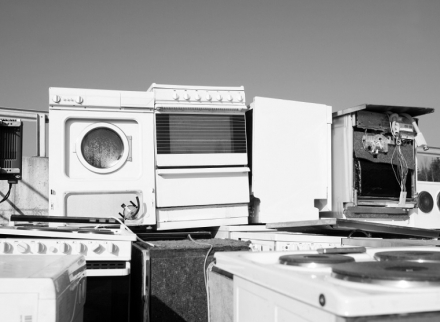
When deciding whether or not to replace your appliance, you should consider how old the unit is and how long you’ve owned it for. While premium appliances are built to last, no unit will last forever. If your unit is older than its average lifespan, you should definitely consider investing in a replacement.

While the lifespan of your kitchen and laundry appliances will vary, you can reference the information below for an approximate age range of several common appliances:

• Dishwashers: 9-10 years
• Dryers: 13 years
• Washing Machines: 5 -15 years
• Microwaves: 9 years
• Gas Ranges: 15-17 years
• Electric Ranges: 13 – 15 years
• Refrigerators: 9 – 13 years
• Range Hoods: 14 years
• Oven: 10 – 18 years

When considering appliance age, you should also take into account your unit’s design and style. An old appliance may function perfectly, but if its appearance does not match your changing design aesthetic, you may want to invest in a replacement.

Is Your Appliance Still Under Warranty?

Many homeowners start to consider replacing an appliance once it faces a major maintenance or repair problem. But if your appliance still has a number of years left on its warranty, you may want to hold off on replacing your unit.

Appliance warranties cover specific maintenance or repair costs, often allowing you to receive replacement parts or basic services at a reduced rate or free of charge. Be sure to check what warranties cover your appliances, and should you need service, be sure a factory-certified appliance repair company covers it. If service is covered under your warranty, there may be no need to replace your appliance.

What Is The Difference Between Repair & Replacement Costs?

If your appliance is no longer under warranty, you’ll need to more carefully consider replacing your unit. Generally speaking, it makes sense to replace your appliance when the price of the repair totals more than half the cost of a new model. There is little reason to spend a fortune on repairing an old appliance, and the more advanced features and contemporary style of a newer model will more than make up for the additional investment cost. The only time you should consider such costly repairs is if your appliance is a specialty model that would be difficult to replace.

Discover The Ideal Modern Appliances For Your Home

The decision to repair or replace a cherished home appliance can be a difficult one, and should not be taken lightly. Should you face this challenging task, be sure to consider the age of your appliance, the potential cost of repairs and its warranty policy before choosing to invest in a new unit.

If you’re ready to choose a new appliance, you can use this online collection of cooking appliances and this online collection of laundry appliances to discover great new units for your home. For additional assistance, do not hesitate to contact a home appliance expert.

4 Kitchen Appliance Tips For The Holidays

Your kitchen is a hub of activity throughout the year, but this is particularly true during the holiday season. If you plan on hosting a holiday gathering, you’ll definitely want to get the most out of your premium kitchen appliances, and there are plenty of small tips and tricks you can employ to ensure your kitchen runs smoothly.

To help, we’ve compiled some suggestions for kitchen appliance use this holiday season.

1. Do Not Self-Clean Your Oven Before Holiday Cooking

The self-cleaning feature on your oven is intended to make cleaning easy, but if used right before you begin cooking for the holidays, it could cause a major disaster.

Many homeowners do not use their oven’s self-clean option frequently, and if you use this feature right before a big event, you risk causing an oven malfunction that can seriously damage your appliance. If your oven’s self-cleaning feature isn’t used at least every six months, you run the risk of damaging the appliance when it is activated.

You should also avoid using chemical oven cleaners right before holiday cooking. These products can be effective, though they often leave a layer of chemical residue that needs to be burned off before heavy oven use. This residue can be cooked into your holiday dishes, creating a foul taste while providing a health risk to your holiday guests.

 2. Use Your Oven’s Convection Settings

Many homeowners have a convection oven, though they are unsure of how to properly use its convection setting. Your unit’s convection option helps it cook food faster and more evenly, and is generally better for browning dishes — making it a great choice for a host of holiday favorites.

If you want to take advantage of this feature, be sure to reference your appliance’s owner’s manual for instructions. In general, you should try to follow these basic rules on how to use a convection oven:

  • Lower the recommended cooking temperature by 25 to 30 degrees Fahrenheit, or cut the baking time by 25 percent.
  • For small pastries, reduce the cooking time by 10 to 15 percent
  • For large roasts, reduce the cooking time by approximately 30 percent

3. Do Not Overwork Your Dishwasher

Once your holiday feast is done, it’s time for the dishwasher to do its job. However, you don’t want to risk ineffective wash cycles by overworking your appliance.

When washing dishes post-holiday dinner, be sure to use the proper amount of soap for each cycle. Too much soap will fill your machine with excess suds, making your cycles less effective. You should also be sure to scrape off all food residue from plates, bowls and silverware, as excess food particles can clog your unit’s jet streams. You should also be sure not to over-rinse dishes, as enzymes in dishwasher detergent require the presence of food residue in order to activate and be effective.

 4. Empty Your Ice Maker Before Gatherings

Nothing ruins a delicious drink like dirty ice, and you’ll definitely want to supply your holiday party with a steady stream of fresh and clean ice. If you notice that your ice maker produces chalky or smelly ice, you’ll have to take action to ensure your guest receive what they deserve.

As air moves throughout your refrigerator and freezer, the unit’s ice maker can become polluted by the flavors of food stored in the appliance. This often results in chalky, smelly and odd tasting ice. To prevent such impurities, you should first empty out your entire ice compartment and allow it to refill with fresh ice. Once the compartment if full, empty the fresh ice into a plastic bag and store it on your freezer shelf. The bag will protect your ice from air that circulates in the unit. You can feel free to continue this process until you have enough ice for your holiday party.

Meet Your Home Appliance Needs This Holiday Season

Your kitchen needs to work at peak efficiency during the holiday season, meeting your cooking and cleaning needs at each and every turn. Armed with a deeper understanding of how your kitchen appliances operate, you’ll be in the perfect position to have a memorable holiday season.

If you notice any issues with your home appliances, the holiday season is also a great time to upgrade to more modern options. You can browse this online collection of cooking appliances to explore your choices, or contact a home appliance expert for further details.


How to Decorate Your Kitchen For The Holidays

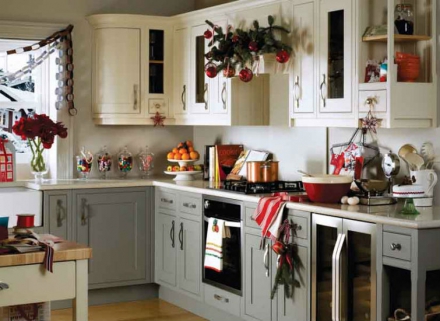
The holiday season is in full swing, and you’ll want to fill every corner of your home with festive decorations and holiday cheer. Many homeowners focus their decorating efforts on the outdoors, or on their Christmas trees, but there’s no reason you can’t bring some fun décor to your kitchen.

Decorating the kitchen can be a tricky task considering the number of useful appliances that fill the space. You don’t want to get in the way of accessing your refrigerator, and you definitely don’t want to put decorations too close the flames of your gas cooktop. However, there are plenty of ways you can decorate your cooking space for the holidays. With that in mind, we’ve compiled a helpful guide on how to decorate your kitchen for the holidays.

Display Cards & Photos On Your Refrigerator

You’ll likely receive a host of cards from family, friends and loved ones this year, and there’s no better pace to display them than right on your refrigerator.

Many of today’s best refrigerators feature stainless steel designs, or another form of metal exterior, allowing you to easily place holiday cards on the unit using small magnets. You can find refrigerator magnets at many convenience stores or hardware stores, and you’ll even be able to find holiday-themed magnets for added style. With these magnets, you’ll be able to arrange cards along your refrigerator however you please. You can even display photos from previous holidays on your appliance, sharing fond memories with all who enter the kitchen.

Festive Linens For Christmas

Everyone knows that green and red are the traditional colors of Christmas, and an easy way to incorporate these colors into your kitchen décor is by investing in festive Christmas linens.

Many popular home brands produce holiday themed towels, potholders, aprons and more, and adding these to your kitchen is an easy way to bring some festive flavor to the cooking process. Most holiday decorations are not designed for easy placement in the kitchen, and holiday-themed linens are a simple way to add some Christmas style to the kitchen without getting in the way of everyday cooking tasks.

Create An Island Or Table Arrangement

Most homes have an island, a kitchen table or both, and the flat surfaces these fixtures provide make them a great location for arranging holiday decorations.

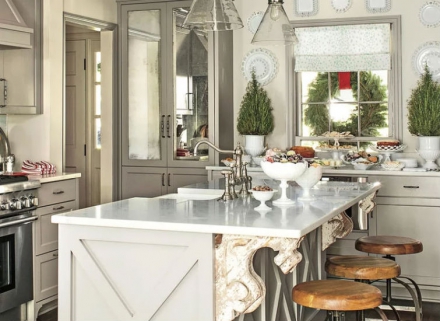
For elegant and understated style, we recommend creating a floral arrangement using traditional holiday plants like poinsettias, ferns or small pines. You can also place a wreath on the flat surface and build a centerpiece within the wreath using plants or other decorative elements. Feel free to let your creativity run wild, but just be sure that you have ample space to eat at the table or prepare food on your island.

Keep Things Simple

Decorating your kitchen is a great way to get into the holiday spirit, but it’s important that you don’t go overboard. The kitchen is always a major hub of activity, but this is especially true when holiday parties and gatherings are near. While you’ll want to impress guests, you definitely do not want to be tripping over holiday decorations when preparing a meal.

When decorating the kitchen, it’s best to keep things simple. Ensure that your festive touches do not block access to your appliances, and that flammable decorations are not too close to your oven, cooktop or cooking range, as this can create a major fire hazard in your home. With some strategic planning, there’s no doubt that your holiday kitchen decorations will look amazing.

Holiday decorations are a great addition to any home, and the holiday season is also a great time to gift your home with some new appliances. You can explore your options using this online collection of cooking appliances, or contact a home appliance expert for additional assistance.

What’s The Difference Between a Rangetop & Cooktop?

Today’s kitchens breathe life into your home by playing host to a variety of powerful and advanced cooking appliances, helping you bring culinary dreams to life with ease. When designing your kitchen, you’ll definitely want to invest in either a cooktop or rangetop, but what’s the difference between these two appliances?

Cooktops and rangetops provide many of the same functions, but contrary to popular belief, these appliances are not the same. To help you explore your options, we’re breaking down the differences between cooktops and rangetops.

Rangetops vs. Cooktops

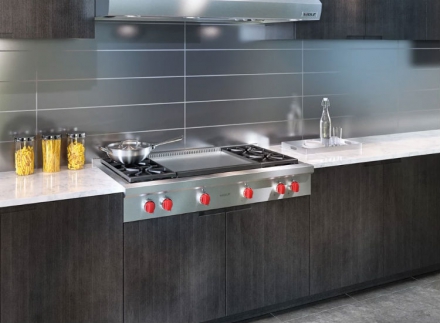
When comparing these two appliances, the main difference comes down to their basic design. The standard cooktop is a drop-in unit that is installed within a kitchen counter, featuring control knobs on the top of the appliance. Meanwhile, a rangetop is a slide-in unit installed within your countertops, flanked on each side by the counter itself. This design features control knobs on the front of the appliance, just like a cooking range. Your preference in knob placement will likely be a deciding factor in whether you invest in a cooktop or rangetop, though there are other minor differences that will also impact your decision.

Pros & Cons of Cooktops

Cooktops are commonly found in a host of homes, and like any other appliance come with their own set of pros and cons.

These appliances are designed for everyday home use, and there are several types of cooktops designed to match your specific needs. Gas cooktops, electric cooktops and induction cooktops are all popular choices, allowing you to choose between different fuel sources to find the right appliance for your home. Moreover, compared to most rangetops, the average cooktop requires a smaller countertop cutout space for installation.

While cooktops are a popular choice, these units do have their drawbacks. There are many exceptional premium cooktops available on today’s market, but there are also countless lower-end models that may not meet the demands of a busy kitchen. To find the right option, you’ll need to do a lot of research. Furthermore, some homeowners do not like how cooktop controls are located on the top of the appliance, as this can present a minor risk of burns if making adjustments while cooking.

Pros & Cons of Rangetops

If you’re looking for pro-style in your kitchen, then a rangetop may be the appliance for you. These units are commonly found in professional kitchens, and are ideally suited for avid home cooks that want to bring commercial-grade quality to their kitchen.

Most rangetops are pro-style units, meaning they offer superior power and heating functions that allow you to cook quickly, helping you save time in the kitchen. However, the greatest benefit of these models is their control knob orientation. With controls on the front of the appliance, you have easy access to the knobs while cooking, ensuring that you never have to reach over your pots and pans to adjust burner temperatures. This design significantly decreases the chance that you’ll burn yourself while cooking.

Rangetops are great for many kitchens, but you’ll need to ensure that you have enough space for your unit before making an investment. These appliances typically require more counter space for installation than a standard cooktop. Moreover, rangetops often come at a higher price than the average cooktops. However, their advanced heating capabilities and professional style makes the cost more than worth it.

Superior Rangetops & Cooktops For The Modern Kitchen

A great cooktop or rangetop is a must-have appliance in every kitchen, providing the strong heat and cooking surface required for crafting a wide array or exciting recipes. Thanks to a host of superior options available from a range of premium brands, there’s no doubt that you’ll find the perfect rangetop or cooktop for your home.

Looking for a new cooking appliance? You can use this online collection of cooktops or this collection of rangetops to explore your options, or contact a home appliance expert for specialized assistance.

How To Clean Your Dishwasher in 3 Steps

The dishwasher is your kitchen’s premier cleaning appliance, providing your home with a steady supply of clean plates, bowls, utensils, cookware and more. But just like any other kitchen product, your dishwasher requires regular cleaning.

Some homeowners assume that because the dishwasher is used for cleaning, it doesn’t need to be cleaned. However, failing to clean your unit will result in a smelly dishwasher filled with waste that ultimately cannot do its job. Luckily, cleaning a dishwasher is a simple task, and to educate you we’ve provided some helpful information on how to clean your dishwasher in three steps.

1. Clear The Dishwasher Drain

The dishwasher drain is designed to capture all the food particles and waste that’s washed off of your dishes after a cycle, and you’ll want to clear the drain before you wash the entire unit.

The drain is located in the bottom of your appliance, and you’ll need to remove the bottom dish rack for proper access. Simply locate the drain and remove any gunk or food waste that you find. Cleaning the drain is particularly beneficial if you notice bad smells coming from your appliance, as these odors are typically caused by rotten food waste. Moreover, cleaning the drain will improve your dishwasher’s efficiency and drainage capabilities.

 2. Wash Cycles With White Vinegar

Once your dishwasher drain is cleared, you can clean the interior of the appliance using white vinegar.

To do this, you should first place one cup of white vinegar in a dishwasher-safe container on the top rack of the unit. Next, run the dishwasher on a hot water cycle. This will help eliminate grime and grease throughout the appliance, while also killing bacteria that can cause musty odors.

 3. Rinse Cycle With Baking Soda

After the white vinegar wash cycle, the final step in cleaning your dishwasher is running a rinse cycle using baking soda.

You should measure one cup of baking soda and sprinkle it across the bottom of the dishwasher, then run a hot water rinse cycle. This cycle will remove stains throughout the appliance’s interior and leave it smelling fresh.

Efficient & Effective Dishwashers For Today’s Homes

The only way your dishwasher will work properly is if it’s clean, and dishwasher cleaning is a necessary chore for every homeowner. As long as you have white vinegar and baking soda in your home, cleaning your dishwasher will be a simple task.

Are you looking for a new dishwasher? You can use this online collection of dishwashers to explore your options, or contact a home appliance expert for specialized assistance.

How To Use A Convection Oven

The modern kitchen is not complete without a powerful oven, and for fast and efficient cooking results you’ll definitely want to invest in a convection oven.

Convection ovens offer specialized settings that heat the appliance differently than conventional ovens, reducing cooking times and helping you achieve even oven-cooked results. But many homeowners are unsure of how to use their convection ovens. To help you take advantage of your appliance, we’ve gathered some helpful information on how to use a convection oven.

Convection Ovens vs. Conventional Ovens

Convection and conventional ovens will both effectively cook or bake your items, but the key difference is the way that they heat food. Conventional ovens cook food by surrounding it with hot air, while convection ovens circulate hot air for cooking.

A convection unit features a fan in the back of the oven, and when it’s convection setting is turned on, the appliance blows hot air throughout the inside of the unit. Compared to conventional oven cooking, this air circulation promotes fast and even heating. With conventional settings, hot air simply sits within the oven’s interior, which can potentially lead to slower cooking and uneven results.

When to Use Convection Settings

Most modern ovens offer convection cooking settings, but these settings are not ideal for every cooking scenario. That said, you’ll definitely want to use your appliance’s convection setting when:

  • Roasting Meat or Vegetables: Roasted dishes benefit from the drier cooking environment that convection settings provide. These conditions help create crispy skin on meat and yield caramelized exteriors for vegetables.
  • Baking pies and pastries: Convection cooking creates steam and melts fat fast, offering more “lift” in pastries and pie dough.
  • Toasting or dehydrating food: Convection cooking natural creates a dry atmosphere that removes moisture from food, making it an ideal option for toasting or dehydrating dishes.

It’s also worth noting that you should not use convection settings when cooking delicate dishes or desserts. This is because blowing of the convection fan can endanger the integrity of the dish, separating baking batters or creating lopsided results in other delicate foods.

Convection Oven Cooking Tips

Convection oven settings are significantly different from conventional settings, and you’ll need to keep a few things in mind when cooking with convection.

First, remember to lower the standard oven temperature for whatever you’re cooking by 25 degrees Fahrenheit. The convection settings promote stronger overall heat, and lowering the temperature will ensure whatever you’re making isn’t overcooked or burned. You should also be sure to check your food earlier than the recommended cooking time, as convection settings will cook food faster than normal.

Finally, you also need to ensure that air can properly flow through your oven for the convection process to work. You should try to use trays and pans with lower sides, as this will help air flow over your food and through your oven. You should also avoid covering oven shelves with foil.

Superior Convection Ovens For Today’s Kitchens

A convection oven is a great addition to any kitchen, helping you cook and bake a variety of items effectively and efficiently. With some knowledge on how the convection cooking process works, you’ll be able to take advantage of all the benefits your oven offers, bolstering the culinary possibilities of your home.

If you’re looking for a new oven, consider using this online collection of cooking appliances or contact a home appliance expert for additional assistance.