Should You Choose a Downdraft or Vent Hood?

When you start considering which appliances are best for your kitchen, it is very easy to feel a little lost. This is particularly true when you need to figure out the ventilation in your kitchen. While you’re likely to know that a vent will be a great addition to your kitchen, it can get confusing when you discover there is more than one type of vent system. Both downdraft and vent hoods are made to remove smoke, fumes, heat, and steam in your kitchen to keep the air generally quite fresh, but knowing which one is best for your kitchen can be a challenge. So, here we’ll explore both types of vent to help you gain the details needed to make an informed purchase decision.

The Benefits of a Vent Hood

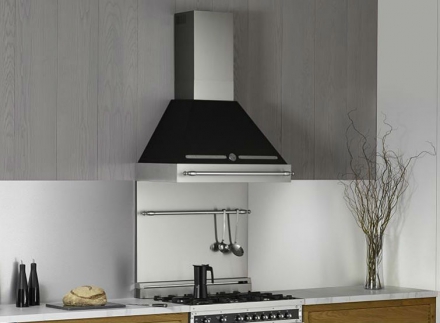
Many types of hood are actually in the category of the vent hood. You may be looking at a kitchen hood, range hood or even an electric kitchen chimney, but they are very similar in design. These types of hood are often paired with a range, but you can see them over a cooktop.

Vent hoods tend to be considerably larger compared to a downdraft hood. This means that they have the power needed to cover a larger area and significantly reduce smoke and steam in your kitchen. Additionally, vent hoods also provide improved kitchen lighting. Most models feature at least one light, so you can easily spotlight where and what you’re cooking. Although they are a larger appliance, they tend to hide in plain sight, so rather than looking bulky, a vent hood can add a touch of luxury to your kitchen.

The Downdraft Hood Basics

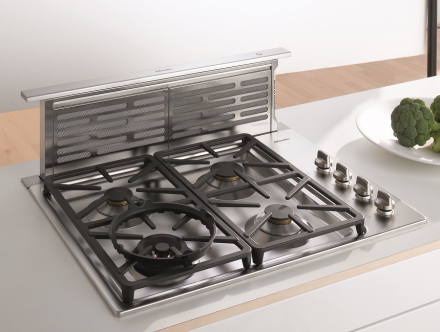
If you want to install something a little more subtle than a typical vent hood, you should consider a downdraft hood. There are some models of downdraft hood that can be hidden into your kitchen cabinet layout. Some models have a telescopic feature, so they can rise from your cooktop with the touch of a button. This is a high tech option that can work very well at sucking fumes down and out of your kitchen from a duct, but it can also provide a showstopping feature to your kitchen design.

Making Your Purchase Decision

So, how do you make the decision to choose between a downdraft and vent hood? There are a few things to consider before you make your final purchase decision.

  • Do You Need More Storage Space? If you have minimal space or simply need more storage space, then you may prefer a downdraft hood. This will allow you to install cabinets above your cooking area, which would not be possible with a vent hood.
  • Do You Find Cleaning a Chore? If you struggle to manage the cleaning of your kitchen, you may prefer a downdraft vent. These tend to be easier to clean than a large vent hood. When you have a vent hood above your range, you’re likely to find that it may look great, but it extends nearly to the ceiling, and you will need to reach to keep it clean. It is amazing how much dust and other debris can accumulate on kitchen surfaces, so you’ll need to keep a vent hood clean to ensure it continues to look its best.
  • Do You Cook Big Meals? If you tend to cook with big pots and pans, you’re likely to prefer a vent hood. This will have a greater capacity to remove the smoke and steam from your cooking space, compared to a downdraft hood that will be unable to reach the height of your larger pots.

If you’re considering a new hood, you can explore your options with this online vent hood and downdraft hood collection, or for further help, speak to a home appliance expert.

Considerations for Placing Your New Laundry Set

Whether you’re upgrading your existing appliances or planning a new laundry area, the placement of your washer and dryer needs some thought and careful planning. Positioning your new appliances in the wrong spot could create problems for your daily routine, and cause inconvenience and headaches. So, here are some considerations for placing your new laundry set.

Think Space

While your existing washer and dryer may be tucked away in your basement, this may not be the right spot for your new appliances. Many homeowners find lugging loads of dirty laundry from the bedrooms upstairs all the way to the basement to be a real pain. So, it could be worth thinking about other spaces around your home that could provide the ideal location. A favorite spot for a laundry set is just off the kitchen. This can add functionality to your kitchen and prevent it from being cluttered. The kids can drop their knapsacks, jackets, and shoes in a laundry room and prevent those items from making your kitchen look untidy. You will need at least a 5×8 foot area, but larger is often better as you can maximize storage.

Ventilation Requirements

Your new washer and dryer will need to be vented, so the most practical placement is adjacent to an external wall. Proper ventilation is essential to prevent fires, particularly with a dryer. If it is not possible to place your new laundry set against an external wall, you will need to give ventilation some thought.

Is the Location Structurally Sound

While new appliances tend to be more stable than their older counterparts, there is still some vibration to consider. This means that your new placement needs to be structurally sound. If you are unsure whether your new location is suitable for supporting two new appliances, it is a good idea to have it checked by a professional contractor.

Noise

Even the best quality washers and dryers still make some noise, so you need to think about whether the noise produced will disturb you. If your new set is placed near work, sleeping or leisure areas, you will need to think about noise suppression. Ideally, you will be able to close a door on the appliances to keep in the noise when you’re doing laundry. If this is not possible, you may need to think about installing wallboard that can dampen any noise and vibrations.

Choose the Right Flooring

Before you place your new laundry set, you need to look at your floor. The floor not only needs to be level, but you also may want to sort your laundry on the floor. This means a garage with a dirt floor may not be sufficient for your needs. Ideally, your floor should be waterproof in case of any spills and look attractive to complement your new appliances.

Choose the Right Appliances

Finally, you need to ensure that you choose the right washer and dryer for your home. Fortunately, there are plenty of options that combine performance and value. If you have limited space, you may need to consider whether you need appliances that can be stacked or a front loading washer that can accommodate a dryer above. Bear in mind that front loaders tend to be quieter compared to a top loader, but they still produce a high-frequency noise when entering the final spin cycle. You may also need to consider the cycle time and features.

Every home needs a different layout for laundry appliances, and there are lots of helpful accessories to meet your requirements. If you need to raise the height of your washing machine or want to stack your appliances, there are kits and pedestals to assist you.

If you’re looking for a stack kit or would like to explore your options, consider this online collection of laundry accessories or speak to a home appliance expert for specialized help.

5 Types Of Range Hoods For Your Kitchen

Cooking appliances like ranges and cooktops allow you to craft exciting meals for friends and family, but along the way help contribute to some of the worst messes in your kitchen. When you cook, you’re constantly creating smoke and steam, while also letting grease and other substances fill the air surrounding your cooking space. To combat these airborne pollutants, you’ll definitely want to invest in a powerful range hood.

Range hoods promote proper ventilation around your cooking space, removing steam, smoke, grease and more from the air to make your kitchen comfortable and clean. Finding the right range hood for your home can be tough, especially if you don’t know about the different types of range hoods available on today’s market. To help you get informed, we’ve compiled some useful information on the five common types of range hoods for your kitchen.

1. Under Cabinet Range Hoods

Under cabinet range hoods are found in many homes, and are probably the most common type of hood available. These hoods are installed under the kitchen cabinets above your cooktop or cooking range, offering an attractive design that’s adapted to your cabinetry.

Under cabinet hoods are manufactured in two standard varieties — ducted and ductless. A ducted under cabinet hood features a duct that transports smoke and airborne pollutants outside, while ductless hoods simply filter and recirculate dirty air. A ducted under cabinet range hood is a great choice because the duct system can typically be hidden within your cabinets, offering peak style to your home. That said, ductless hoods are often just as effective. These units come in a wide range of styles, sizes and designs, allowing you to select the perfect choice for your home.

2. Wall Mount Range Hoods

If there are no kitchen cabinets in the area above your cooking space, you may want to invest in a wall mount range hood.

Wall mount range hoods are installed directly in your wall and are aligned with your kitchen’s pre-existing duct system for ventilation. These hoods are sometimes called wall-mounted chimneys, as their design is similar in shape to a traditional chimney. Compared to under cabinet hoods, wall mount hoods are typically wider on the bottom, offering more coverage of your cooking space.

3. Island Hoods 

You can rely on an island hood to provide suitable ventilation for a cooktop or cooking range that is not installed alongside a wall.

These hoods are similar in design to wall mount hoods, but do not have to be installed alongside a wall. An island hood features a vent that connects to a duct in your ceiling, pulling dirty air up and out of your cooking space. These hoods tend to be more expensive than their counterparts, but that cost generally comes with added style. Island hoods often feature sleek, contemporary designs that make them an ideal choice for an elegant, refined kitchen.

4. Cabinet Insert Hoods

For greater customization, you may want to consider investing in a cabinet insert hood.

These units, sometimes referred to as power packs, are designed for installation within an existing cabinet or range hood. Cabinet inserts feature blowers as well as speed controls and lights, but do not feature the complete ventilation system that comes with other types of hoods. An insert hood is best used as the base for a custom designed range hood, providing the core features you need while allowing you to design a ventilation system to match your kitchen’s layout.

5. Downdraft Range Hoods

Most range hoods are designed to pull fumes up towards the ceiling, but downdraft range hoods work in the opposite direction, pulling air in a downward direction out of your cooking space.

These hoods are installed behind your cooktop and reverse the direction of rising air by pulling it down and pushing it out through ducts beneath the floor. Downdraft hoods are good additions to kitchens with drop-in cooktops, and are typically used when the cooktop is built-in to an island. If your kitchen has the proper ducting system, a downdraft range hood can be a suitable addition to the space, offering the ventilation capabilities you need in a unique, eye-catching design.

Powerful Range Hoods For Your Kitchen Ventilation Needs

Your kitchen should be a comfortable and clean location, and a powerful range hood is sure to help make that a reality. Choosing the right range hood can be a challenge, but with some basic information on the common types of range hoods, you’ll be in the perfect position to find the right unit for your home.

You can start your search for the perfect appliance with this online collection of range hoods. For extra assistance, be sure to contact a home appliance expert.