Are All Laundry Machines Stackable?

The short answer is no. Although many homeowners want to make the most of their laundry space by placing one machine on top of another, this is only sometimes possible. Certain manufacturers have designed their machines to be compatible, but this may not extend to others. Stacking your laundry appliances within the same brand and model range as you like may be possible. This article will examine stacking laundry machines to help you make informed buying decisions.

The Types of Laundry Machines That Can Be Stacked

It’s important to remember that you can only stack front-load laundry appliances. This may seem strange, but there are many examples of people buying top-loading machines only to discover that they can’t put another appliance on top of them!

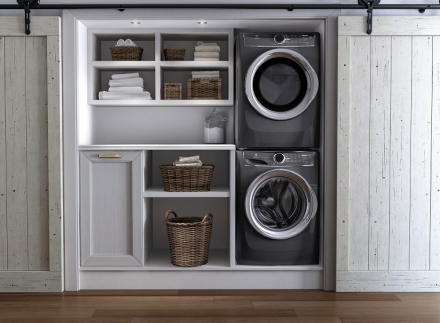
It’s also fairly standard practice to stack dryers on top of washers. Why? There are two main reasons. First, the washer is heavier, and this is especially true if it’s full of water. Second, it will be necessary to plumb a washer into the water supply and drain, which tends to be lower on the wall of your laundry room. Although installing a washer and dryer in the opposite configuration is possible, this is not advisable.

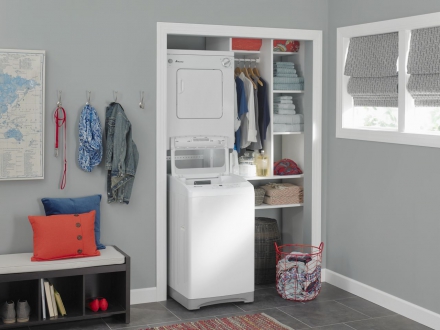
So, if you want two machines to wash and dry simultaneously, you will need a pair of front-loading models. To promote compatibility, they should be from the same manufacturer and product lineup. The alternative is to avoid using two models and use a combination washer/dryer with a top-load washer door. If you’re considering this route, please remember that the washer door may only open up to a 45º angle.

All front-loading laundry machines have the controls mounted on the front of the appliance. This is important because you will need ready access to the controls without trying to reach behind or on top. There are three different stable laundry units that you should consider using compatible machines. They are:

  • Compact Units: These are two laundry machines that are distinct from each other, but you want to connect them anyway. This is common when people buy a new machine and don’t want to get rid of the different model because it’s working well. The good news is that compact units are smaller, the dryer should be condensation-free, and there will be fewer choices to make. In this case, the best option is to buy a separate stacking kit for each machine to join them together.
  • Laundry Centers: These are washers, dryers, and stacking kits contained in a single unit. This guarantees compatibility out of the box, the owner’s manuals cover troubleshooting, and the process should be hassle-free.
  • Standard Front Load Machines: These are full-sized front-load washers and dryers that can be stacked side by side or on each other as required. They are typically bought separately, and compatibility is not guaranteed. Some research may be necessary, and a stacking kit will be a separate purchase, too. The usual rules apply: the dryer will be stacked on the washer.

Check the Space Requirements

It’s essential to carefully measure the space where you want to stack your dryer on top of your washer. Many people install their machines in an enclosed area or closet to best use the space. This is a great idea, but leaving at least a few inches on each side for ventilation and access is essential. There may be times when you need to pull the machines out to check a connector or hose. This can be extremely difficult if you cannot purchase on the machines’ sides.

Many people need to remember about the door. Make sure that the closet is sufficiently deep to accommodate the laundry machines. If it isn’t deep enough, you may find that you cannot close the closet door!

Are There Any Stacking Disadvantages?

Yes. The main problem is that some capacity may need to be sacrificed to make this configuration work. A regular load isn’t a problem, but if you plan to wash heavier items like bedding and blankets, there may be a problem. Another potential drawback is that if one of the compatible machines fails and you want to replace it, you have limited options. The new machine must be compatible with your remaining machine, or you won’t be able to stack it. This is a significant problem with laundry centers that can be difficult to deal with regarding repairs and replacements. In truth, aside from the space-saving aspects of stacking, there are no other significant advantages. If you have the space, installing the two machines alongside each other is better.

How Do I Stack Laundry Appliances?

The first step is to ensure the dryer can be stacked on the washer. A manufacturer’s product range usually has broad compatibility. However, it may be possible to stack two machines from different manufacturers. To check if the machines can be stacked, look for specific details in the user manuals for those models. This information can also be found on the manufacturers’ websites.

If you’re sure the laundry appliances can be stacked, you’ll need some physical way to do it. Stack kits for specific laundry appliances can usually be found at appliance retailers and online. A stacking kit comprises metal brackets used to securely and safely join the two appliances. These can represent a significant investment, but they take much guesswork out of the process and are easy to use.

For brevity, here are eight simple steps to stack your dryer on top of your washer:

  • Tools and Items: You will need the stacking kit, owner’s manual for both machines, a level, measuring table, screwdriver, adjustable wrench, adhesive foam pads, lifting straps, cardboard sheets, and a friend.
  • Check the Manual: Double-check that the two machines are compatible. This will determine whether you have the correct stacking kit.
  • Prepare the Space: Remember that the space needs to be deep enough for the machines; you need around 3 inches down the sides and 6 inches of clearance at the top.
  • Prepare the Appliances: Put the cardboard on the floor, place the dryer on it, lean it over carefully, and remove the foot screws with the wrench. Get the stacking feet from the kit and thread them onto the base of the dryer. Keep the legs safe; you may want to change the configuration later or sell the machine.
  • Positioning: Move the washer into position, leaving a couple of inches for stacking clothes, and ensure the appliance is level. Slide the dryer over on the cardboard sheet to protect the floor and stack it on top using foam pads. You will need two people for this stage and may want to use lifting straps, too. The front and sides of the dryer should be flush with the washer.
  • The Brackets and Clips: Now, you can attach the two appliances to prevent lateral movement when they are operating. All brackets and clips should be installed according to the instructions on the lower edges using the screwdriver. Some alignment may be required to get the fit right before the screws are fully tightened.
  • Make the Connections: Connect the water, gas, vent, and power and ensure that everything is tight before the stacked machines are carefully slid into their final position.
  • Testing: Run an empty washer and dryer cycle to ensure everything works typically. Watch for sudden movements or complex vibrations that indicate that the machines are not level or that the stacking kit wasn’t appropriately used.

Safety Considerations

Some people take a risk and place their dryer on top of the washer without using a stacking kit. This is a bad idea because dryers tend to sway as they operate, and it’s difficult for them to work off the top of the washer.

Ultimately, this may cause damage to both machines, which could be expensive to fix. In extreme cases, it may lead to an earlier-than-expected replacement, costing even more. However, installing built-in shelves to house the machines may not be the best option. The dryer could still move and fall, as we covered in the previous scenario. Also, going this route may cost more than a stacking kit, which would be safer and more secure.

In Conclusion

Choose a home appliance specialist if you’re looking for compatible front-load washers and dryers and the stacking kits to connect them. They can offer helpful advice on the best models to meet your needs and space requirements.


Laundry Room Essentials: Your Washer and Dryer Buying Guide

The laundry room is often an overlooked but essential space in our homes. It’s where the magic happens – the transformation of dirty clothes into fresh, clean ones. Whether you’re a seasoned homeowner looking to upgrade or a first-time buyer setting up your laundry room, selecting the right washer and dryer is crucial. In this comprehensive guide, we’ll explore everything you need to know to make an informed decision when buying a washer and dryer.

Assessing Your Laundry Room

Before diving into the world of washer and dryer options, let’s begin by understanding your laundry room’s space and requirements. Here are a few key factors to consider:

  • Room Size: Measure your laundry room to determine how much space is available for your appliances. This will help you decide on the size and type of washer and dryer that will fit comfortably.
  • Utility Connections: Check if your laundry room has the necessary utility connections, including water supply, drainage, and electricity. If not, you might need to budget for installation or choose ventless models.
  • Ventilation: Adequate ventilation is crucial to prevent moisture buildup and mold. Ensure your laundry room has proper ventilation options.

Types of Washers and Dryers

There are several types of washers and dryers available, each with its unique features and benefits. Let’s explore the most common options:

Washer Types:

  • Top-Load Washers: These are the traditional washers with a lid on top. They’re easy to load and are available in both agitator and high-efficiency models.
  • Front-Load Washers: Front-load washers are known for their efficiency and larger capacity. They use less water and have various wash cycle options.
  • Stackable Washers: Perfect for small laundry rooms, stackable washers save space by stacking the dryer on top of the washer.
  • Compact Washers: Ideal for tight spaces or apartments, compact washers are smaller in size but still pack a punch in terms of performance.

Dryer Types:

  • Electric Dryers: These dryers use electricity to generate heat and require a 240-volt power outlet. They are commonly found in most homes.
  • Gas Dryers: Gas dryers are more energy-efficient and cost-effective in the long run, but they require a natural gas connection.
  • Ventless/Condenser Dryers: Ventless dryers do not require an external vent for moisture removal, making them suitable for apartments and spaces with limited ventilation.

Features to Consider

When choosing your washer and dryer, several features can enhance the functionality and convenience of your laundry routine:

  • Capacity: Consider the size of your household and the amount of laundry you do. A larger family may require a washer and dryer with a higher capacity.
  • Energy Efficiency: Look for appliances with an ENERGY STAR certification to ensure they are energy-efficient, which can save you money in the long term.
  • Wash and Dry Cycles: The variety of wash and dry cycles can make your life easier. From delicate to heavy-duty cycles, having options ensures you can care for all your laundry needs.
  • Noise Level: Some washers and dryers can be noisy, so if your laundry room is close to living spaces, opt for quieter models.
  • Smart Features: Modern appliances often come with smart features, such as remote control and monitoring through smartphone apps, saving you time and effort.
  • Warranty: Ensure your appliances come with a warranty for peace of mind and protection against unexpected repairs.

Maintenance and Care

Maintenance and care are crucial aspects of ensuring the longevity, efficiency, and safety of your washer and dryer. Regularly attending to these tasks can prevent malfunctions, reduce the risk of breakdowns, and contribute to the overall performance of your laundry appliances. Let’s delve deeper into the maintenance and care practices for both washers and dryers:

Washer Maintenance and Care:

  • Clean the Lint Filter: Many modern washers come with a lint filter that should be cleaned after each use. This filter captures lint and debris from your clothes, preventing them from clogging the drain and causing drainage problems.
  • Inspect Hoses and Connections: Regularly check the water inlet and drain hoses for any signs of wear, cracks, or leaks. Ensure that all connections are tight and secure to prevent water leakage.
  • Use the Right Detergent: Different types of washers, especially high-efficiency models, may require specific detergents. Using the wrong detergent can create excessive suds and lead to poor cleaning or even damage the machine. Follow the manufacturer’s guidelines for the appropriate detergent.
  • Leave the Door Open: After each wash cycle, leave the washer door slightly ajar to allow air to circulate and prevent the growth of mold, mildew, and unpleasant odors.
  • Clean the Dispenser Drawers: If your washer has a detergent or fabric softener dispenser drawer, remove it and clean it regularly to prevent detergent residue buildup.
  • Inspect and Clean the Drum: Periodically check the drum for any foreign objects, like loose change or buttons, that might be causing damage. You can also run an empty hot water cycle with vinegar or a washer cleaner to remove any mineral buildup.

Dryer Maintenance and Care:

  • Clean the Lint Trap: Before or after every drying cycle, clean the lint trap or lint screen. A clogged lint screen can restrict airflow, reduce drying efficiency, and pose a fire hazard.
  • Inspect and Clean the Vent and Duct: Regularly check the dryer’s exhaust vent and duct for lint buildup. Accumulated lint is highly flammable and can lead to fires. Ensure that the vent is unobstructed, and clean it annually, at the very least.
  • Check for Unusual Noises and Vibrations: Pay attention to any strange sounds or excessive vibrations during operation. These could be early warning signs of a problem with the dryer’s motor, blower, or other components.
  • Regularly Replace the Dryer Belt: The dryer belt is responsible for rotating the drum. If it starts to wear or break, it can result in inefficient drying. Replace it if you notice any signs of wear or if the drum is not turning properly.
  • Keep the Area Around the Dryer Clear: Ensure there is sufficient space around the dryer for proper ventilation. Remove any items or debris that might obstruct airflow or create a fire hazard.
  • Inspect the Gas Line (Gas Dryers): If you have a gas dryer, inspect the gas line for leaks or damage. Gas leaks are dangerous and should be addressed immediately by a professional.

In addition to these maintenance and care practices, it’s a good idea to consult your washer and dryer’s user manual for manufacturer-specific guidelines. Following the recommended maintenance schedule and best practices will not only extend the lifespan of your appliances but also help them operate at peak performance, saving you energy and money in the long run. Regular maintenance also contributes to the safety of your laundry room, as it reduces the risk of fire hazards associated with lint buildup and gas leaks (in the case of gas dryers).

Installation and Setup

Proper installation is crucial for the safety and functionality of your washer and dryer. If you’re not experienced with such installations, it’s advisable to hire a professional. Here’s what you should consider:

  • Location: Choose a level, stable, and well-ventilated location for your appliances.
  • Utility Connections: Ensure water supply, drainage, electrical, and gas connections are correctly installed and meet local building codes.
  • Ventilation: Properly vent your dryer to the outside to prevent moisture buildup and potential fire hazards.
  • Stacking: If you have a stackable set, follow the manufacturer’s instructions for secure stacking.

Making the Final Decision

After assessing your laundry room, understanding the types of washers and dryers available, considering essential features, setting a budget, and knowing how to maintain your appliances, you’re now ready to make the final decision.

  • Research: Read reviews, ask for recommendations, and visit showrooms to see the appliances in action.
  • Compare: Create a list of your top choices and compare them based on capacity, features, and budget.
  • Check Dimensions: Double-check the dimensions to ensure the appliances will fit in your laundry room.
  • Retailer and Warranty: Choose a reputable retailer and inquire about the warranty terms.
  • Delivery and Installation: Discuss delivery and installation options, and make sure they can accommodate your schedule.

Final Thought

Selecting the right washer and dryer for your laundry room can significantly impact your daily life. By assessing your laundry room, understanding the different types and features, and following the budget and maintenance guidelines, you can make an informed decision that suits your needs and enhances the efficiency of your laundry routine. Now, go ahead, make your choice, and enjoy fresh, clean clothes with ease!

If you’re considering a new washer and dryer, you can explore your options with this online collection, or for further help or guidance, speak to a home appliance expert.

Tips for Saving Energy On Your Appliances During Winter

When winter arrives, many homeowners have concerns about their utility bills. Since you’re likely to spend more on heating your home, you may want to make savings elsewhere. So, here we have some tips for saving energy on your appliances during winter.

Refrigerator:

The simplest way to waste energy is to keep opening and closing your refrigerator door. Each time you open the door, cold air can escape, and your appliance will need to work a little harder to compensate for this.

The ideal solution for this is to have a glass door refrigerator or smart fridge with an interior camera. However, if this is not feasible, try to limit how often you open the door. Try to avoid browsing the contents with the door open. Instead, have a clear idea of what you need before you open the door.

Oven Range:

Rather than heating your entire oven to reheat any leftovers, use a microwave or toaster oven. These smaller countertop appliances use less energy than a conventional gas or electric range.

Additionally, if you’re cooking in the oven, look through the door to check on the progress of your dish. Use the oven light rather than opening the door. The internal temperature can drop by 25º each time that you open the door.

Washer:

While it may be tempting to just run a wash cycle with only a few items, this wastes water and energy. So, you should only wash full laundry loads. You can also save as much as $60 each year by washing your laundry in cold water. Although some laundry detergents are designed to work best with warm water, most modern products can perform just as well in cooler temperatures. Additionally, washing winter knits in cold temperatures can cause less fraying. So, your clothing will last longer.

Dryer:

In addition to saving energy, you can reduce the risk of a fire by cleaning the lint filter on your dryer regularly. It is also a good idea to check the tubing to ensure there isn’t an accumulation of lint. Run your vacuum cleaner nozzle down the tubing to clean out any stubborn particles.

If you want to save additional energy, try to air dry where possible. Use drying racks if you can’t hang your laundry outdoors due to adverse weather conditions.

Dishwasher:

Like your washer, you should only run your dishwasher if you have a full load. Many dishwasher models may feature a light load function, but this often still uses more water when compared to washing a similar number of dishes on a full load.

Another way to save water and energy is to avoid using “rinse hold” during the cycle. This feature can use as much as seven times more hot water per use. Additionally, avoid using a rinse precycle. This not only uses more water, but it can also compromise the detergent performance. Most modern detergents are designed to work with particles of food debris. So simply scrape your dishes before loading.

Finally, consider air drying your clean dishes rather than using a drying cycle. This can reduce the energy use of your dishwasher by 15 to 50 percent.

Watch Out For Energy Spikes:

While it is inevitable for your energy bills to increase over winter, be aware of any spikes in usage. These may indicate that one of your appliances is no longer operating efficiently. As appliances age, they need to work harder to perform correctly. This increases energy use. So, if your energy bills have increased more than expected and one of your kitchen appliances is getting to the end of its lifespan, it may be time for an upgrade.

If your kitchen appliances can no longer handle the demands of your household, you can explore your options with our online kitchen appliance collection. Alternatively, speak to one of our home appliance specialists for expert help and guidance.

Tips to Plan Your Perfect Laundry Room

Many of us find laundry a cumbersome and annoying task. In a busy family home, it can mean doing loads of laundry every day, and when you have your washer and dryer lurking in a basement or tucked away in a garage, you may dream of creating a laundry room. This can not only make your life easier, but could add to the value of your property. In fact, a National Association of Home Builders 2017 survey found that the number one on a list of most desired features for a new home is a dedicated laundry room. It was shown to be considered desirable or essential by 90 percent of the survey respondents. The National Association of Realtors has also found that a laundry room is high on the list of must-haves for millennials, who are now representing the largest proportion of home buyers. So, here we’ll explore some tips to plan your home’s perfect laundry room. 

Think Dual Purpose

In addition to being a convenient location for all your laundry related tasks, your new laundry room could also serve a second purpose as a mud room. This means that you can avoid knapsacks, shoes, jackets and muddy boots coming into your kitchen and living areas. For this sort of application, you will need a 6×12 foot area ideally, but it can be accomplished with as small a 5×8 footprint.

Test For Structurally Sound Locations

Before you make a final decision on the location of your new laundry room, you need to ensure that it is structurally sound. An engineer can help you to determine this, particularly if you want a laundry room on the first floor near your bedroom. You may also need help from an architect, who can help with any space planning concerns and the incorporation of any necessary mechanical changes to the design of an existing home.

Remember that floor joists must be able to support the additional weight of the washer and dryer, along with the associated vibrations. You will also need a clear path for venting, electrical, plumbing, and even gas lines.

Consider Noise

It is worth bearing in mind that even the most modern of washer and dryer models will still make some noise, so you need to think about whether this will interfere with the usual activities in certain areas of your home. For example, while it may seem like a great idea to have a laundry room near your bedroom, you may regret it if the spin cycle wakes your children after bedtime. Of course, you can add insulation to prevent noise from traveling to adjoining rooms and those above and below, but this will add to the costs of your renovation.

Plan For Waterproofing

One of the best ways to prevent leaks flooding the rest of your home is to create a curb across the threshold of your laundry room, install a floor drain and waterproof the floor area. Since the drain will typically be dry, you will also need a trap primer to divert a small amount of water from your supply line to keep the trap full and prevent nasty smells from rising into your home.

Choose the Right Appliances

Finally, you need to choose the best appliances for your new laundry room. To minimize vibrations, you’ll need to ensure that your appliances are level and you may want to consider stack-ability to maximize space. It is also a good idea to look for efficient, low noise appliances that can offer excellent performance. Just remember that while you need a loud chime when your washer is in the basement, it can be annoying next to your bedroom or near your living area. So, look for models that allow the audible alerts to be turned down or off.

If you’re considering installing or upgrading your laundry room, you can explore your options with this online washer and dryer collection, or speak to a home appliance professional for more specialist and expert help.

Do You Have Bad Laundry Habits?

While you may not have given it much thought, many of us have some bad laundry habits. These seemingly minor issues may be costing you money for new clothes, washing machine repairs and even higher bills. Breaking these habits can be simple, and here we have some tips to help you get started with better habits today.

Too Much Laundry Detergent

There is an assumption that more detergent means that you’ll get cleaner clothes, but this isn’t always the case. While not using enough detergent can leave your wash less than fresh, using too much can cause a residue to be left on your clothing creating a dull look. Excessive amounts of suds can also cause damage to the pump and drain on your washing machine. So, it’s important to use the right amount of the right laundry detergent. Use the recommended amounts listed on your detergent bottle and check you’re using the right product for your washing machine.

Leaving Your Wet Clothes Lingering

As soon as your load finishes washing, it is important to transfer it into your dryer. Although it is easy to forget about a laundry load, in only 8 to 12 hours, mildew and mold can start to develop on your clean clothes. This will turn a fresh load of laundry into a smelly mess overnight. If you have a load of towels or clothing slip your mind, you’ll need to rewash them, and if there is a lingering sour smell, you should add a cup of white vinegar to the load with your normal detergent.

Tossing Clean Clothing in a Laundry Basket

If you’re in the habit of simply tossing your clean clothing in your laundry basket, you are creating far more work for yourself. If you don’t hang or fold your items straight away, they’ll end up wrinkly and in need of a really good iron. If you pull your items out of the dryer and fold or hang them while they’re still warm, they’re less likely to look wrinkled, and you can avoid standing for hours of ironing.

Overloading Your Washing Machine

Whether you’re behind on your laundry or simply want to try and get your chores done a little quicker, you may be tempted to cram extra clothes into your washing machine. Some people even believe that they are conserving water or energy, but this is not the case. In fact, overloading your washing machine causes the appliance to work harder and may contribute to a breakdown. Additionally, since there is less room in the drum for the water to circulate and the detergent to agitate, you are likely to find that your clothing doesn’t come out as clean as you would like. This means that you’ll be forced to wash them again anyway. So, it is far better to adhere to the load limits detailed by the manufacturer in your user’s manual to achieve the best results.

Not Zipping Up

The metal teeth of zippers can easily snag on your delicate items and cause damage. So, develop a new habit of ensuring that any zippers on your clothing are all the way up before they go in the wash. As an aside, this does not apply for buttons, as leaving buttons fastened on shirts and pants can actually create stress on the button and could cause them to pop off.

Putting All Your Items in The Dryer

While using a dryer is the fastest option it can also cause premature wear on clothing. Jeans and towels can benefit from always being put in the dryer as they won’t go crispy, but everything else should be hung dry where possible. You should also pay close attention to the clothing care labels and never put anything that says “line dry” in your dryer.

If you’re looking for more efficient laundry appliances, you can explore your options with this online collection or contact a home appliance expert for a more specialized service.

How To Raise The Height of Your Laundry Appliances

Your laundry space serves as “mission control” for the modern home, and requires the proper layout for maximum efficiency. Depending on your unique needs and the size of your home, it may be a smart idea to raise your laundry appliances above their standard height.

Homeowners typically want to raise the height of their laundry units for one of two reasons. They either want easier access to front load units, or want to stack their appliances to save space. To help you meet these goals, we’ve gathered some information on two beneficial laundry accessories that will allow you to raise your laundry appliances.

Laundry Pedestals

If you like to have your front load washer and dryer side-by-side, but want easier access to your appliances, then you may want to invest in a laundry pedestal.

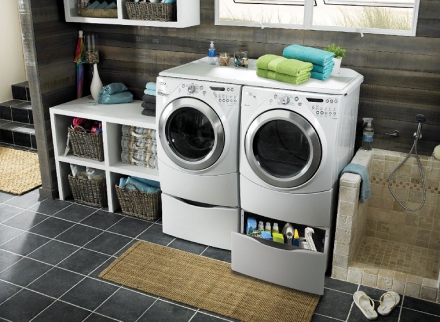
These useful laundry accessories can be placed below a washer or dryer to raise the height of the appliance. The additional height is ideal for front load laundry units, which offer quality washing and drying functions, but force you to bend down to load and unload the machine. Thanks to a laundry pedestal, you won’t have to bend down nearly as far. Moreover, many pedestals feature a spacious storage drawer designed to hold laundry essentials like detergent, bleach, fabric softener and more.

An effective laundry pedestal will give your laundry units the boost of height you need while helping your laundry space stay organized. It’s worth remembering, however, that these add-ons are not designed to help you save a significant amount of space in the laundry room.

Laundry Stack Kits

Should saving space be your top priority, you’ll definitely want to consider purchasing a laundry stack kit.

Stack kits are metal brackets sold separately from you laundry units that allow you to place your dryer on top of your washer, creating additional floor space in your laundry room for other cleaning tools or appliances. The vertical orientation provided by a stack kit can also help you install laundry machines in areas other than a laundry room, like inside a closet or alongside appliances in your kitchen.

While these units do not offer the built-in storage possibilities of a laundry pedestal, they will still help you raise your laundry units to a comfortable height that actually saves you space. Should you choose to invest in a stack kit, you need to check the model numbers on your washer and dryer to ensure you purchase a compatible kit.

High Quality Laundry Accessories for Every Home

Every home requires a different layout for its laundry appliances, and there are a host of helpful laundry accessories that are sure to satisfy your needs. If you want to raise the height of your unit’s and promote exceptional organization, laundry pedestals are a great investment. Meanwhile, should you need extra height for space-saving purposes, you’ll definitely want to invest in a laundry stack kit.

Are you looking for a new laundry pedestal or stack kit? Explore your options using this online collection of laundry accessories, or contact a home appliance expert for specialized service.

Which Type of Dryer is Right for Your Home?

The laundry room is the command center of the contemporary living space, providing your home with a steady supply of clean clothes, bedding, towels, and more. There are various types of washers to start your laundry process and you can’t get the job done without a powerful dryer.

Today’s dryers come with a host of advanced functions and innovative features that ensure your items are ready for use after each dry cycle, but finding the right dryer for your laundry room can be tough. There are two common types of dryers — gas and electric — each with their own advantages and disadvantages. To help you decide which type of dryer is right for your home, we’ve gathered some helpful information on both gas dryers and electric dryers.

Gas Dryers

Gas dryers have been popular models for decades, as they offer high heat levels and fast spin speeds that provide the exact results many homeowners require.

Gas dryers use a dedicated gas line as a power source, and as a result heat up quickly and dry items faster than their electric counterparts. These fast cycles make the unit more energy efficient and help the dryer treat fabrics more gently. Generally speaking, gas dryers are also less expensive to operate than electric models, though this will ultimately depend on the cost of utilities in your area.

If strong heat and fast cycles are your top priorities, then a gas dryer is an excellent choice. However, these appliances also come with a few drawbacks. On average, gas dryers come at a higher cost than electric dryers. These units also need to be vented to the exterior for proper heat management, meaning you may have to invest in a vent kit for your appliance. Moreover, the gas connections that these units require can make them difficult to install, often requiring professional service for proper installation. If your laundry space does not have a proper gas line, then you won’t be able to add one of these units to your home.

Electric Dryers

 Electric dryers tend to be the more popular type of dryer nationwide (in California Gas Dryers are the best sellers however), with a broad range of models available from a host of premium appliance brands.

Electric dryers draw power from a 240-volt outlet, which can be found in most laundry spaces. If your space does not have the proper outlet, you can easily add a 240-volt converter to the room. As a result, these appliances are easier to install than gas models. In fact, some electric dryers do not need to be vented to the exterior, making them the ideal choice for spaces where venting is impossible. Best of all, electric models tend to be less expensive than gas units, offering a wider selection for budget-conscious homeowners.

Modern electric dryers are easy to install and offer all the dry cycles you need for a fair cost, but come with a few minor disadvantages. These models typically heat up more slowly and take slightly longer to dry items than a gas dryer, using more energy in the process. As a result, an electric dryer may cost more to operate than a gas dryer, though in the end this depends on the cost of utilities in your area.

Find The Right Dryer For Your Laundry Room Today

The modern home simply isn’t complete without its own dryer. While gas dryers and electric dryers each have their advantages and disadvantages, the best dryer for your home is ultimately the one that meets your budget, your needs and your location in the country. Armed with some basic knowledge on the two common types of dryers, you’ll be in the perfect position to make an informed decision.

Ready to find the perfect new dryer for your home? Consider beginning your search with this online collection of dryers. For additional help, be sure to contact a home appliance expert.

Which Type Of Washer/Dryer Combo Is Right For Your Home?

The contemporary laundry room is more than just a space to wash clothes. The laundry room provides comfort and convenience to your entire home thanks to its advanced and intuitive appliances and tools that allow you to prepare clothing, bedding, towels, and other items for everyday use. Though many homes feature separate washer and dryer appliances, a washer/dryer combination unit is a worthy alternative that will bring added convenience to your home.

Washer/dryer combos come in two common styles — stacked washer/dryer combos, and all-in-one washer dryer combos. Deciding which type is best for your home can be a challenge, which is why we’ve crafted an overview on both types of washer/dryer combos.

Stacked Washer/Dryer Combo

Most common washer/dryer combinations are stacked combos. These units feature a dryer stacked on top of a washer, and are ideal if you’re looking for classic laundry appliance features at a great value. By stacking appliances vertically, you have additional space to store other laundry tools like ironing boards, clothing baskets, and cleaning supplies. These combos are also great for small homes or apartments where the floor space required for traditional appliances is limited.

Stacked washer/dryer combos typically come in traditional styles and designs, and may not offer the highly advanced features expected from luxury laundry appliances. However, these units still offer the power you need to wash and dry items, with many boasting simplified controls that make the laundry process easy.

You can explore a range of stacked units in this collection of washer/dryer combo appliances.

All-In-One Washer/Dryer Combo

The traditional laundry room features either separate or stacked washer and dryer appliances. But for exceptional style and advanced functionality, you may want to invest in an all-in-one washer/dryer combo. These unique appliances combine the features of a washer and dryer in one unit, bringing unparalleled convenience to the laundry process while helping you save floor space.

All-in-one combos are luxury appliances, and because of that come with an array of advanced features that can complete laundry as well or better than many traditional machines. These appliances also offer exceptional convenience, as you can complete wash and dry cycles back-to-back without having to move your laundry to another machine. You can also complete wash or dry cycles separately if needed.

All-in-one units utilize a ventless drying system, which means they can be installed almost anywhere. Best of all, all-in-one washer/dryer combos tend to be more stylish than their stacked counterparts, bringing a modern aesthetic to your laundry room.

Interested in an all-in-one washer/dryer combo? Check out this online collection of appliances to begin your search.

Which Washer/Dryer Combo Is Better?

Stacked washer/dryer combos and all-in-one combos are both great appliances, and the “better” appliance is ultimately the one that meets your specific style preferences and needs.

Stacked washer/dryer combos are more traditional appliances, and often feature an array of basic functions and exceptional ease of use. These units may not be the most stylish, but they offer all the functions you need in a space-saving design that simplifies the laundry process.

All-in-one washer/dryer combos also help save space, but feature more advanced and innovative technology that places all your required laundry functions in one appliance. These machines are truly luxury units, offering all the style and advanced functions you would expect from a premium appliance. Those features may come at a high price point, but that price is often more than worth it.

Exceptional Washer/Dryer Combination Units For The Modern Home

The modern home is not complete without exceptional laundry appliances, and a washer/dryer combination unit is a great addition to any laundry room. Whether you choose a stacked washer/dryer combo or an all-in-one appliance, you’re sure to find an impressive choice for your home.

For a host of premium washer/dyer combos, be sure to visit this online collection of laundry appliances.