How to Clean Grease from Stainless Steel Surfaces

In recent years, stainless steel has become the most appliance choice. This is understandable, stainless steel surfaces look great, and they’re durable. But, certain appliances, including ranges and cooktops can have a grease buildup with frequent use. In this article, we will show you how to remove grease from stainless steel surfaces.

Washing with Soap and Water

Many liquid dish soap products are marketed as being tough on grease formations. They can be effective on light grease buildup and using dish soap should be tried first before you resort to other solutions. Mix a little dish soap in a bucket of warm water to create a bubbly cleaning mixture. Get a soft and clean microfiber cloth or a non-abrasive sponge and dip it in the cleaning water. Use the moistened cloth or sponge and scrub the stainless steel gently in the direction of the grain. This may be repeated a few times with a fresh sponge or cloth to get the surface clean. A nylon scrub brush can be used on areas that have caked-on grease deposits. When the grease is removed, use a clean and fresh cloth to rinse the surface with warm water and dry the surface with a towel.

Cleaning with Baking Soda and Vinegar

If you search for homemade cleaning solutions, you will discover that most of these cleaning recipes contain baking soda and vinegar. They are effective cleaners, deodorizing agents and they are kind on stainless steel surfaces. Combine equal parts baking soda and clean water in a bowl to form a thick paste. Use a soft cloth or spoon to apply this cleaning paste to the greasy areas. After 15 minutes scrub the stain with a soft nylon brush, and you must scrub in the direction of the stainless steel grain. Then, rinse the surface with clean water and examine the surface. If there are still grease deposits, apply some white vinegar to the remaining baking soda deposits. This will cause a gentle chemical cleaning reaction that will make the surface fizz. Brush the area clean, and you should have a clean and grease free stainless steel surface.

Baby Oil Restoration

There may be times when cleaning simply doesn’t remove stubborn grease stains. This can diminish the shine, but it may be possible to remove the stain with baby oil. Baby oil can dilute the oil deposits that form most of the grease stain which breaks it down for cleaning. The baby oil can be applied to the surface with a soft and dry microfiber cloth. The affected areas should be buffed in the direction of the grain, and this can be repeated multiple times as required. When you’re done, buff the oil with a fresh clean cloth to remove the residue. If you don’t have baby oil, it is possible to get similar results with mineral or olive oil.

Commercial Degreasers

If the DIY grease cleaning solutions shown above don’t work or you don’t have time to try them, there are widely available commercial degreaser products to try. When you choose a degreaser, check the label carefully to ensure that it will work with stainless steel. Certain cleaners and degreasers are designed for clear-coated steel, and other products work better on raw metal surfaces. A degreaser that’s formulated for stain steel is the best option and the manufacturer’s instructions should be followed carefully.

If you’re thinking about a new stainless steel appliance, explore your options with our online collection or for further guidance speak to a home appliance expert.

4 Steps to Clean and Sanitize a Washing Machine

We rely on our washing machines to clean our fabric items, and most people believe that this process keeps the appliance clean too. This is incorrect; a washing machine requires periodic cleaning after every 30 washes to maintain performance and efficiency. If you’ve noticed that your fabrics are not smelling fresh anymore, this can be caused by a buildup of bacteria, grime, and mold inside the appliance. Regular cleaning can prevent and correct these problems, and that will be the focus of this article.

Gather the Cleaning Supplies

The cleaning methods that you choose and the products that you choose for the task may vary depending on whether you have a front load or top load model. To ensure that you’re cleaning the appliance correctly, consult the owner’s manual for your specific washing machine. This will have helpful tips on how to clean the washing safely and efficiently. That said, there are certain items that you will need: a damp cloth, an all purpose cleaner, liquid chlorine bleach, and an Affresh tablet.

Affresh contains sodium percarbonate, which is better known as “Oxygen Bleach” or an “Oxygen-based Bleach,” and it contains no chlorine. If you prefer to use an alternative, you can clean and sanitize with liquid chlorine bleach or a homemade baking soda and white vinegar combination. But, you must choose one approach only; you cannot use bleach and vinegar together because they form chlorine gas which is dangerous to inhale.

4 Steps to Thoroughly Clean the Appliance

When you’re ready to start cleaning, there are four easy steps to follow in order:

Step 1: Cleaning the Washer Tub

Remove any items from the washer tub, and add the affresh table or your chosen alternative to the bottom. Take care; if you’re using a liquid chlorine bleach, check the owner’s manual first because it shouldn’t be used with certain front load washing machines. When you’re ready to continue, close the door, select the cleaning cycle and start the machine. If you’re cleaning a top load model, you will need to run an additional rinse and spin cycle to clean away excess cleaning products that may be lingering in the machine. If you’re performing a deeper clean, consider removing, washing, and replacing the agitator before you run the wash cycle. When the wash cycle finishes, leave the door open and let the washer tub dry naturally.

Step 2: Cleaning Detergent Dispensers

The detergent draw may be removable, but this will vary depending on the model, and full removal instructions can be found in the owner’s manual. If you can’t remove the detergent drawer, you will have to clean it in place and fully extend it. Apply the all-purpose cleaner, rub it into the surfaces with a damp cloth and dry it with a clean towel. Some detergent drawers are dishwasher safe, but many are not, and this should be confirmed before you consider cleaning the drawer in the dishwasher.

Step 3: Clean the Washer Door

Open the door or lid and wipe the surface with a damp cloth. Front load washers have a rubber door seal that can be lifted, and you can wipe under there too. Washing these surfaces with warm water reduces detergent build up and the soiling process is slowed.

Step 4: Clean the External Surfaces

Use a mild cleaner or soap to sponge down the exterior of the washing machine. This cleans away any unsightly spills and drips that can become grubby and dirty over time. Congratulations, your washing machine is now clean and ready for the next laundry load.

If you’re considering a new washing machine, you can explore your options with this online collection, or for further help or guidance, speak to a home appliance expert.


5 Common Washing Machine Cycles Explained

A washing machine cycle is the set of instructions that the appliance used to wash our clothes and other fabric items. The cycles are typically organized as a wash, followed by a rinse, and a final rinse, based on the type of clothes, colors, fabrics, and other factors. Having a good understanding of how the washing cycles work is important to safeguard your clothes, linens, and the washing machine. In this article, we will take a closer look at five common washing machine cycles.

1.  Delicates

This is a gentle cycle designed to emulate the handwashing process using cold or warm water with little to no spinning. It’s usually the shortest cycle to select and if your machine defaults to warm water we recommend that you use cold water instead. Use this cycle to wash items, such as lace, silk, lingerie, knits, cashmere, faux fur, and other items that are prone to stretching. As an extra precaution, bundle items in a mesh bag to keep them safe during the delicate wash cycle.

2.  Normal

This is the default cycle; it tends to be a lengthy program with high agitation to get everyday items clean. Most modern washing machines allow you to select the water temperature that you want to use based on the type of load. Choose hotter temperatures for whites and cool or cold water for other colors. Add a fabric conditioner for softening or a capful of all-purpose bleach to brighten dull white fabrics. The normal cycle is best used for items such as T-shirts, socks, underwear, sheets, towels, and durable synthetic items.

3.  Quick Wash

As the name suggests, this is the fastest wash cycle, and it’s the most energy efficient option. A quick wash tends to take 30 minutes; it’s a fast way to clean lightly soiled clothes and fabrics that are not smelly or heavily soiled. A short wash cycle is followed by a high-speed spinning cycle, and this speeds up the drying times. A quick wash is not suitable for delicate items, such as lingerie, silk, woolens, embellished, and embroidered fabrics.

4.  Permanent Press

This cycle was created back in the 40s to wash synthetic, wrinkle-free, and wash and wear items that were in vogue at the time. This is a shorter cycle than the normal program, and it uses warm water combined with a lower spin. This is a rarely used cycle; most people are adequately served by the normal and delicate cycles above.

5.  Other Less Used Cycles

Some washing machines have additional cycles, including: “Whitest Whites,” “Heavy Duty,” and more. Selecting these settings with one of the cycles shown above will intensify those cycles in a specific way. This can include a presoak, larger volumes of water, and other characteristics to wash heavily soiled items. The intensity of these settings can vary a great deal, and it’s important to read the owner’s manual for your machine before you choose them.

Temperature Selection

Now that you understand the purpose of the wash cycles, let’s take a quick look at temperature selection. The washing machine temperature dials have a pair of temperatures, the first refers to the water used for washing, and the second is the rinsing water temperature as follows:

  • Hot-Cold: Hot cleaning, Cold rinsing.
  • Warm-Cold: Warm cleaning, Cold rinsing.
  • Cold-Cold: Cold cleaning, Cold rinsing.

Pretreating Stains

Color-rich stains can be pretreated with a stain solution product, or you can use a wash and stain bar if the stain is oil-based. Soak the items in warm or cool water, depending on the fabric that you’re treating. A 30 minute soak should be sufficient for heavily soiled items. All white fabrics, such as linen or cotton, should be soaked with whites detergent or an all-purpose bleach alternative.

If you’re considering a new washing machine purchase, you can explore your options with this online collection, or for further help or guidance, speak to a home appliance expert.

How Does a Washing Machine Hand Wash Cycle Work?

Washing clothes by hand is a laborious process, and thanks to the invention of washing machines, we don’t need to set an entire day aside to wash our clothes and other items. But, certain items are more delicate; they require a lighter touch when they’re washed and for many years this meant that hand washing was still necessary. But, the manufacturers noticed this trend, and they have implemented hand washing cycles on their latest washing machines. These cycles are meant to replicate the less rigorous hand washing process to reduce the potential for damage to sensitive items. In this article, we will take a closer look at how this works.

What Does Hand Wash Mean?

Some materials can be damaged by exposure to high temperatures, chemicals found in detergents, excessive agitation, and more. This can be seen on the labels of such items, which are usually marked as “Hand Wash Only.” This informs the consumer that these items need special attention and care during the washing process. This phenomenon can be traced back to the earliest washing machines that were too aggressive for woven, knitted, and delicate fabrics. Many modern machines now have hand wash cycles that mimic the hand washing process, but they are not perfect.

A Brief Washing Machine Primer

Washing machines can be divided into two very broad categories: front loading and top loading. These terms refer to how you load clothes into the machine and whether that washing machine uses an agitator. Some top loading machines use agitators, but all front loading models don’t have one.

People like front loading machines because they take up less space, they can accommodate bulky loads, and they are easy to stack with a dryer. Many people choose top loaders because they are less complex and they can handle smaller loads easily. But, anyone that has worked in a laundrette can tell you that an agitator is the best solution for heavy-duty cleaning. A hand washing cycle on both washing machine types is designed to simulate the lower levels of disturbance to clean delicate items without causing damage.

The Hand Wash Cycle

Depending on the washing machine that you have, this could be referred to as the “Hand Wash” or the more common terms are “Delicate” or “Gentle.” The exact settings that manufacturers use will vary, but the intensity of the cycle tends to be lower, and the water is usually warm rather than hot. Depending on the manufacturer, there may be a gentle spin cycle, but this may cause stretching on certain fabrics. Always check the label carefully, and if it explicitly states that the item shouldn’t undergo a spin cycle, skip it. Using a washing machine on a gentle cycle works best for the following items: modern synthetic blends, small wool items, and bulky non-vintage items. Avoid using stain removers, a small drop of detergent should work well, and you don’t need to apply chemicals to the surface. If you’re washing smaller delicates, place them in a mesh bag to prevent tangling with other items.

When to Hand Wash

There is still a place for traditional hand washing for specific fabrics and items of clothing: heavily embroidered, intricately woven fabrics, garments that are vulnerable to stretching, and vintage clothes. When you wash these items, follow the instructions carefully, and if you’re not sure how to proceed, look for specific advice online.

If you’re considering a new washing machine, you can explore your options with this online collection, or for further help or guidance, speak to a home appliance expert.


A Brief Guide to Appliance Sizes

Modern appliances are at the heart of the kitchen and they have a huge effect on how we live our lives. There are many makes and models of every appliance type, but they need to be placed in a location that can accommodate them. When you design a new kitchen, the appliances may be the last thing on your mind. This is a mistake, it’s important to make the layout of the kitchen around your new or existing appliances. An appliance specialist can help you if they are involved at an early stage. If you’re determined to go it alone, here are three appliance types and sizes to consider.

1.  Refrigerators

Modern refrigerators may have a host of useful features including door-in-door access, built-in thermometers, digital cameras and more. But, they are complex and they are available in a wide variety of styles and sizes. The more common widths are: 36”, 42” and 48”. Some suburban kitchens have narrower 36” models and a freestanding refrigerator needs a 72” tall opening for installation. If the refrigerator is built-in, the space requirements increase to an 84” tall opening. Refrigerators and freezers may be separate purchases which come in a broader size range, the widths, are: 10”, 24”, 30” and 36·. A popular combination is a 36” wide refrigerator next to a 24” wide freezer. There are also wine column refrigerators that come in 18” and 24” widths.

2.  Dishwashers

The width of a standard dishwasher is 24”, but larger homes may have a second machine for extra convenience and flexibility. This is especially true if people want to avoid an extra trip to the kitchen from a pool or bar area. In this case, an additional slimline dishwasher with a width of 18” or a dishwasher drawer may be the solution. Most full-size dishwashers have a height of 35”, but ADA models are 34” high and they can be raised or lowered to fit easily under the countertops. A key factor with dishwashers is the depth which must be carefully considered to accommodate the hoses. Most European made models have flush fit because the sleek style is an essential aspect of their design. Most American made models protrude slightly from the cabinets if the dimensions are not factored into the kitchen design. Another option is a panel that blends the dishwasher into the cabinetry and the maximum depth for this is 23⅙”. When a standard dishwasher door is fully open it will extend 27” into the kitchen and this is important if you want to avoid blocking foot traffic.

3.  A Washer and Dryer

Both washers and dryers come in a wide variety of sizes to accommodate homes with different needs. A 24” wide washer is considered to be a compact model and these are an ideal fit for smaller apartments. They are flexible, they require no venting and they can be installed under the kitchen counter, in a closet, a bathroom or behind a mudroom cabinet. The 27” wide front load washers are considered to be standard size and they are typically mounted on a pedestal draw for extra storage and easier use. The larger washers have a width of 30” and there are fewer models at this price point. These washers are harder to install and they are overkill unless you have a very large family or you like to wash rugs.

In Conclusion

Taking extra care and measuring twice is the key to success if you’re in the market for new appliances. Even if you have the available space, make sure that they will fit through the principal entryway and other points that need to be negotiated to install the appliance.

If you’re searching for new appliances, you can explore your options with our online collections or further guidance and help, speak to a home appliance specialist.

Which is the Best Washer Choice? Agitator vs. Impeller

When it’s time to upgrade to a new top-loading washer, the first choice you need to make is between the two different styles, agitator and impeller. They both move the washing load and get the clothes clean, but they work in very different ways. Understanding the similarities and differences will help you to make a more informed purchasing decision. Let’s take a look at agitator and impeller washer characteristics in more detail.

How Do These Washers Clean?

The more common washer style uses an agitator, they are tried and tested and they still work well to this day. An agitator washer can tackle tough laundry loads without causing damage to the fabrics. A traditional agitator washer will have a centrally located tall spindle that twists back and forth to move the laundry load. This action breaks the dirt particulates apart to make the washing process more effective.

An impeller washer works in a different way. They have low-profile discs or cones that spin to rub the fabrics against each other for efficient cleaning. One of the main advantages of an impeller approach is that less water and motion are needed to get the laundry clean. The unit is designed to create extra room to promote more movement to increase the level of friction between the clothes. This results in a thorough and more gentle cleaning process that uses less water and energy.

Agitator vs. Impeller Washer: Which is Best?

This is a hard question to answer because although we all want clean laundry loads, we may have certain requirements. Comparing the cleaning power and wash action of these two washing methods is necessary to make a decision that’s right for your home. Let’s take a look at the key features in more detail, they are:

5 Key Agitator Washer Features

  1. The overall washing cycle times are shorter which lowers the energy requirements.
  2. The clothes are soaked with water that’s recycled from the wash and rinse cycle which reduces the volume of water needed.
  3. This is tried and tested technology that most people are familiar with already.
  4. The friction between the fabrics breaks down dirt and stains for effective cleaning.
  5. The entire wash basket rotates to create significant cleaning action.

5 Key Impeller Washer Features

  1. The extra room in the wash basket makes it easier to load and unload bulky articles.
  2. The fabrics are rubbed together gently for thorough cleaning.
  3. The rotating action of the wash basket can give your laundry a deeper clean.
  4. The drying times tend to be much shorter.
  5. The clothes are soaked with recirculated water from the wash and rinse cycle.

Making a Final Purchasing Decision

Now that we’ve made a direct comparison, it’s easier to see the similarities and differences. Both washer types have all the modern features that you would expect and they can both get you through a tough laundry day. But, which type of washer would be the best fit for your lifestyle?

Both washer types can clean tough stains, sanitize workout clothes, and get your whites clean and bright. The exact model that you choose may be based on the features, such as the size, load capacity, water usage, energy efficiency, and more. Personal preference and your unique lifestyle will be the final determining factor. Don’t be fooled by the hype, both types of washers will get the job done, but there will be a brand or model that’s ideally suited to your needs.

If you want to upgrade your washer, you can browse our online collection or speak to one of our home appliance specialists.

4 Common Refrigerator Configurations Explained

Selecting the right refrigerator for your home is tricky because there are many options. There are brands, models, configurations, and extras to consider, and most people tend to focus on the bells and whistles. The first thing to think about is the size and configuration of the appliance to ensure that it fits and that it meets your food storage needs. In this brief guide, we will look at the four main refrigerator configurations in more detail to help you make an informed purchasing decision.

Refrigerator Basics

Before we begin, it’s important to note that the refrigerator types can be broadly classified by the door configurations. Some of these designs are tried and tested, and others are newer and up-to-date. The configuration of the refrigerator can affect many other aspects of the appliance, including storage space, energy consumption, ease of access, the footprint, and extra features. Let’s examine them in more detail:

1.  Top Freezer Refrigerators

These are the oldest and most recognizable examples of a combined refrigerator and freezer appliance. As the name suggests, the freezer is located in a smaller compartment above the refrigerator. These appliances are usually under 69” in height, and they tend to be less expensive than other models. The main drawback with these models is that the freezer may be too high for some users and the storage options in the refrigerator are basic.

2.  Bottom Freezer Refrigerators

This model has a freezer installed under the refrigerator with two or three drawers. These are more modern than top freezer models, and the slide out drawers improve the storage of frozen foods. The space in the refrigerator is easy to access because all food items are between eye or waist height. The main drawback is that users need to bend or squat down to access the lower freezer drawers.

3.  Side-by-Side Refrigerators

These refrigerators have become more popular in the last decade, and that trend is set to continue. There are a pair of doors with the refrigerator on one side and the freezer on the opposite side. The freezer is usually located on the left side, but take care, this is not always the case. The refrigerators tend to be less expensive than the French door models that we will cover next. But, the capacity is a little lower, and you may need to reach around other food items to reach items at the back. Models with a higher storage volume are easier to use, but they cost more than standard size appliances.

4.  French Door Refrigerators

A French door refrigerator has two doors, but the refrigerator double doors are on top, and the freezer is underneath with pull out drawers. These appliances have become the default purchase for people looking for a high-end appliance with a luxury aesthetic appeal. They do give a kitchen an ultramodern look, but taller people have to stoop to reach the lower freezer drawers. These appliances have all the latest features and plenty of storage to feed larger families.

In Conclusion

Before you make a final commitment to buy a new refrigerator/freezer, it’s important to measure the access points and the location twice. Many people buy appliances that they cannot get into their home and that don’t fit the available space. It’s also important to match the appliance to your existing kitchen decor unless you’re planning a remodel. The general style and finish should complement the style, handles, finish, and other appliances in your kitchen.

If you’re considering a new refrigerator-freezer, you can explore our online collection, or for further help, you can speak to a home appliance expert.

One Simple Hack that Can Revolutionize Your Refrigerator Storage

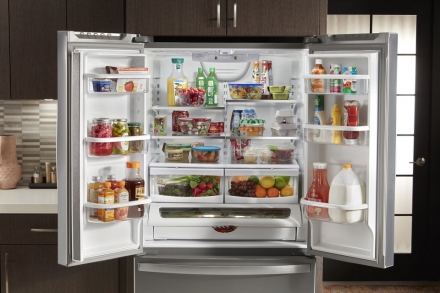
A bold claim? Possibly, but let’s face it, most people don’t have much control over the contents of their refrigerators. The contents may lurch from full to empty with no middle ground until shopping day arrives and the full space is not utilized properly. Proper airflow must be maintained with a space of ½” between food items to prevent cross contamination. But this can be tricky to achieve when you’re managing a busy refrigerator. In this article, we will look at one simple hack that may help.

Refrigerator Food Storage Basics

The optimal temperature for a refrigerator is 35-38ºF, and the areas should be split into zones to improve storage. All raw meat and dairy food items should be restricted to the lower shelves to prevent cross-contamination. Prepared foods, fruits, and vegetables should be stored on upper shelves which have minor temperature variations. The door shelves should be used to store foods that have a virtually unlimited shelf life and that need to be cold, including cans of soda, condiments, sauces, pickle jars, and more. But, there is one hack that can make these storage rules even more efficient.

Using Storage Bins in the Refrigerator

There may be dedicated storage bins built into the refrigerator that are designed for fruits or vegetables, or other food items. These should be used, but there is an opportunity to use storage bins to store items neatly on the other shelves. These are the same storage bins that many people use to store food in a pantry, and they work equally well in the refrigerator.

This is an underused and misunderstood refrigerator hack that is easy to get wrong. The basic rules of refrigerator food storage still apply, but on those shelves, the food items can be placed in storage bins. Specific categories can be created for each bin, and they can be labeled clearly for easy identification. It’s even possible to create an inventory for each storage bin to avoid food spoilage and to lower the food bills. As an example: a kid’s snack bin will prevent the kids from disrupting other areas in the refrigerator.

The secret sauce in this hack is that storage bins are stackable, and this can help you to take full advantage of your refrigerator space. Going vertical will improve access in the same way that many use storage bins in their pantries. There are various storage bin sizes and shapes that you can purchase to customize the storage options in your refrigerator. These bins will prevent spills and drips that can spread bacteria to other food items on a shelf. The storage bin is easier to clean quickly; simply remove the items, clean the bin, replace the items and you’re done. A spray bottle filled with a bleach solution in a ratio of one tablespoon of unscented bleach to a gallon of water is an effective disinfectant.

The only real drawback is that the storage bins will need regular cleaning at the same time as the shelves. It’s recommended that a deep refrigerator cleaning occurs every three months to maintain and promote cleanliness. An open container of baking soda can make the spaces fresher, but this should be replaced during the deep cleaning. Double-walled shelves should not be submerged in water to prevent the trapping of water in between the glass walls. Trapped water is an ideal growth medium for mold, which will degrade the health and cleanliness of the refrigerator.

If you’re considering a new refrigerator or freezer, you can explore your options through our online collection or for further guidance, speak to a home appliance specialist.

What is the Best Way to Clean an Electric Cooktop?

An electric cooktop is an attractive option for many people because it has a contemporary look, it’s simple to use, and easy to clean. But, for people that have previously used a gas stovetop, it can be a culture shock to be presented with a smooth cooktop surface. There are no gas burners to clean and it can be difficult to understand how to clean it properly. If you have a new electric stovetop or you’ve inherited one in your new home, this brief guide will help you to clean it efficiently.

Understanding the Differences

Before we begin, let’s take a look at some of the key differences that you need to understand when you approach this cleaning task. First, there is no need to search for chunks of burnt food debris that may be lodged in the gas burners.

Second, on most days you won’t need any kind of deep cleaning routine to keep your electric cooktop in great condition. A gentle daily scrub with some warm water and a kitchen sponge will go a long way to keep your stovetop clean, safe, and serviceable to use.

Lastly, at times you will want to give the stovetop a more comprehensive clean and scrub to restore some lost luster. This should be a weekly deeper cleaning process to remove any buildup of grease stains that may have occurred during cooking. This deeper cleaning is the focus of the remainder of our article.

Gather the Supplies

To clean your electric cooktop you will need the following supplies: a soft sponge, a ceramic scraper (this is optional), paper kitchen towels, a soft cloth, a glass cooktop cleaner, and warm soapy water.

Cleaning the Electric Cooktop

Before you begin make sure that the cooktop is completely cool to the touch to avoid burns and other injuries. To remove any loose debris use the sponge and warm water and wipe down the entire cooktop area as you would for lighter daily cleaning. When you’re done wipe the area with the dry soft cloth and kitchen towels until it’s fully dry.

Now it’s time to apply the cooktop cleaner, use a liberal amount, and gently scrub the surface with the kitchen sponge. The harsher scrubbing side of the sponge can be used to make circular movements to cover the cooktop with the glass cleaner. This takes a little time, there will be some areas that feel rougher to the touch than others. This indicates a buildup of grease that needs to be removed.

Those harder areas with a buildup of grease can be scraped clean with the ceramic scraping tool. These rougher areas need to be scraped and then scrubbed again with the cooktop cleaner. This should be followed with the sponge to clean the surface again and check for any remaining rough patches of grease. Go slowly, the ceramic scraper is designed to minimize scratching the glass but careless use can still cause visible damage. With repeated scrapings and wiping the glass stovetop surface should start to feel smoother as you rub the areas with the sponge.

The final stage is to remove the cleaner from the stovetop with the soft cloth or a few kitchen paper towels. When the surface is drier you can buff the glass surface with dry paper like you would when cleaning a window. With polishing, it’s possible to get the surface clean and shiny and you may be able to see your reflection in the glass.

If you’re thinking about a new electric cooktop for your kitchen, explore this online collection of cooktops or for additional help and guidance speak to a home appliance expert.

How to Choose the Correct Temperature for Your Refrigerator and Freezer

We chill and freeze foods to keep them fresh and healthier for longer, and the temperature that we choose can make all the difference. If food is stored at the wrong temperature, it can spoil quickly, and there is a real risk of disease to consider. A modern refrigerator and freezer can keep food safe for days or weeks because it slows the growth of bacteria. But, if the temperature rises too far, the bacteria will multiply at an exponential rate, and food poisoning becomes a risk. In this article, we take a closer look at the correct temperatures for health and efficient food storage.

A Refrigerator Temperature

According to the U.S. Food and Drug Administration (FDA), the optimal refrigerator temperature is at or under 40ºF. But, the optimal refrigerator temperature may be lower in the 35-38ºF range. Why? Well, this temperature is as close as you can get to the freezing point without the food actually freezing. If the refrigerator temperature is at 40ºF, the bacteria begin to multiply, and that is what we want to prevent.  When internal refrigerator temperatures climb above the aforementioned 35-38ºF range, the food can spoil quickly, and stomach upsets are more likely due to E.coli, Salmonella, and other microorganisms.

A Freezer Temperature

The FDA has stated that the ideal freezer temperature should be at or under 0ºF. The temperature should be kept as close to 0ºF as possible, and this is especially true when warm food is added to the freezer. Some freezers have a flash freeze feature that drops the temperature further for around 24 hours to prevent freezer burn on new items. This can be replicated manually if the temperature is dropped a few degrees for a few hours. But, this will drive up the energy bills, so it’s important to change the temperature back to 0ºF when you’re ready. If there is a significant buildup of ice inside the freezer, this is a sure sign that the temperature is too cold.

Taking Accurate Temperature Readings

Measuring the refrigerator and freezer temperatures accurately is important when you want to promote efficient food storage in your home. Modern appliances may come with a temperature gauge, but the accuracy can vary a great deal. It is possible to set the refrigerator to 37ºF, and the temperature gauge is reading it wrong. In fact, it’s pretty common for a refrigerator to be 1-3ºF off the temperature that you want. To remedy this problem, there is a simple solution if you add a separate refrigerator and freezer thermometer to double-check the temperature in each unit. These gauges are inexpensive and readily available, and they are a must for models that have no display temperature gauges installed.

How to Use a Separate Thermometer

The thermometer should be placed in the freezer, and another should be located in the freezer. They should be left in place for at least 20 minutes to take an accurate temperature reading. After this period, remove them and compare them to the built-in temperature gauge if you have one to see if they match. If they are close, you can make accurate adjustments using the basic 1-5 rated temperature dial until you achieve the optimal temperature. Make minor adjustments until you’re happy, and the refrigerator and freezer should be able to maintain that temperature. Regular checks are advisable, but if the appliance is working well, there should be no problems.

If you are considering a new refrigerator/freezer for your kitchen, you can explore your options with this online collection or contact a home appliance specialist for further help and guidance.