Great Features of Speed Ovens

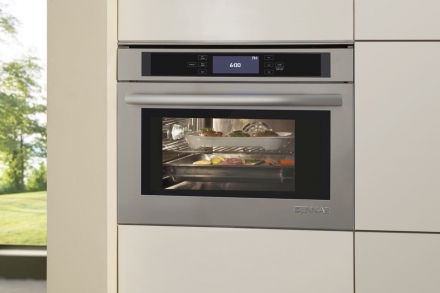
Speed ovens are becoming increasingly popular as they are designed to be able to cook meals faster than you can when using a traditional full size ovens. Essentially, a speed oven offers a combination of microwaving and baking, and since they run on electricity, they are compatible with almost every kitchen. If you’re still unsure about whether a speed oven has a place in your kitchen, here we’ll explore some of the great features you can expect from these amazing appliances.

The Speed Oven Basics:

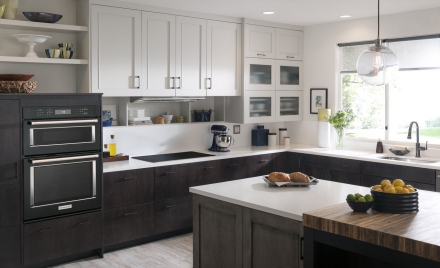
As we’ve just mentioned, speed ovens provide a combination of microwaving and baking, but they are also highly flexible appliances. There are speed oven models available in 24”, 27” and 30” widths to enable you to accommodate one into your kitchen regardless of whether you have a compact space or a large area. There are also combination wall models that feature speed ovens alongside a wall oven, which allows twice the baking space without needing to upgrade to a double wall oven.

However, the overall interior space of a speed oven tends to be slightly smaller than a countertop microwave. You can expect one to two cubic feet of capacity, but these small appliances do pack a punch.

Convection:

All models of speed ovens are equipped with a convection baking mode. This can be used to provide better results when baking proteins, pizzas and desserts. If you’ve used an air fryer before, you are likely to be familiar with convection technology. Essentially, the heated air moves around inside the oven to provide more consistent, even cooking temperatures.

Pre Set Cooking Modes:

While you may be an old hand at cooking your favorite dishes, it can be very handy when your oven knows how long is needed to cook certain foods and the optimum cooking temperature. Most speed ovens feature pre set cooking modes, so you don’t even need to think about these settings when you’re preparing a dish. You can simply press a button for the appropriate selection and let the oven do all the thinking for you.

Cooking Sensors:

Speed ovens typically feature sensor cooking technology. This can improve the quality of your dishes as the ambient temperature and  moisture levels are monitored. With sensor technology, foods have a higher quality finish compared to microwave heating alone.

Grill Functions:

Premium speed ovens may also have a grill function. Although this is not grilling with fire, there are select models that can offer results that can match the output of even a special pizza oven. This provides even greater flexibility as you can use the speed oven to prepare dishes that require high temperatures of direct heat for crispy, golden goodness.

Multi Tier Cooking:

Although speed ovens do tend to be on the small side, there are models that can accommodate a baking rack. This allows you to cook multiple items simultaneously. While this is not the flashiest of appliance features, it can be handy to save time, especially if you’re preparing a family dinner.

WiFi Compatibility:

Smart technology has made it even easier to manage your kitchen and this technology is incorporated into many speed oven models to take your culinary skills to a whole new level. You can pair your speed oven with a smart device, so you can program the appliance and monitor your dish without even needing to step foot into the kitchen.

If you’re considering a speed oven, you can explore your options with our online speed oven collection or speak to one of our home appliance specialists for further guidance to help you find the ideal appliance for your home.

Understanding the Self Clean Feature on Your Oven

The self-clean feature is a relatively new addition to oven models, but many people remain wary about it, worrying about the potential dangers of running it. So, here we’ll delve into this feature, so you can understand how to use it for the best results.

The Self Clean Basics:

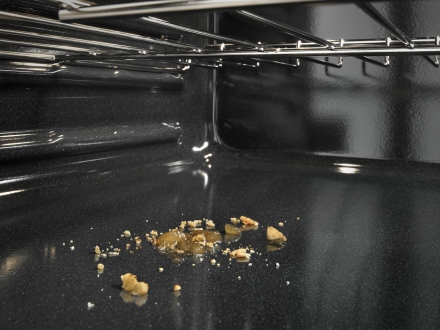
Many convection ovens have a self-clean feature, but it doesn’t involve soap and a scrubbing brush. Instead with this setting, the interior temperature rises to approximately 800 degrees. This high heat will help to incinerate any food debris or gunk that has adhered to the oven walls. Once the oven has cooled after the self-clean cycle, and it will cool slowly, you can simply wipe out any residue.

Newer steam ovens may also feature a self-clean function. This uses steam to blast the inside of the oven and eliminate any gunk. This typically uses less energy as the extremely high temperatures are not necessary.

With either type of self-clean feature, it is easier and less time consuming to keep your oven clean. You can set the oven to self-clean and then go about other tasks around your home, coming back later to run a cloth over the inside of the oven.

The Benefits of the Self Clean Feature:

Before we explore the potential dangers of the self-clean feature, it is important to highlight the benefits of this function. These include:

  • Timesaving: Rather than needing to take the time to hand wash the inside of your oven, you can set the oven to self-clean and then you’ll only need a minute or two to wipe it down afterward.
  • Ability to Multitask: Since you don’t need to supervise the self-clean cycle, you don’t need to be stuck in the kitchen. You can clean the oven and tackle other projects around your home.
  • Less Messy: If you’ve ever cleaned an oven by hand, you’ll know that it is a messy job. With cleaning liquids and sprays, multiple cloths and gloves, you can end up feeling extremely grimy when you’re done. Since the self-clean cycle is automated, the mess is contained within the oven.
  • No Toxic Chemicals: This follows on from the previous point, but oven cleaning products tend to contain very harsh chemicals that are not only dangerous to inhale, but can burn the skin. Therefore, a self-clean cycle is far more natural and environmentally friendly.
  • More Efficient Cleaning: Finally, since all the food debris and grime is blasted off the oven walls by high heat or steam, it provides a thorough cleaning of every inch inside the oven, for a more efficient clean.

The Potential Dangers of the Self Clean Feature:

Unfortunately, there are a few potential risks of using the self-clean feature on your oven. These include:

  • Overworking the Appliance: It takes a great deal of power for a standard oven to generate the high temperatures needed for the self-clean cycle. This has the potential to overwork the appliance, particularly if you have an older model that is nearing the end of its lifespan.
  • Fumes: While you’re not using harsh chemicals, the self-clean feature can still produce some fairly noxious odors as the food debris and gunk is burned away. So, if you don’t ventilate the space properly, you could end up causing a nasty smell throughout your home.
  • Potential for Fire: Finally, if there are chunks of grease or large pieces of food inside your oven, there is the potential that it may ignite. While a fire inside a sealed oven is not necessarily dangerous, it could spread to the control panel or blow a fuse.

If your oven is struggling to self-clean, it may be time to consider an upgrade. You can explore your options with our online oven and range collection or you can speak to one of our home appliance specialists for expert help and guidance.


Plastic vs Stainless Steel Dishwasher Tub- Which One is Best?

When you’re shopping for a new dishwasher, you’re likely to find a wealth of options with various makes, models and designs. One area where there are two main options is the choice of dishwasher tub. Dishwasher tubs are available in plastic or stainless steel, but which one is best?

Plastic Dishwasher Tubs:

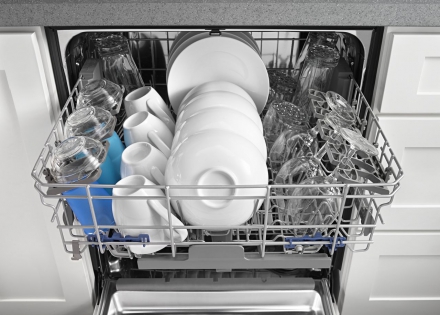
Many people worry about plastic dishwasher tubs as they have concerns about whether plastic is safe. While there is cheap, low quality plastic on the market, if your dishwasher has high quality, BPA free, food grade plastic, it is safe to withstand the high temperatures typical with a dishwasher.

While plastic is not as durable as stainless steel and may not be as effective as a stainless steel tub, since it does not get as hot, there are some advantages of plastic. Generally, plastic is a more affordable option, so if you’re on a restricted budget, you may want to consider dishwashers with a plastic tub. Plastic tub dishwashers also tend to be smaller models, which may be a better option if you have limited space. You may also find these models have shorter wash cycles compared to stainless steel models, making them more energy and water efficient. Finally, plastic tubs are also far less likely to get hard water marks or be discolored by stains, which improves the ease of long term maintenance.

Stainless Steel Dishwasher Tubs:

Stainless steel is a more durable material, so it tends to have a longer lifespan. It is easier to clean than many other materials and it can be more sanitary, since it can be heated to higher temperatures for a bacteria free environment.

Stainless steel can also be a good choice if you’re concerned about odors in your kitchen. Stainless steel will not absorb food odors, so you don’t need to worry about your dishes not smelling clean and fresh. It can also provide better noise insulation compared to plastic, so stainless steel tub dishwashers tend to be quieter.

Unfortunately, stainless steel dishwasher tubs can be vulnerable to rust. This is quite a rare occurrence, typically only seen in older dishwashers, but if your dishwasher does develop rust, it will compromise the integrity of the tub and overall appliance. Rust spots will need to be professionally cleaned and treated to prevent spreading.

What is a Hybrid Dishwasher Tub?

A hybrid dishwasher tub offers the best of both worlds. The tub is made of stainless steel, but it has a plastic liner. The tub has stainless steel running up the sides and back, and along the door, but the bottom is plastic. This increases the durability of the tub and improves rust resistance.

Hybrid tub models can operate at higher temperatures, as the higher heat will not damage the tub. They can also enjoy the energy efficiency benefits of traditional models.

What is a Polinox Dishwasher Tub?

Polinox is becoming a more widely adopted material for dishwashers. It is a nickel free stainless steel containing 0.5% or less carbon. Polinox is not only non magnetic, but it has greater resistance to scratching, staining and corrosion.  It can also offer the same heat and odor resistance benefits of a stainless steel tub. For this reason, Polinox is used in high quality dishwasher models.

Dishwashers have a typical lifespan of approximately 10 years, which can be extended with proper care and maintenance. If your dishwasher is approaching the end of its useful lifespan and you’re considering an upgrade, you can explore your options with our online dishwasher collection or speak to one of our home appliance specialists for further advice.

What’s the Difference Between a Speed Oven and Microwave?

In today’s hectic lifestyle, being able to heat food quickly can be a massive advantage in any home. While the typical go-to for quickly heating food is a microwave, many people are now considering speed ovens, but what’s the difference? Here we’ll explore the differences and similarities between these two appliances to help you make an informed purchase decision for your home.

The Microwave Basics:

As the name suggests, microwave ovens use microwaves, which is a type of electromagnetic energy to heat the food. This energy causes the water molecules in the food to vibrate, which generates heat and as a result, cooks the food.

Microwaves can reheat or cook food in a fraction of the time needed for a traditional stovetop or oven. These appliances are available in various styles and sizes, providing a convenient and time saving solution in practically any kitchen.

The Speed Oven Basics:

Speed ovens are a combination of traditional ovens and microwaves. They use both microwave technology and convection heating to evenly and quickly cook food. The convection heating has a fan to circulate the hot air around the food, promoting crispiness and browning, while the microwave technology heats the food from the inside out.

This combination allows faster cooking compared to a traditional oven, but you can still achieve the same level of crisping and browning.

The Key Differences Between Speed Ovens and Microwaves:

As we just covered, while there are some similarities between speed ovens and microwaves, there are some important differences. These include:

The Cooking Method:

We touched on this above, but while microwaves use microwave technology, speed ovens use a combination of microwave and convection heating technologies. This difference means that a speed oven can brown and crisp food, while microwaves cannot.

Additionally, the combined cooking method of speed ovens mean that food cooks far more quickly than with a traditional oven, yet offers similar results.

Cooking Options:

Since speed ovens have convection technology built in, it allows cooking using various methods including broiling, roasting, grilling and baking. You can use a speed oven to prepare a variety of dishes including grilled vegetables, roasted meats and even dishes such as lasagna.

Microwaves tend to be far more limited. They are mainly used for quick cooking and reheating, such as making popcorn, reheating leftovers and cooking frozen meals. While they tend to have a defrost option, since they cannot brown and crisp foods, they are not designed for baking, grilling, roasting and broiling.

Capacity:

Speed ovens tend to have a larger capacity compared to microwaves. The overall appliance tends to be bigger, which means that they can prepare greater quantities of food. Some speed ovens are specifically designed to be built into walls or cabinetry, which means that they tend to require more space in your kitchen.

On the other hand, microwaves are available in a variety of styles and sizes from large built in models down to small countertop models. This makes them more flexible if you have limited kitchen space.

Price:

Finally, price is a key difference between speed ovens and microwaves. Speed ovens have more advanced features and greater cooking options, which is reflected in their price. Microwaves are generally less expensive, but the specific cost depends on the brand, model, size and features.

Which is Best?

Whether a speed oven or microwave is best will depend on your preferences, requirements and kitchen. If you’re a seasoned chef who cooks lots of meals and has plenty of space in your kitchen, a speed oven could be a good choice. On the other hand, if you simply need an appliance to reheat food and drinks, you would be better suited to a microwave.

If you’re considering a speed oven, you can explore your options with our online collection or speak to one of our home appliance specialists for further help and guidance.

Convection Oven vs Conventional Oven: What’s the Difference?

If you’re planning a kitchen renovation, you are likely to be considering upgrading your oven. When you start appliance shopping, you will quickly become aware of ovens in various styles and designs, but should you choose a convection oven or a conventional oven? Here we’ll explore the key differences between these two types of oven.

The Heat Source:

Both types of ovens look similar and both can be electric or gas powered. The key difference between conventional and convection ovens is in how that heat source is treated. In a conventional oven, the heat is stationary, rising up from the heating element located at the bottom of the oven. This differs from a convection oven, which has heat blown by fans, circulating the air all around the inside of the oven, creating consistent heat.

The Impact of Differing Heat Patterns:

Since the heat is stationary, conventional ovens can create pockets of warmer or cooler air. This can differ from the temperature on the indicator. This is why many recipes recommend turning your cookie sheet or roasting pan around half way through the cook time. If you don’t do this, you may find the food towards the back of the oven becomes burned, while the food at the front is underdone.

In a convection oven, the heat is more evenly distributed. They can cook food more evenly and more efficiently, cooking up to 25 percent faster compared to a conventional oven. So, if you’ve previously used a conventional oven, you will need to compensate for this when you switch to a convection oven. It is a good idea to check the food approximately ten minutes before it would typically be done.

Additionally, convection ovens do not need the preheat time that a conventional oven would.

The Potential Issues with Convection Ovens:

While it would seem that convection ovens have the edge, there are some potential issues. For example, if you’re baking in a convection oven, the fan moving the hot air around can cause the outside of a cake to cook far quicker than the middle. This can mean that you end up with a dried out or overbaked top of the cake, while the middle is still raw.

If you’re used to using a convection oven, it is possible to compensate for this, but if you’re new to this type of oven, the learning curve may include a couple of ruined cakes or dishes. You can also find oven models that have a “bake” or “thermal bake” setting. When you select this mode, the oven functions like a conventional oven, so you can get more consistent baking results. You can also find convection ovens which have a variable speed fan. You can select a low speed for dehydrating foods or baking cookies, but have a higher fan speed if you’re making a roast.

Other Considerations:

There are a few other considerations when choosing between a conventional and convection oven. The most obvious is price. Conventional ovens tend to be less costly compared to their convection counterparts. But, convection ovens tend to have more features, which may provide greater value for serious home cooks and bakers.

Another consideration is the energy efficiency of the appliance. If you’re concerned about the environmental impact of your home or keeping your energy bills more reasonable, you may prefer the efficiency of a convection oven.

If you’re considering a new oven, you can explore your options with this online collection or speak to one of our home appliance specialists for further help and guidance.


What are the Optimal Refrigerator Temperatures for Food Storage?

Many people place their food in the refrigerator without a second thought. But, there is a wide range of temperature options to consider and coldest isn’t always the best choice. The humidity conditions can have a dramatic effect on the freshness of stored food and when you store the food is important. In this article, we will take a closer look at a variety of foods and some key considerations on how they should be stored in a refrigerator.

Optimal Meat Storage Conditions

Meat needs to be kept colder than other foods and it should always be stored in the coldest part of your refrigerator. When you store red and white meat it should be kept at a temperature close to freezing. This is especially true if you’re storing meat for a longer period of time. Setting part of your refrigerator to 28ºF to 32ºF is ideal for meat storage. Some models have a colder drawer with sub-freezing temperatures for meat storage. High humidity in the 85-90% range is also important for meat storage to keep it fresher for longer and to prevent it from drying out.

Optimal Seafood Storage Conditions

Seafood should be stored at 40ºF or lower to prevent a fast degradation in quality that is inevitable at higher temperatures. Maintaining high humidity is also helpful and you can simulate these conditions if you cover the seafood with a clean and damp cloth. These considerations are especially important if you plan to eat seafood raw.

Optimal Vegetable Storage Conditions

Vegetables should be stored in humid and cold conditions and a crisper drawer is the ideal location in a modern refrigerator. The optimal storage temperature can vary by each vegetable, but 34ºF is a good average for most veggies.

Optimal Cheese Storage Conditions

Cheese cannot be kept too cold, ideally, it should be stored between 40ºF and 52ºF. As a rule, a soft cheese needs higher humidity storage conditions than a hard cheese. But, both cheeses should be stored with a minimum humidity level of 80%. Some modern refrigerators have a convertible drawer with soft freezing functions that can store cheeses at 42ºF.

Optimal Fruit Storage Conditions

If you intend to use fresh fruit on the day of purchase or during the next day, you may want to consider placing the fruit in a bowl on the countertop. But, if you need to store prepared fruit or fruit that you want to store for longer, it’s important to create the right storage conditions.

Fruit needs to be kept in a humid environment with 80-95% relative humidity to prevent drying issues. The temperature should be in the 32ºF to 55ºF range for optimal preservation. These conditions are essential to prevent the growth of bacteria on fruit which is more prevalent than stored meat!

Fruit can be stored at a wider range of temperatures than meat, but freezing must be avoided. A modern refrigerator with variable temperature zones is the best option when you need to store a lot of fruits and vegetables.

Refrigerator Food Storage FAQs

What is the ideal temperature for a refrigerator?

This is hard to answer because most people eat a varied diet and they need to store a wide variety of foods. As a general rule of thumb keep the refrigerator temperatures lower than 40ºF and consider purchasing a model with variable temperature zones. This will give you the ability to make certain areas a little warmer or cooler to store specific types of foods.

Which is the coldest part of the refrigerator?

Heat always rises and this is equally true inside the refrigerator. So, the lower shelves will always be a little colder than the upper shelves.

If you’re considering a new refrigerator, you can explore your options with this online collection of models, or for further help or guidance, speak to a home appliance expert.

How to Clean Grease from Stainless Steel Surfaces

In recent years, stainless steel has become the most appliance choice. This is understandable, stainless steel surfaces look great, and they’re durable. But, certain appliances, including ranges and cooktops can have a grease buildup with frequent use. In this article, we will show you how to remove grease from stainless steel surfaces.

Washing with Soap and Water

Many liquid dish soap products are marketed as being tough on grease formations. They can be effective on light grease buildup and using dish soap should be tried first before you resort to other solutions. Mix a little dish soap in a bucket of warm water to create a bubbly cleaning mixture. Get a soft and clean microfiber cloth or a non-abrasive sponge and dip it in the cleaning water. Use the moistened cloth or sponge and scrub the stainless steel gently in the direction of the grain. This may be repeated a few times with a fresh sponge or cloth to get the surface clean. A nylon scrub brush can be used on areas that have caked-on grease deposits. When the grease is removed, use a clean and fresh cloth to rinse the surface with warm water and dry the surface with a towel.

Cleaning with Baking Soda and Vinegar

If you search for homemade cleaning solutions, you will discover that most of these cleaning recipes contain baking soda and vinegar. They are effective cleaners, deodorizing agents and they are kind on stainless steel surfaces. Combine equal parts baking soda and clean water in a bowl to form a thick paste. Use a soft cloth or spoon to apply this cleaning paste to the greasy areas. After 15 minutes scrub the stain with a soft nylon brush, and you must scrub in the direction of the stainless steel grain. Then, rinse the surface with clean water and examine the surface. If there are still grease deposits, apply some white vinegar to the remaining baking soda deposits. This will cause a gentle chemical cleaning reaction that will make the surface fizz. Brush the area clean, and you should have a clean and grease free stainless steel surface.

Baby Oil Restoration

There may be times when cleaning simply doesn’t remove stubborn grease stains. This can diminish the shine, but it may be possible to remove the stain with baby oil. Baby oil can dilute the oil deposits that form most of the grease stain which breaks it down for cleaning. The baby oil can be applied to the surface with a soft and dry microfiber cloth. The affected areas should be buffed in the direction of the grain, and this can be repeated multiple times as required. When you’re done, buff the oil with a fresh clean cloth to remove the residue. If you don’t have baby oil, it is possible to get similar results with mineral or olive oil.

Commercial Degreasers

If the DIY grease cleaning solutions shown above don’t work or you don’t have time to try them, there are widely available commercial degreaser products to try. When you choose a degreaser, check the label carefully to ensure that it will work with stainless steel. Certain cleaners and degreasers are designed for clear-coated steel, and other products work better on raw metal surfaces. A degreaser that’s formulated for stain steel is the best option and the manufacturer’s instructions should be followed carefully.

If you’re thinking about a new stainless steel appliance, explore your options with our online collection or for further guidance speak to a home appliance expert.

A Brief Guide to Appliance Sizes

Modern appliances are at the heart of the kitchen and they have a huge effect on how we live our lives. There are many makes and models of every appliance type, but they need to be placed in a location that can accommodate them. When you design a new kitchen, the appliances may be the last thing on your mind. This is a mistake, it’s important to make the layout of the kitchen around your new or existing appliances. An appliance specialist can help you if they are involved at an early stage. If you’re determined to go it alone, here are three appliance types and sizes to consider.

1.  Refrigerators

Modern refrigerators may have a host of useful features including door-in-door access, built-in thermometers, digital cameras and more. But, they are complex and they are available in a wide variety of styles and sizes. The more common widths are: 36”, 42” and 48”. Some suburban kitchens have narrower 36” models and a freestanding refrigerator needs a 72” tall opening for installation. If the refrigerator is built-in, the space requirements increase to an 84” tall opening. Refrigerators and freezers may be separate purchases which come in a broader size range, the widths, are: 10”, 24”, 30” and 36·. A popular combination is a 36” wide refrigerator next to a 24” wide freezer. There are also wine column refrigerators that come in 18” and 24” widths.

2.  Dishwashers

The width of a standard dishwasher is 24”, but larger homes may have a second machine for extra convenience and flexibility. This is especially true if people want to avoid an extra trip to the kitchen from a pool or bar area. In this case, an additional slimline dishwasher with a width of 18” or a dishwasher drawer may be the solution. Most full-size dishwashers have a height of 35”, but ADA models are 34” high and they can be raised or lowered to fit easily under the countertops. A key factor with dishwashers is the depth which must be carefully considered to accommodate the hoses. Most European made models have flush fit because the sleek style is an essential aspect of their design. Most American made models protrude slightly from the cabinets if the dimensions are not factored into the kitchen design. Another option is a panel that blends the dishwasher into the cabinetry and the maximum depth for this is 23⅙”. When a standard dishwasher door is fully open it will extend 27” into the kitchen and this is important if you want to avoid blocking foot traffic.

3.  A Washer and Dryer

Both washers and dryers come in a wide variety of sizes to accommodate homes with different needs. A 24” wide washer is considered to be a compact model and these are an ideal fit for smaller apartments. They are flexible, they require no venting and they can be installed under the kitchen counter, in a closet, a bathroom or behind a mudroom cabinet. The 27” wide front load washers are considered to be standard size and they are typically mounted on a pedestal draw for extra storage and easier use. The larger washers have a width of 30” and there are fewer models at this price point. These washers are harder to install and they are overkill unless you have a very large family or you like to wash rugs.

In Conclusion

Taking extra care and measuring twice is the key to success if you’re in the market for new appliances. Even if you have the available space, make sure that they will fit through the principal entryway and other points that need to be negotiated to install the appliance.

If you’re searching for new appliances, you can explore your options with our online collections or further guidance and help, speak to a home appliance specialist.

4 Common Refrigerator Configurations Explained

Selecting the right refrigerator for your home is tricky because there are many options. There are brands, models, configurations, and extras to consider, and most people tend to focus on the bells and whistles. The first thing to think about is the size and configuration of the appliance to ensure that it fits and that it meets your food storage needs. In this brief guide, we will look at the four main refrigerator configurations in more detail to help you make an informed purchasing decision.

Refrigerator Basics

Before we begin, it’s important to note that the refrigerator types can be broadly classified by the door configurations. Some of these designs are tried and tested, and others are newer and up-to-date. The configuration of the refrigerator can affect many other aspects of the appliance, including storage space, energy consumption, ease of access, the footprint, and extra features. Let’s examine them in more detail:

1.  Top Freezer Refrigerators

These are the oldest and most recognizable examples of a combined refrigerator and freezer appliance. As the name suggests, the freezer is located in a smaller compartment above the refrigerator. These appliances are usually under 69” in height, and they tend to be less expensive than other models. The main drawback with these models is that the freezer may be too high for some users and the storage options in the refrigerator are basic.

2.  Bottom Freezer Refrigerators

This model has a freezer installed under the refrigerator with two or three drawers. These are more modern than top freezer models, and the slide out drawers improve the storage of frozen foods. The space in the refrigerator is easy to access because all food items are between eye or waist height. The main drawback is that users need to bend or squat down to access the lower freezer drawers.

3.  Side-by-Side Refrigerators

These refrigerators have become more popular in the last decade, and that trend is set to continue. There are a pair of doors with the refrigerator on one side and the freezer on the opposite side. The freezer is usually located on the left side, but take care, this is not always the case. The refrigerators tend to be less expensive than the French door models that we will cover next. But, the capacity is a little lower, and you may need to reach around other food items to reach items at the back. Models with a higher storage volume are easier to use, but they cost more than standard size appliances.

4.  French Door Refrigerators

A French door refrigerator has two doors, but the refrigerator double doors are on top, and the freezer is underneath with pull out drawers. These appliances have become the default purchase for people looking for a high-end appliance with a luxury aesthetic appeal. They do give a kitchen an ultramodern look, but taller people have to stoop to reach the lower freezer drawers. These appliances have all the latest features and plenty of storage to feed larger families.

In Conclusion

Before you make a final commitment to buy a new refrigerator/freezer, it’s important to measure the access points and the location twice. Many people buy appliances that they cannot get into their home and that don’t fit the available space. It’s also important to match the appliance to your existing kitchen decor unless you’re planning a remodel. The general style and finish should complement the style, handles, finish, and other appliances in your kitchen.

If you’re considering a new refrigerator-freezer, you can explore our online collection, or for further help, you can speak to a home appliance expert.

One Simple Hack that Can Revolutionize Your Refrigerator Storage

A bold claim? Possibly, but let’s face it, most people don’t have much control over the contents of their refrigerators. The contents may lurch from full to empty with no middle ground until shopping day arrives and the full space is not utilized properly. Proper airflow must be maintained with a space of ½” between food items to prevent cross contamination. But this can be tricky to achieve when you’re managing a busy refrigerator. In this article, we will look at one simple hack that may help.

Refrigerator Food Storage Basics

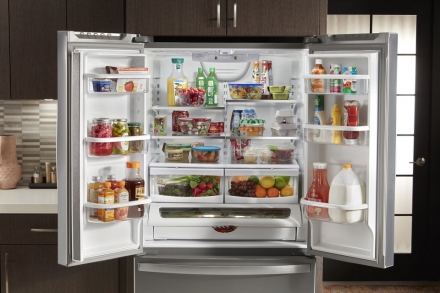
The optimal temperature for a refrigerator is 35-38ºF, and the areas should be split into zones to improve storage. All raw meat and dairy food items should be restricted to the lower shelves to prevent cross-contamination. Prepared foods, fruits, and vegetables should be stored on upper shelves which have minor temperature variations. The door shelves should be used to store foods that have a virtually unlimited shelf life and that need to be cold, including cans of soda, condiments, sauces, pickle jars, and more. But, there is one hack that can make these storage rules even more efficient.

Using Storage Bins in the Refrigerator

There may be dedicated storage bins built into the refrigerator that are designed for fruits or vegetables, or other food items. These should be used, but there is an opportunity to use storage bins to store items neatly on the other shelves. These are the same storage bins that many people use to store food in a pantry, and they work equally well in the refrigerator.

This is an underused and misunderstood refrigerator hack that is easy to get wrong. The basic rules of refrigerator food storage still apply, but on those shelves, the food items can be placed in storage bins. Specific categories can be created for each bin, and they can be labeled clearly for easy identification. It’s even possible to create an inventory for each storage bin to avoid food spoilage and to lower the food bills. As an example: a kid’s snack bin will prevent the kids from disrupting other areas in the refrigerator.

The secret sauce in this hack is that storage bins are stackable, and this can help you to take full advantage of your refrigerator space. Going vertical will improve access in the same way that many use storage bins in their pantries. There are various storage bin sizes and shapes that you can purchase to customize the storage options in your refrigerator. These bins will prevent spills and drips that can spread bacteria to other food items on a shelf. The storage bin is easier to clean quickly; simply remove the items, clean the bin, replace the items and you’re done. A spray bottle filled with a bleach solution in a ratio of one tablespoon of unscented bleach to a gallon of water is an effective disinfectant.

The only real drawback is that the storage bins will need regular cleaning at the same time as the shelves. It’s recommended that a deep refrigerator cleaning occurs every three months to maintain and promote cleanliness. An open container of baking soda can make the spaces fresher, but this should be replaced during the deep cleaning. Double-walled shelves should not be submerged in water to prevent the trapping of water in between the glass walls. Trapped water is an ideal growth medium for mold, which will degrade the health and cleanliness of the refrigerator.

If you’re considering a new refrigerator or freezer, you can explore your options through our online collection or for further guidance, speak to a home appliance specialist.