Many people enjoy drinking wine on a casual basis and others take it more seriously. Wine requires an optimal temperature, limited light exposure and humidity conditions to improve the aroma, structure and flavors over time. Investing in a dedicated wine fridge or wine cooler is an excellent way to store your precious bottles of wine at home. In this article, we will take a closer look at three useful tips to help you make an informed choice.
What is a Wine Fridge?
Although you may hear the terms “wine fridge” and “wine cooler,” they are to all intents and purposes they are the same. That said, a wine cooler tends to be a smaller appliance and it may lack some of the more extensive features of a larger wine fridge. These appliances can store wine at the optimal temperature which is 46ºF (7.2ºC). Certain highly collectible wines may require a specific and very different long-term storage solution.
3 Tips to Choose Your Appliance
A brief glance at wine fridges and coolers will quickly reveal that there is an extensive range of models to choose from. There are freestanding units, built-in refrigerators, dual-zone temperature models and many more. This can be overwhelming, but it is possible to narrow down the choices if you understand your needs.
To make the process easier, we have divided the appliances into three broad categories. This will make it easier for you to choose the type of fridge or cooler you want with all the features you require.
1. Consider the Design and Location
Choosing the perfect appliance to meet your wine storage needs may be determined by the design and intended location as follows:
- The Countertop Wine Cooler: This is the perfect appliance for those with modest wine storage needs and not much space. A typical compact model can store up to twenty-five bottles and it can be kept on the kitchen counter. Another common location is in the dining room where it can be placed on a sideboard as a talking piece and for convenience. Although these models can be compact they do need adequate ventilation space around them to function properly.
- A Freestanding Wine Cooler: This is a larger freestanding fridge that may be fitted with a reversible stainless-steel door to place it in a handy nook or cellar space. The main advantages are the larger capacity and that it can be moved for cleaning and during a remodel.
- The Undercounter and Built-In Wine Cooler: The wine fridge can be installed in the kitchen or a home bar to blend in seamlessly. This is more expensive than the countertop and freestanding models because it’s a custom-built appliance.
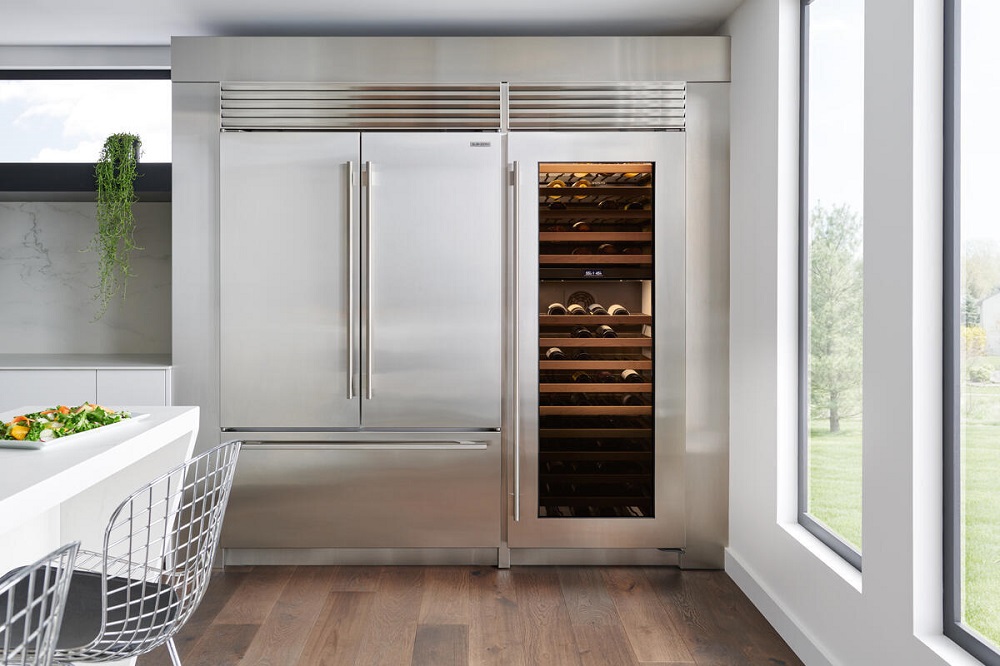
- The Side-by-Side Fridge Cabinet: This may be the best option for a true wine aficionado that needs a higher capacity to house their collection. Because these are freestanding appliances they can be added over time to expand a wine cellar.
- The Beverage Center: These are dual-zone chiller systems where you can store your favorite beverages including your wine. The wine bottles can be kept in a separate compartment at 40-70ºF as needed. For the other beverages the temperature can be set in the 35-68ºF range. These can be freestanding or built-in appliances depending on your needs and budget.
2. Consider the Temperature Zones
The optimal serving temperature for red and white wines is 45-50ºF or 50-65ºF respectively. Varying types of wines may need to be consumed and stored at specific temperatures. When you understand your storage needs it’s easier to reach a final purchasing decision. The temperature zone appliances can be broken down into three broad categories as follows:
- Single-Zone: These wine coolers are designed to maintain a precise and even temperature for short term wine storage.
- Dual-Zone: These appliances have a lower area with cooler temperatures for white wines and vice versa for red wines. These are an excellent compromise for those that want to collect and keep red and white wine in a single location. The bottles are evenly spaced to facilitate even temperature cover and once the temperatures in each zone are set they are precisely maintained.
- Multi-Zone: This is the wine fridge or cooler option for avid wine collectors that want to store more than a hundred bottles at three or more different temperatures. This is the ultimate way to store red and white wine and other beverages at the optimal serving temperature. Some models even feature polyvalent technology with up to six temperature zones regulated with fans for efficient air circulation.
3. Consider the Cooling Technology
The cooling method used in a modern wine cooler is either a thermoelectric or compressor-based technology. Each technology has its pros and cons to consider and these can affect your final choice:
- Compressor: This is an excellent choice to store a larger wine collection because the cooling capacity is powerful. Most large modern wine coolers will use a compressor-based cooling system. The wine fridge can adapt to the surroundings to account for external temperature changes throughout the year. This makes this technology a good fit for those that want to store their wine in an uninsulated area such as a wine cellar. The main drawback is the number of moving parts that need to adjust to regulate the internal temperatures which can cause noise and minor vibrations.
- Thermoelectric: A thermoelectric wine fridge has fewer moving parts and it requires less power. This makes this option a better choice for small scale wine storage for those that want minimum vibration and quiet energy efficiency. A thermoelectric wine cooler is not a good option for those worried about power failures. This cooling technology is not a good fit for those living in places with higher ambient temperatures that would compromise the cooling capacity.
What Features Do I Need in a Wine Fridge?
There is no one-size-fits-all answer to this question because every wine collector will have their own preferences and requirements. But, there are some key features that you need to consider to help you make the right choice.
The first and for most people the most obvious consideration is the bottle capacity. An appliance that’s marketed as a wine chiller or cooler will tend to be smaller than a wine fridge. This isn’t always the case, some companies may sell small wine fridges and large wine coolers, the terms can be interchangeable which can cause confusion. The smaller appliances typically store up to thirty six bottles, but a wine fridge may store a hundred or more! If you’re a casual drinker or fledgling collector and you don’t have much space in your home you won’t need that larger appliance.
The cooling technology you choose should be appropriate for your wine storage needs. We’ve already covered the differences between compressor and thermoelectric-based cooling technologies. For brevity, go with the compression cooling for larger collections and site the wine cooler with sufficient room around the sides for heat dissipation. Those with more modest wine storage needs will find that a thermoelectric-based system works best if they don’t live in a place with high ambient temperatures.
The temperature controls are extremely important when it comes to wine storage. Choose an appliance with a clear set of digital controls on a front panel. This will limit the need to open the door and disrupt the internal temperature. The controls should be easy to understand, monitor and adjust as needed to protect your investment.
Many people choose the doors for their wine coolers based on pure aesthetic appeal. It is true that a well appointed appliance with a glass or steel door can complement your decor. But, the door material that you choose can have a huge impact on how you store your wine collection. It’s important to protect your wine from UV light, sunshine can lead to oxidation and this will change how the wine tastes and how it matures. The warmth of the sun can also place additional strain on the cooling and this is especially true with thermoelectric-based systems. But, many wine collectors like to see their wine and they can spark interesting conversations with visitors. To meet this need some wine coolers have tinted glass doors to keep out the UV light and view your wine. Some models may even have soft LED lighting systems to turn the wine bottles into a feature.
Aside from these key features there are other options that you need to consider. The door needs to have a proper seal to prevent the escape of treated air that would lead to uneven internal temperatures. The shelf layout needs to be efficient and yet there should be adequate space between the bottles for optimal temperature coverage. A safety lock can be a useful addition for homes with curious teens that may want to sample your wine. Some wine coolers now have a built-in carbon filter to protect each bottle of wine from odors that may affect the contents.
If you’re considering a new wine cooler or fridge, you can explore your options with this online collection, or for personalized guidance and help, speak to a home appliance expert.