The best way to Clean Stainless Steel Appliances

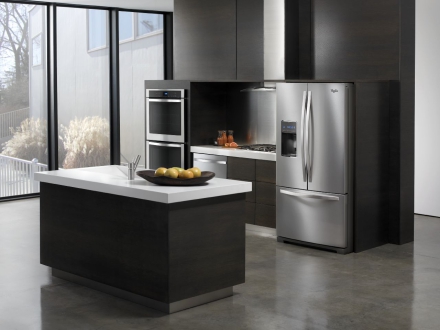
Most homemakers consider kitchen accessories made of this material to be the tangible symbol of modernity and incredible reliability. Though modern buildings contain numerous appliances of kitchen utensils, the material, which is still in high request due to its non-susceptibility to rust and corrosion, as well as to staining, is stainless steel that is used for fridges, dishwashers, ovens, and even microwave ovens. However, retaining that shiny look becomes fairly difficult at times. It is, therefore, important for householders to learn how best to clean their stainless-steel appliances to remove fingerprints, smudges, or streaks that seem to form quickly on the surface. I share some suggested cleaning techniques and stainless-steel appliance cleaners in this blog.

The Significance of Sanitation on Stainless-Steel Devices

Stainless steel also increases the beauty of your kitchen while at the same time providing a clean surface to your working area. It is emphasized that cleaning cannot be done only for aesthetic purposes but also to preserve the material. Such ways put the silver to scratches, dullness, and even full damage if not well cleaned as it should be. Hence, knowledge of appropriate procedures and materials for use is crucial when attempting to maintain the aesthetic and practical value of your stainless steel household utensils.

Things You Will Require

Before diving into the cleaning process, gather the following tools and materials.

Microfiber cloths

Mild dish soap

Warm water

White vinegar

Baking soda

Olive oil or mineral oil is used to cleanse the skin.

Commercial stainless-steel cleaner (optional)

  1.  Spray bottle

Such items should be in your home as they help ease the cleaning process and Childproof your house.

Here is the guide that shows the process of cleaning your stainless-steel appliances:

  1. Remove Surface Debris

The process of cleaning and polishing starts with washing the outer surface of the appliance: get rid of any food crumbs and dirt that are visible at first glance. It is recommended to use a dry microfiber cloth to eliminate crumbs, dust, and other dislodged materials. This step helps to avoid scratching the surface once you start cleaning the piece of furniture.

  1. Bathe with soap and water of low to moderate cleansing power

For normal washing, use 3-5 drops of mild dishwashing soap in warm water in a spray bottle. When the solution is ready, apply it to the stainless-steel surface and then thoroughly clean it using a microfiber cloth. Ensure to go with the grain or guide in the steel direction to prevent streaks. After washing the cloth, dampen the surface with clean water and wipe it to remove the rest of the soap.

  1. Dealing with Impossible to Remove Stains By Using Vinegar

White vinegar also proves to be a good natural cleaner of stainless steel. It glisters but is effective in cutting through grease and grime without harming the surface. Add an equal quantity of distilled white vinegar and water to a spray bottle. Apply the solution to the stained part and let it remain for some time before washing. Next, remove the surface grime with a microfiber cloth, always in the direction of the steel weave.

  1. Wash your hair often after using henna; if there is any problematic area, use baking soda.

Baking soda is quite efficient for such tight areas or special stains. Prepare a paste with the aid of a basin by combining baking soda with a little water. Rub the paste to the area that is stained and leave it for a few minutes. Wash the area around the mark with a soft cloth or sponge, moving it in the same direction as the steel. If soap or water has gotten on the item, rinse it with clean water and pat dry with a clean microfiber cloth.

  1. When accompanied by oil, it will give that shiny look that every car owner desires to have on their cars.

Apply minimal olive or mineral oil for that sparkling, shiny look on your stainless steel Home appliances. Cove the cloth in a few drops of oil and glide the fabric on the surface in one direction, the grain direction. This step not only brings out the sheen on the glass but also acts as a layer of protection against fingerprints and smudges.

  1. Consider a Commercial Cleaner

If you want to opt for commercial products, various stainless-steel cleaners are on the market. These unique products are meant to clean and polish the stainless steel and do not leave behind streaks and smears. Again, for the best appearance, it is recommended that you follow the manufacturer’s instructions. It is wise to apply the cleaner to a hidden area that you intend to clean to determine whether it will harm the surface of the item you are cleaning.

Stainless Steel Maintenance Tips As a Informed Consumer

Cleaning stainless steel appliances only occasionally and giving them the roughest cleaning is not enough.

Here are some tips to keep them looking their best every day

Clean Regularly: Maintenance is done daily, and you use a cloth, particularly a microfiber cloth, to wipe off the appliances, especially where there are prints.

Avoid Harsh Chemicals: Rough cleaners, bleach, and other products containing ammonia should be avoided, as they can harm the finish.

Wipe with the Grain: Clean and polish always in one direction to preserve grain so that there are few scratches on the surface and no blotches.

Use Soft Cloths: Microfiber cloths are the best for cleaning stainless steel since they do not scratch the surface.

Handle with Care: Also, be careful when moving pots, pans, or other objects around the kitchen near your appliances to avoid scratching or leaving deep pits.

Common Mistakes to Avoid

Despite the most careful approach, avoiding stains and other problems among expensive stainless-steel household appliances is sometimes tricky. Here are some common pitfalls to avoid: Here are some common pitfalls to avoid:

Using Steel Wool: Any rough material, such as steel wool or any other abrasive material, can cause the surface to scratch and damage.

Ignoring the Grain: It is recommended that the wood grain be cleaned in the direction of the grain to avoid streaking and lines that may be detrimental to the formulated polishing.

Letting Stains Sit: This will ensure that stains and spills do not set and become very hard to clean later.

Skipping the Rinse: Soap and cleaner residues should be washed off to the verge to prevent streaking and compromising the shiny floor’s finish.

Conclusion

Stainless steel utensils and appliances are among the most attractive and efficient to use inside the kitchen, but they cannot always be cleaned and or polished correctly. Through these filtered tips, you could maintain your stainless steel appliances clean as new as they were while purchasing them for many years. It would still be critical to note that one needs to clean their appliances regularly, use the correct products, and be careful with their use. By putting in some effort and paying some attention to it, your SS appliances will remain gleaming and add to the appeal of your kitchen.

Contact your local kitchen appliance store for further inquires.


Understanding the Average Household Appliance Lifespans

Household appliances have become an essential in many homes, making our lives more convenient and comfortable. Unfortunately, nothing lasts forever and while you may love your current appliances they will inevitably fail with age. How long your appliance lasts depends on the frequency of use, the make, model and brand, and how well it is cared for. So, at some point you will be left with a difficult decision of whether it is more economical to continue to repair an aging appliance or if it is time for a replacement. So, here we’ll explore the average lifespans of household appliances and some tips to help you prolong their usage.

Kitchen Appliances:

The kitchen is one of the busiest rooms of the home and it is packed with appliances that are used daily. From meal prep to clean up, we tend to use an appliance for almost every activity in the kitchen, but many of these hardworking appliances can last 10 years or more with proper care.

Refrigerators: Up to 18 Years

Although a refrigerator is constantly running, many models can last 10 to 18 years. This is a massive difference in lifespan, but you can help your appliance have a long life with these tips:

  • Clean Routinely: Clean the inside and outside of the refrigerator regularly, particularly the condenser coils that can accumulate dirt and dust.
  • Check the Door Gaskets: Clean the gaskets regularly and check that they still create a good seal. This will prevent air escaping and discourage condensation. If a gasket is worn out or becomes brittle, it will make the refrigerator work harder to maintain the temperature.
  • Allow Ventilation: While many people like an integrated look with cabinets surrounding appliances, make sure you still allow for proper ventilation. You will need at least a couple of inches of space between the bottom of the cabinet and the top of the refrigerator to allow heat to escape.
  • Ensure It’s Level: Your refrigerator should sit level on the floor, which will ensure the door closes properly and the motor is not put under undue strain.
  • Pack Properly: There is a delicate balance between having sufficient food and drinks to help maintain the temperature and packing it so full airflow is blocked. Don’t have your fridge so full everything is crushed together or so empty, the appliance needs to generate excessive cool air.

You can usually tell your refrigerator is due for an upgrade if it is failing to properly cool, there is a build up of frost or condensation, or food spoils well before the expiration dates. You may also hear loud noises when it is running.

Ovens: 13 Years Plus:

The average lifespan of ovens depends on whether it is electric or gas. Generally gas stoves have a longer lifespan and may provide 20 or more years of use.

You can extend the lifespan of your oven by keeping the oven clean and avoiding harsh chemicals. Some products can compromise the coating inside the oven cavity or damage the heating knobs. You should also check the seals on the oven door routinely to confirm heat isn’t escaping, forcing the oven to work harder.

If your oven is no longer evenly heating or taking far longer than normal to preheat, it could be time to replace it. A malfunctioning control panel, damage to the glass door, ceramic top or rusting inside the oven are also indications that you need to start oven shopping.

Dishwashers: 9 to 16 Years:

Dishwashers need to run properly to ensure that your dishes are clean and safe to use. You can keep your dishwasher running for longer by keeping the inside clean, including cleaning the filter and removing any solid pieces of food from the dishes before washing. You should also watch for damaged seals or overloading which can place the appliance under strain.

If your dishes are not washing properly, there are issues locking the door or water leaks, your dishwasher may be reaching the end of its usable lifespan.

Garbage Disposals: 10 to 15 Years:

There are a number of things that you can do to prolong the lifespan of a garbage disposal including:

  • Run Cold Water: You should run cold water when your disposal is operating. Avoid hot water that may encourage fat to adhere to the inside of the disposal.
  • Use Citrus Peels: Running citrus peels through the disposal can not only create a fresh scent, but the oils can discourage bacterial growth.
  • Avoid Harsh Chemicals: You can clean this appliance with a degreaser or specifically made cleaning product. Harsh chemicals can put your disposal at risk of damage.
  • Avoid Drain Clogging Foods: There are some foods that are notorious for the potential to clog drains. Avoid putting pasta, potato peels, coffee grounds, eggshells and any grease or fats down the disposal.

If your disposal clogs frequently, leaks or has a burned out motor, you’ll need to replace it.

Microwaves: 5 to 10 Years:

Microwaves are relatively inexpensive to replace, but it is still a good idea to try to get your money’s worth. You can help your microwave to last longer with a few simple things:

  • Only use microwave safe dishes
  • Avoid any metal in the dishwasher including aluminum foil and metal accents on dishes
  • Clean inside to avoid damage
  • Pause or stop the microwave before opening the door
  • Don’t run it empty as there is nothing to absorb the heating waves, which can cause damage to the appliance.

If your microwave makes strange noises when running, there is a burning odor when in use or it smokes, it is likely on its last leg. You should also upgrade if the control panel is no longer working properly or it takes longer to heat the food.

Other Household Appliances:

There are also other household appliances around your home that are important for your family. These can be costly to replace prematurely, so you will want to keep them running as long as possible.

Washers and Dryers: Up to 18 Years:

Dryers tend to last longer than washers, but you can expect 8 to 16 years of useful life from your washer. As with ovens, the lifespan of a dryer is influenced by whether it is gas or electric, but in this case, electric models tend to last a little longer.

You can extend the lifespan of these appliances with some basic preventative maintenance. These measures include:

  • Keep the appliances level to prevent damage
  • Replace damaged hoses
  • Wipe down gaskets and clean lint traps after each use
  • Clean dryer ducts at least once per year to eliminate lint build up
  • Use the correct amount and type of detergent. If you have a HE washer, use special HE detergent.

If your laundry appliances start to make excessive noise when in use, there are leaks or the performance has been compromised, it is time to buy a new appliance.

If any of your household appliances are reaching the end of their lifespan and you’re considering a replacement, you can explore your options with our online appliance collections. If you need further help, be sure to speak to one of our home appliance specialists who would be delighted to guide you through your options.


Your Ultimate Dishwasher Buying Guide

Whether you’re considering upgrading your dishwasher or you’re planning a complete kitchen remodel, choosing the right appliance can be a little daunting. So, here we’ll present your ultimate dishwasher buying guide to help you to make an informed purchase decision.

Functionality:

A good starting point when considering a new dishwasher is to think about how you will use it. How often would you run a dishwasher? Do you typically have larger baking dishes, pots and pans or do you prefer to run small loads more frequently? All of these things will influence the size and type of dishwasher you choose.

Finishes:

Unless you opt for a built in dishwasher, you will need to think about what appliance finish would work best in your kitchen. There are many types of finishes, so you can choose a new dishwasher that matches your other appliances and complements your kitchen decor. Common finishes include white, off white, black, black stainless and stainless steel.

A quick note about stainless steel and stainless look finishes is that there are some important differences. Both have a lovely modern aesthetic, but real stainless is typically not magnetic. It can also more easily accumulate fingerprints. Stainless look tends to be easier to clean and fingerprint resistant.

Control Panels:

Regardless of the feature set on your dishwasher, the control panel can have an impact on the overall aesthetics of the appliance. The control panel will be either on the front of the dishwasher or hidden on the edge of the door. This fully integrated design means that you can’t see the control panel when the door is closed. This can be a good idea if you have small children in your household who like pushing buttons or you want to have a clean look. But, if your new dishwasher has a hidden control panel, it can be tricky to see the stage of the dishwasher cycle. In this case, you may want to look for a dishwasher that has a time remaining display or one that shines a discreet light on the floor, so you can see if the appliance is still running or has finished the cleaning cycle.

The Interior Tub:

Dishwasher interior tubs are typically either plastic or stainless steel. Generally, a plastic tub model will cost less than its stainless steel counterpart, but you do need to think about the long term running costs. A stainless steel tub can have better energy performance, since this material will retain heat for longer. Stainless steel is also more stain resistant, odor resistant and durable compared to plastic.

Noise Levels:

If you have an open plan layout in your home or the noises in your kitchen can be heard in another room, you may want to consider a dishwasher with quiet performance. If you’re upgrading your dishwasher, you may be pleasantly surprised at how quiet the cleaning cycle can be on a new dishwasher. There are some models that barely make any noise when running.

Most dishwashers do have layers of insulation and a base to absorb sound to reduce noise, but if a dishwasher running would impact watching television or other family activities, you should look for a model with a low noise level. Many manufacturers rate the noise level in decibels, so the lower the number, the quieter the running noise. Bear in mind a rating of under 50 db is considered fairly quiet.

Rack Configurations:

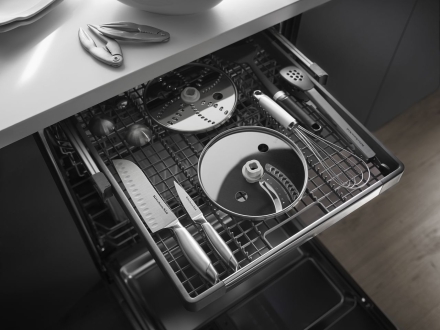
Loading and unloading the dishwasher can be a chore, but when you choose a model with a rack configuration that suits your typical dirty dishes, you can minimize the hassle. If you tend to have a lot of cooking tools or odd shaped small items, you should consider a model with a third rack. This can be a great option for larger utensils or have silverware tines to keep all of your silverware items separate for thorough cleaning.

Some models also have adjustable or removable racks, which allows you to move the rack up or down to fit large plates, cookie sheets or tall glasses. You may also find dishwashers with moveable silverware caddies that allow you to put it where it fits best with the other items in the load. It can also be beneficial if there are fold down or adjustable tines, so you can fit larger items or use the tines to secure lightweight items that can tip and fill with water.

Wash Systems:

Most dishwashers use rotary spray arms that are situated the top, middle and bottom of the tub. These spin, circulating water during the cycle. A wash system with multiple washer arms can provide more thorough cleaning compared to a model with only one or two arms.

But, some manufacturers offer a more powerful wash system with strategically placed spray jets around the tub. These can blast water to clear stuck on food debris, offering a turbo wash.

Cycles:

Dishwashers tend to have the same basic wash cycles such as normal, light and heavy, but you may also find models with specialized cycles. These can provide additional cleaning power or better clean certain types of dishes. If your new dishwasher has more options and cycles, it will be easier to customize the cleaning for the specific load.

Some beneficial programs include:

  • NSF Certified Sanitization: This is a rinse program that heats the water to an extremely high temperature to kill any germs on your dishes and cookware. This can be helpful for cutting boards or cleaning baby bottles. The certification reduces bacteria by 99.9%.
  • China, Glass or Crystal Care: This is a shorter wash cycle with rinsing in cool water for your glassware and other delicate items.
  • Steam Clean: Steam cleaning options can use steam in various ways depending on the manufacturer. Some have steam cycles to pre scrub the dishes, while others use steam to melt stubborn food debris. Some models allow you to add steam to other cycles for additional cleaning power, while others use steam as a special setting.
  • Half Load: This program allows you to clean smaller loads typically using only one spray arm on the upper rack. Or it could be a shorter cycle that requires less water.
  • Eco Wash: If your dishes are not heavily soiled, an eco wash offers a shorter wash cycle to save water and energy.

Energy Efficiency:

One of the benefits of upgrading from an old appliance is that you can enjoy greater energy efficiency. This can help you to enjoy a greener home and lower utility bills. It is a good idea to look for an ENERGY STAR label, which means that the model has met strict energy efficiency guidelines that are set by the US Department of Energy and the US Environmental Protection Agency.

You can further reduce your energy consumption by choosing a model with additional energy efficient features. These include:

Soil Sensors: Soil sensor technology monitors the dirt and food particle levels for each load, adjusting the cycle time and water usage accordingly.

Dry Cycles: If the drying cycle uses a fan, it will use less energy since the dishes will dry more quickly without additional heat. Many models allow you to run a drying cycle without any heat.

Tips for Choosing the Right Dishwasher for Your Kitchen:

Choosing a new dishwasher can be a little overwhelming, but there are a few tips that can help you find the right one for your kitchen.

Assess Your Needs:

Before you search for a new dishwasher, it is worth taking a little time to think about your specific needs. Consider how many people are typically in your household. If you entertain frequently or have a larger family, you will need a higher capacity model. You also need to ask yourself what type of dishes you typically use. If you tend to have a lot of dirty pots and pans, you’ll benefit from a model with adjustable racks and heavy duty cleaning settings.

Set Your Budget:

Dishwasher models are available from the budget friendly to premium, high end. So, it is important to set a budget to narrow down the options and avoid overspending. There is no point in spending more for all the bells and whistles if you won’t use the advanced features. Only you will be able to decide what represents good value for money for you.

Check the Brand and Warranty:

Finally, be sure to check the brand reputation and the warranty details. This can provide you with peace of mind in case there are any potential issues. A reputable brand will ensure that you can enjoy using your dishwasher for many years to come.

A new dishwasher can transform the efficiency and enjoyment of your kitchen, with all the features you need to ensure you have clean, safe dishes for the whole family. If you’re considering a new dishwasher, you can explore your options with our online dishwasher collection. If you need further guidance, be sure to speak to one of our home appliance specialists who would be delighted to help.


Are All Laundry Machines Stackable?

The short answer is no. Although many homeowners want to make the most of their laundry space by placing one machine on top of another, this is only sometimes possible. Certain manufacturers have designed their machines to be compatible, but this may not extend to others. Stacking your laundry appliances within the same brand and model range as you like may be possible. This article will examine stacking laundry machines to help you make informed buying decisions.

The Types of Laundry Machines That Can Be Stacked

It’s important to remember that you can only stack front-load laundry appliances. This may seem strange, but there are many examples of people buying top-loading machines only to discover that they can’t put another appliance on top of them!

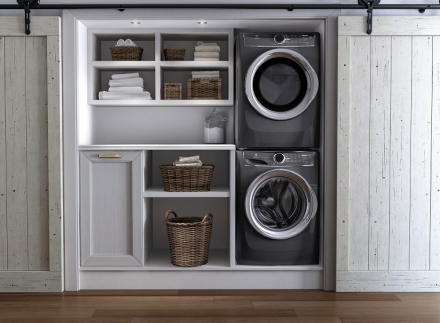
It’s also fairly standard practice to stack dryers on top of washers. Why? There are two main reasons. First, the washer is heavier, and this is especially true if it’s full of water. Second, it will be necessary to plumb a washer into the water supply and drain, which tends to be lower on the wall of your laundry room. Although installing a washer and dryer in the opposite configuration is possible, this is not advisable.

So, if you want two machines to wash and dry simultaneously, you will need a pair of front-loading models. To promote compatibility, they should be from the same manufacturer and product lineup. The alternative is to avoid using two models and use a combination washer/dryer with a top-load washer door. If you’re considering this route, please remember that the washer door may only open up to a 45º angle.

All front-loading laundry machines have the controls mounted on the front of the appliance. This is important because you will need ready access to the controls without trying to reach behind or on top. There are three different stable laundry units that you should consider using compatible machines. They are:

  • Compact Units: These are two laundry machines that are distinct from each other, but you want to connect them anyway. This is common when people buy a new machine and don’t want to get rid of the different model because it’s working well. The good news is that compact units are smaller, the dryer should be condensation-free, and there will be fewer choices to make. In this case, the best option is to buy a separate stacking kit for each machine to join them together.
  • Laundry Centers: These are washers, dryers, and stacking kits contained in a single unit. This guarantees compatibility out of the box, the owner’s manuals cover troubleshooting, and the process should be hassle-free.
  • Standard Front Load Machines: These are full-sized front-load washers and dryers that can be stacked side by side or on each other as required. They are typically bought separately, and compatibility is not guaranteed. Some research may be necessary, and a stacking kit will be a separate purchase, too. The usual rules apply: the dryer will be stacked on the washer.

Check the Space Requirements

It’s essential to carefully measure the space where you want to stack your dryer on top of your washer. Many people install their machines in an enclosed area or closet to best use the space. This is a great idea, but leaving at least a few inches on each side for ventilation and access is essential. There may be times when you need to pull the machines out to check a connector or hose. This can be extremely difficult if you cannot purchase on the machines’ sides.

Many people need to remember about the door. Make sure that the closet is sufficiently deep to accommodate the laundry machines. If it isn’t deep enough, you may find that you cannot close the closet door!

Are There Any Stacking Disadvantages?

Yes. The main problem is that some capacity may need to be sacrificed to make this configuration work. A regular load isn’t a problem, but if you plan to wash heavier items like bedding and blankets, there may be a problem. Another potential drawback is that if one of the compatible machines fails and you want to replace it, you have limited options. The new machine must be compatible with your remaining machine, or you won’t be able to stack it. This is a significant problem with laundry centers that can be difficult to deal with regarding repairs and replacements. In truth, aside from the space-saving aspects of stacking, there are no other significant advantages. If you have the space, installing the two machines alongside each other is better.

How Do I Stack Laundry Appliances?

The first step is to ensure the dryer can be stacked on the washer. A manufacturer’s product range usually has broad compatibility. However, it may be possible to stack two machines from different manufacturers. To check if the machines can be stacked, look for specific details in the user manuals for those models. This information can also be found on the manufacturers’ websites.

If you’re sure the laundry appliances can be stacked, you’ll need some physical way to do it. Stack kits for specific laundry appliances can usually be found at appliance retailers and online. A stacking kit comprises metal brackets used to securely and safely join the two appliances. These can represent a significant investment, but they take much guesswork out of the process and are easy to use.

For brevity, here are eight simple steps to stack your dryer on top of your washer:

  • Tools and Items: You will need the stacking kit, owner’s manual for both machines, a level, measuring table, screwdriver, adjustable wrench, adhesive foam pads, lifting straps, cardboard sheets, and a friend.
  • Check the Manual: Double-check that the two machines are compatible. This will determine whether you have the correct stacking kit.
  • Prepare the Space: Remember that the space needs to be deep enough for the machines; you need around 3 inches down the sides and 6 inches of clearance at the top.
  • Prepare the Appliances: Put the cardboard on the floor, place the dryer on it, lean it over carefully, and remove the foot screws with the wrench. Get the stacking feet from the kit and thread them onto the base of the dryer. Keep the legs safe; you may want to change the configuration later or sell the machine.
  • Positioning: Move the washer into position, leaving a couple of inches for stacking clothes, and ensure the appliance is level. Slide the dryer over on the cardboard sheet to protect the floor and stack it on top using foam pads. You will need two people for this stage and may want to use lifting straps, too. The front and sides of the dryer should be flush with the washer.
  • The Brackets and Clips: Now, you can attach the two appliances to prevent lateral movement when they are operating. All brackets and clips should be installed according to the instructions on the lower edges using the screwdriver. Some alignment may be required to get the fit right before the screws are fully tightened.
  • Make the Connections: Connect the water, gas, vent, and power and ensure that everything is tight before the stacked machines are carefully slid into their final position.
  • Testing: Run an empty washer and dryer cycle to ensure everything works typically. Watch for sudden movements or complex vibrations that indicate that the machines are not level or that the stacking kit wasn’t appropriately used.

Safety Considerations

Some people take a risk and place their dryer on top of the washer without using a stacking kit. This is a bad idea because dryers tend to sway as they operate, and it’s difficult for them to work off the top of the washer.

Ultimately, this may cause damage to both machines, which could be expensive to fix. In extreme cases, it may lead to an earlier-than-expected replacement, costing even more. However, installing built-in shelves to house the machines may not be the best option. The dryer could still move and fall, as we covered in the previous scenario. Also, going this route may cost more than a stacking kit, which would be safer and more secure.

In Conclusion

Choose a home appliance specialist if you’re looking for compatible front-load washers and dryers and the stacking kits to connect them. They can offer helpful advice on the best models to meet your needs and space requirements.


Which is Best? Ceramic vs Induction Cooktops

A cooktop is a valuable appliance in any modern kitchen that offers a proper surface to cook various delicious dishes. There are two popular options: ceramic and induction cooktops. At first glance, they look very similar. But looks can be deceiving, and upon closer inspection, these cooktops are very different. In this article, we will look at these two cooktop choices in more detail to help you determine which will suit your kitchen.

What is an Induction Cooktop?

This is a smooth ceramic surface that hides high-frequency electromagnetics mounted underneath. The magnets interact with the cookware’s surfaces to generate heat in the pan or pot. To generate heat efficiently, the cookware must have steel, iron, or magnetic stainless-steel bottoms. This limited interaction has significant advantages over cooktops that generate heat directly.

First, there is no heat to cause accidental burns during or after cooking if the cooktop is touched. This significantly reduces the chances of accidents, which may be of considerable interest to those with children and elderly relatives. The induction cooktop will only generate heat when the correct type of pan or pot is placed on the surface. Because the surface is sleek and smooth, it’s aesthetically pleasing and easy to clean. Induction cooktops tend to heat the pots and pans quickly, speeding up cooking times and lowering energy bills.

What is a Ceramic Cooktop?

There are also smooth-topped appliances, but instead of the high-frequency electromagnets, they have coiled metal heating elements instead. These elements are placed under a sheet of tempered ceramic glass, which glows during heating. The heat is transferred to a specific burner or “zone” on the cooktop for easy reference. Ceramic cooktops are and remain a popular choice with many people because they are attractive, simple to use, and easy to clean. There are no obtrusive burner units that are difficult to clean, and they deliver reliable and consistent heating.

Which is the Best Cooktop?

This is a tricky question; we all have different expectations, requirements, and budgets. Both cooktops make an excellent choice for a modern kitchen, but they work quite differently, and it’s important to understand these differences.

Those seeking a premium-grade performance without the hassle of a gas cooktop may prefer an induction appliance. The heating times are much faster than those of a typical ceramic cooktop, and they are safer. The cooktop’s surface doesn’t get hot unless it’s in direct contact with a suitable pan or pot. As a bonus, if you spill any food or ingredients during cooking, they will not be cooked onto the surface. This, combined with the sleek finish, makes an induction cooktop simple to clean quickly.

The only real disadvantage of an induction cooktop is that this technology drives up the price. This is fair when considering the features, but it’s probably not the best choice for budget-conscious buyers looking for a new cooktop. This is the main reason why ceramic cooktops are still popular today. They are sleek, controllable, and easy to clean, yet they are much cheaper than an induction model. Those who can deal with slightly slower heating times and incrementally higher energy bills have a lot to offer.

A Brief Cooktop Buying Primer

No matter which cooktop you choose, there are five things that you need to bear in mind before you buy. They are:

  • Available Space: It’s essential to match the cooktop to your kitchen space carefully to ensure it fits properly. There’s not much point in agonizing over how many cooking zones you need on your new induction cooktop if you can only fit four in your kitchen. Certain manufacturers offer 70cm cooktops that fit in a 60cm cutout. This can be useful if 60cm feels too cramped and you need extra space around the base of your pots and pans.
  • Extra Features: One of the best things about new ceramic and induction cooktops is the extra features. The burners or cooking zones can be chosen to suit the number and types of pans that you use regularly. Other useful features may include child locks, timers, displays, control positions, and more. This level of customization isn’t possible with more traditional cooktop designs.
  • Energy Efficiency: Energy costs have risen dramatically in recent years, and many people are looking for ways to trim expenses without compromise. So, it’s a great idea to prioritize energy efficiency when you choose your new cooktop. In this area, the induction cooktop is the clear winner; the upfront costs may be much higher, but energy savings are possible in the medium to long term. This can add up to a tidy sum over the appliance’s lifespan.
  • Electrical Rating: Any cooktop you’re considering should have the correct wiring to suit your kitchen. If you’re unsure, consult a professional home appliance technician to check the wiring and install the cooktop for you. It’s important to follow the manufacturer’s installation requirements carefully. This will prevent any problems in the future and protect your manufacturer’s warranty.
  • Avoid DIY Installations: Although it’s tempting to attempt a DIY installation for your new ceramic or induction cooktop, this should be avoided. Both cooktops represent a significant investment that should be protected. A non-professional installation may cause warranty issues that can degrade the value of your new cooktop.

Making the Final Buying Decision

Although both cooktops work well in a modern kitchen context, we believe the induction cooktops are the best option on the market. They are aesthetically pleasing, functional, simple to use, and easy to clear. Over the years of ownership, a regularly used induction cooktop can save the user a lot of money. Some users may need to upgrade or change their cookware to work with these cooktops. But, the cost of these induction pots and pans has dropped significantly over the last decade. Induction cookware is now more affordable than ever, and many can be used on ceramic, electric, and gas cooktops.

A gas cooktop is the only natural alternative for “serious” cooks. These have become extremely popular in recent years and are often part of a dual-fuel range setup. Many top chefs swear by gas cooktops because they offer superior temperature control, which is a requirement for advanced cooking techniques. But for many people, a gas cooktop is likely to be overkill when it comes to their daily cooking needs. Most of us need a cooktop that’s effective, safe, and easy to clean.

If you’re not sure about induction cooking, there’s a cost-effective option to try it out for yourself. Many manufacturers now sell induction hot plates that you can use with a single pot or pan to evaluate if this technology will work for you. Set up the hotplate and time how long it takes for the water to come to the boil. The results may surprise you; unlike other heating methods, an induction surface is not subject to changes at different altitudes. Most induction surfaces have a minimum and maximum temperature of 100ºF and 500ºF respectively. Because there’s a limited risk of burn, the heat can be distributed consistently and evenly across the entire cooking process. Certain ceramic cooktops can limit heat or fade in and out to “save energy,” which can be annoying.

Safety Features

We’ve touched on this briefly, but the safety features of an induction cooktop can be awe-inspiring. It’s also admirable that these safety measures do not degrade the performance. The risk of injury and damage to cookware and the cooktop is significantly reduced during cooking. The surface doesn’t get too hot and is only activated in set zones that only operate when the pan or pot is in place. Although they are safer than traditional cooktops, ceramic models retain heat after cooking, which can lead to burns. A ceramic cooktop will retain the heat for 4-5 times longer than an induction model. Both types have heat indicators that warn of stray hands or those cleaning the surface too early. One helpful feature on specific models is turning off the zone if there’s a spillage or the cooking zone empties. This can prevent long-lasting damage and use energy in areas no longer required.

In Conclusion

Ideally, we prefer a professionally installed induction cooktop over a ceramic model. The heating speed, energy savings, and extra features are well worth the premium-grade price. An induction cooktop will also add much value to a kitchen if you sell your home shortly. If you want to learn more about induction or ceramic cooktops, contact a home appliance specialist for expert help and advice.


What are the Pros and Cons of a Dual Fuel Range?

The range is one of the most used kitchen appliances in many homes because it combines a cooktop and oven. Many cooking ranges on the market host various valuable functions and features. The dual fuel range is one of the most popular appliances in recent years. This combines a gas cooktop with an electric oven to deliver both advantages. However, a dual-fuel range represents a considerable investment that can deter some people from taking the plunge. This article will examine the pros and cons of dual fuel ranges to help you make an informed purchasing decision.

A Brief Dual Fuel Range Primer

We’ve covered the basics in the introduction, but it’s worth exploring a dual fuel range and why professional chefs and other cooking experts highly regard it.

A dual-fuel range combines a gas cooktop with an electric oven. The purpose is to get the best of both worlds to improve precision and efficiency in the kitchen. Dedicated cooks admire gas cooktops that run on natural gas and liquid propane. Gas is versatile for cooking; it’s much easier to control and comparatively cheap as an energy source. This superior temperature control is essential to make delicious meals evenly cooked throughout. An electric oven delivers heat through coils; they are trusted, reliable, and consistent appliances. A gas oven can work well in some kitchens but can be harder to use and clean.

Dual Fuel Range Advantages

Seven key advantages may influence your decision to purchase a dual fuel range. They are:

  • Improved Heat Control: A gas cooktop allows you to cook at higher temperatures and still has greater heat control than a gas stovetop.
  • Faster Preheating: A gas cooktop typically preheats much faster than an electric alternative.
  • Consistent Heating: Every gas burner delivers consistent heating if they are cleaned regularly. This is far superior to other heating elements that can provide sporadic heating when needed.
  • Designed for Chefs: If you want to improve your cooking and try out some advanced techniques, you will eventually need a gas cooktop.
  • Electric Heating Elements: Placing the electric heating elements in a dual-fuel range oven improves the heat distribution throughout the cavity. This delivers consistent cooking results and is essential for baking, roasting, and more.
  • Lack of Power: If you’re living off the grid or are concerned about a lack of access to consistent electrical power, you should consider a gas cooktop. This will allow you to cook meals that don’t require an oven even if the power has failed.
  • Aesthetic Appeal: A dual-fuel range is a premium-grade kitchen appliance, and the best examples add considerable aesthetic appeal to the space.

Dual Fuel Range Disadvantages

Four disadvantages may affect your decision to buy a dual fuel range. They are:

  • Higher Purchasing Costs: A dual-fuel range will be more expensive than an alternative all-gas or all-electric appliance. However, for many people, the added precision, functionality, and versatility are well worth the additional investment.
  • Slower Preheating Times: An electric oven tends to have a slower preheating time than a gas oven.
  • A gas line must be connected to the home to power a gas or dual fuel range. If no gas line is present, one will need to be installed, which will add to the final cost of the appliance.
  • The Urge to Remodel: If your kitchen needs an update, you could find yourself pulling the trigger sooner rather than later if you purchase a dual-fuel range. This premium-grade appliance may outshine the rest of the kitchen and persuade you to upgrade to a luxurious, aesthetically appealing style to impress visitors. If you have a great deal of self-control, this will be less of an issue, but it could be a factor.

Dual Fuel Range Infrastructure Limitations

Although a dual-fuel range does offer some considerable advantages, it may not be the ideal choice for every home. These appliances rely on two distinct power sources to operate, and if you don’t have access to one of them, you’re wasting your time. Some homes don’t have access to a gas line unless the homeowner can install a propane or natural gas tank for the property.

Another key problem is that the location of the gas line could limit the range’s placement in the kitchen. If you want to position the dual-fuel range in a specific location, it may be necessary to move the gas line. This can add a lot to the cost of the installation, and it should be carefully considered before you go ahead. There needs to be adequate voltage to run the oven, which may be an issue for an older home that has a simplified kitchen.

Installing a Dual Fuel Range

Once you’ve checked that you have a connected gas line to power the burners, take some time to evaluate the electrical power requirements. You will need a 240v power supply for the range; a standard 120v power supply and plug will not be sufficient. Before you make a final commitment, it’s a great idea to consult an appliance installation expert to ensure the installation is possible and install the range for you. If you choose to attempt a DIY installation, there are ten essential steps to complete the process safely. They are:

  1. Check the Circuit Voltage: It’s essential to find out if the electric oven has a 240v power supply.
  2. Understand the Power Cords: A dual fuel range cannot be powered with a standard 120v plug, power supply, or extension cord.
  3. Check the Range Connections: The electric range connections should be checked to determine that they are secure and properly insulated.
  4. The Gas Valve: Find the valve and turn it off to stay safe throughout the installation.
  5. The Gas Connector: It’s time to attach the gas connector to the gas cooktop unit.
  6. Electric Power: When ready, connect the proper power cord to the electric oven unit.
  7. The Duel Range: For most dual fuel range appliances, this is when you will be ready to slide the range into place.
  8. The Mounting Plate: If you have a mounting place, it’s time to secure it.
  9. Restore the Gas Supply: Turn the gas back on and check for any leaks.
  10. Explore the Functions: Once you’re confident that everything is connected correctly, try all the functions to ensure everything works as intended. If there is a problem, check the owner’s manual for your appliance. There should be a troubleshooting guide that can be useful when you’re using the dual fuel range for the first time.

FAQs

Is a Dual Fuel Range Worth the Price?

This is a tricky question; everyone has different expectations and budgets to consider. Many people who switch to this kitchen appliance love it and would never consider switching back to an all-electric or all-gas model. If you have the available hookups, the installation costs are lessened, which can soften the financial blow somewhat.

A dual-fuel range will offer cooks who aspire to a higher level of cooking an opportunity to truly excel. The best advice for budget-conscious people may be to pair a gas cooktop with a separate wall-mounted electric oven. This combination can work well in smaller kitchens and is likely to be a cheaper way to go.

How Does a Downdraft Dual Fuel Range Work?

A downdraft model has a clever internal ventilation system that eliminates the need for an overhead venting hood. The vent may be located on the cooktop surface, where it captures unwanted odors and particles from the air surrounding the cooking surface. The air is then filtered and recirculated in a duct-free vent or vented into the ductwork.

Another option is a downdraft hood installed behind the dual fuel range. This hood can be extended or retracted as required, and it is relatively easy to install into your existing kitchen.

Is a Dual Fuel Range Installation a Valid DIY Project?

This can vary depending on your skill and experience with both gas and electrical installations. Most people should not consider a DIY installation at all, there’s a very real risk of electrocution and gas inhalation or explosions to consider. It may seem like a good idea to save some money, but it may be costly. There may be unforeseen problems to overcome, and a kitchen appliance installation specialist can get the job done quickly.


You can discover the perfect dual fuel range for your home with this online collection of cooking ranges. For more information, be sure to contact a professional home appliance expert.

What Is Induction Cooking? And How Does It Work?

Due to its efficiency, preciseness, and safety, induction cooking has become increasingly popular in Los Angeles kitchens. Induction cooktops use advanced technology to heat pots and pans directly, while traditional gas or electric stoves indirectly transfer their heat to cooked food. This new way of cooking gives cooks at home and in professional restaurants a sleek and efficient solution to complete their mission. But what exactly is induction cooking, and how does it work? Let’s delve into the details and benefits of this exciting kitchen technology.

Understanding Induction Cooking

Induction cooking has revolutionized kitchen technology by directly heating pots and pans through electromagnetic fields. All other traditional cooking methods, from gas burners to electric stoves, rely on conduction and radiation. Gas burners heat up through an open flame, and electric stoves have heated coils warming cookware. In an induction cooktop, the heat is produced inside a cooking vessel directly through electrical induction.

How Induction Cooking Works?

These steps explain how induction cooking works:

Induction Cooktop

An induction cooktop, hob, or stove features a flat, heat-resistant glass-ceramic surface. Under this is a coil of copper wire. When the cooktop is powered, high-frequency alternating current flows through this coil, creating an oscillating magnetic field.

The Magnetic Field

The oscillating magnetic field produced by the copper coil does not generate heat directly. It creates an electrical current in any ferrous metal- that is, metal-containing iron-set upon the cooktop. Here comes into action your cooking vessel.

The Cooking Vessel

Induction cooking works only if the vessel is made of ferrous metal. This would typically include cast iron, carbon steel, and some grades of stainless steel. When this magnetic field meets with the ferrous metal in cookware, it sets huge eddy currents moving at the bottom of a vessel.

Heat Generation

These eddy currents flow through the resistance of the metal, directly heating the cooking vessel. The heat from the pot or pan is then transferred to the food or liquid it contains. Here, the process is efficient in minimizing heat losses by assuring that energy is used directly for actual cooking.

Advantages of Induction cooking

For many reasons, induction cooking is a prominent option in modern kitchens.

Speed and Efficiency

Induction cooktops warm up faster than traditional gas or electric stoves. Because energy is directly transferred to the cooking vessel, less heat is wasted on the environment. Hence, cooking with an induction cooktop is more efficient in using energy; cooking times are considerably reduced.

Precise Temperature Control

It allows for perfect temperature control while cooking. While a gas or electric stove may take a little time to get the desired heat, induction cooktops respond almost instantaneously to changes in heat settings. This kind of precision helps when cooking delicate dishes that require exact temperatures.

Safety

Another advantage of induction is safety. Individuals are far less likely to get burned because the cooktop remains cool during operation and gets hot only under the cooking vessel. This technology automatically shuts off when it fails to detect compatible cookware, preventing unintended turn-on. Moreover, no open flames translate to no risks of gas leaking or sparking into fire.

Easy Cleaning

Induction cooktops have smooth, flat tops that are easy to clean. The cooktop surface does not get too hot, so spillovers don’t burn onto it, making cleanup relatively easy.

Suitable Cookware for Induction Cooking

Cookware is one of the significant factors in induction cooking. Not all pots and pans work with an induction cooktop. Here are five kinds of cookware that work with induction:

1. Cast Iron

Cast iron cookware will work very well on an induction cooktop due to its high iron percentage, which makes it strongly magnetic. It distributes the heat evenly and retains its perfect features, suitable for slow-cooking and simmering.

2. Stainless Steel

Stainless steel cookware is used with induction cooktops. Not all stainless steel, however, is magnetic. The point here is to check for induction compatibility before buying. Some stainless steel cookware has added a layer of magnetic material to make it induction-friendly.

3. Enameled Cast Iron

Another excellent choice for induction cooking is enameled cast iron. It offers all the benefits of inbound-iron cookware, plus it has an enamel coat to make cleaning easier.

4. Carbon Steel

Carbon steel pans perform very much like cast iron and work with induction stoves. They are fast heating and can be used for varied cooking methods.

5. Induction-Compatible Cookware

Nowadays, many manufacturers create cookware designed for induction cooking. These pots and pans are branded as compatible with induction cooking and mostly have a magnetic bottom.

The Induction Cooking Experience

Induction cooking does require some adjustment, mainly if you are accustomed to cooking on gas or electric stoves. Here are things to bear in mind:

Cookware Compatibility

As noted earlier, not all cookware is induction-compatible. You’ll need cookware with a bottom material made of ferromagnetic material. A simple test to check if your cookware will work on an induction cooktop: see if a magnet sticks to the bottom; if it does, it will work.

Different Cooking Methods

You may have to work differently because induction cooking is very efficient. You may be using lower heat settings than those you have been used to, as induction quickly raises the food temperature.

New Sounds

Induction cooktops occasionally produce humming or buzzing sounds. This is normal and caused by the electromagnetic field interacting with the cookware. High-quality, heavy-bottomed pans tend to minimize this effect.

Visual Cues

If you are used to cooking on gas, you may miss the visual cue of the flame. Induction cooktops often have digital readouts for power levels, but it can take a little habituating.

Final Thoughts

Induction cooking works very fast and efficiently, saving time and ensuring safety in the kitchen. Appreciating how induction cooktops work and using suitable cookware will further enhance your cooking experience. Whether you’re a professional chef in Los Angeles or a home-oriented cook, induction cooking helps to gain more functionality in your kitchen while easing up meal preparation. If you want a new cooking appliance, induction cooktops might be precisely what your home needs.

Visit your local kitchen appliance store to check out your options.

Steps to Choose the Best Microwave for Your Kitchen

Kitchen appliances are necessary in this fast-paced world where everyone looks for comfort and convenience while cooking meals. Many kitchen appliances exist, but microwaves are the most indispensable and important kitchen appliances today. It is no longer an optional luxury; instead, it has evolved to become a necessity that performs a wide array of functions. The functionality of the microwave is not only limited to reheating or defrosting, but it has also become a fantastic appliance that helps cook delicious and healthy meals. Everyone needs This culinary ally in the modern kitchen as it performs many functions like heating, defrosting, baking, cooking, grilling, and steaming. With technological advancements, the functions and features of microwaves are evolving every day, and the need to choose the best microwave has become even more important. Whether buying a microwave for the first time or replacing the old model of this appliance, it is essential to have valuable insights into the type of microwave available in the market. Choosing the most versatile and convenient appliance can be a great relief, so you’ll need to explore the various options before making an informed decision about your purchase.

Steps to choose the best microwave for your kitchen

Types of microwaves- three types of microwaves are available in the market, which includes-

Over-the-range microwaves come with features where the odors and smoke from the cooktop are removed for more efficient cooking.

Built-in microwaves—When facing a space shortage, you should choose this option, as you won’t need extra counter space for the microwave.

Countertop microwaves are the most popular and affordable option. They are preferred due to their ease of use and convenience, as installing the appliance in your kitchen is unnecessary.

Know the different sizes– the microwaves are measured based on their external and internal dimensions. The selection of the perfect size depends on the size, layout, and design of your kitchen so that the appliance can fit into the available space. The internal dimensions relate to the interior space present for cooking, baking, or grilling, while the external dimension relates to the overall space of the appliance. While considering the size, you also need to ensure ample ventilation space is available for the proper usage of the appliance. The size is also measured in liters, and the selection should be done according to the size of your family and cooking requirements.

Choose the right power and wattage– Wattage measures the microwave energy consumed. This also determines how quickly and efficiently food is cooked, and hence, for appropriate cooking, you need to choose an option with 1100 or 1200 watts. The microwave’s wattage is directly related to the period within which the food is cooked and heated. Please look at your cooking needs when selecting a microwave that can be precisely what you have been looking for.

You can find out the usage instructions- microwaves are considered a must-have appliance for every household, and they have revolutionized the way of cooking foods. For a seamless cooking experience, you should choose an easy and convenient appliance with simple cooking instructions—always looking for a model with a delicate touchpad, transparent displays, and intuitive controls so that cooking can be done without any hassles. It is also essential to look for an appliance that can be cleaned and maintained easily without elaborate procedures. For this, you should look for models that come with flatbed or turntable design, and they should be made of ceramic or stainless steel as these are the most easy-to-maintain options.

Consider the price—Along with the microwave’s features, you must also consider its price, as it is one of the most critical considerations in determining the final selection. There might be many options for microwaves available in the market, but you should always keep in mind your budget to make the final decision. For a low budget, you should look for an affordable countertop microwave. Still, it would be best to choose an over-the-range or built-in microwave for a more elegant, practical, and innovative option.

Please be sure to look for additional features– different models and brands of microwaves have various features and options for usage. You must explore all these features to select the appliance based on your needs and preferences. The most popular features that you need to look for in the microwave include-

Power rating—It is essential to check the microwave’s power rating, which may vary from 600 watts to 1500 watts. Choosing higher watts means you will get quick and efficient cooking within a short period.

Controls—The microwave must be selected based on easy-to-use controls that make cooking seamless and enjoyable. Always look for an appliance with an easy user guide so that you won’t face any difficulty using it.

Automatic defrosting is an important feature that makes defrosting easy, quick, and convenient. You will only need to enter the type and weight of the food to defrost it. This desirable feature is convenient for anyone who loves eating ready-to-eat frozen food, as it can be defrosted easily within a short period.

Child lock features—Anyone with small kids needs to choose an appliance with child lock features for their kids’ safety. This feature is extremely beneficial as you can set a code that needs to be entered every time you use the microwave. Hence, your child will not use the microwave even when you are absent, so there are no risks or hazards associated with using this appliance.

Contact your local appliance retail store to help you navigate.


What Is a Convection Oven and When & How to Use It

Today, home appliances are a far cry from where they used to be. The convection oven is one of the most valuable kitchen inventions, undoubtedly changing how we cook. As you read this article, you will become familiar with what a convection oven is, how it operates, and its efficient methods to enhance your cooking process.

Baking is a science and an art that needs the right equipment to become a masterpiece. This three-compartmented traditional oven has been used for decades and has recently been supplemented by Convection ovens. If you are interested in a convection oven and have wondered why it is different or how it can improve your food, then you are at the right place. This blog will go over all the mechanics, the advantages or disadvantages, and the uses of a convection oven to assist you in honing your culinary skills.

What are the characteristics of a Convection Oven?

The convection oven uses a fan and a blower to distribute hot air all over the food that needs to be cooked or baked. This differs from conventional ovens, which use only direct heat from the top and bottom heating features. A circulating air system used in convection ovens distributes heat evenly, making them easier to cook and, sometimes, even quicker than conventional ovens.

How Does It Work?

In a convection oven, a fan circulates the hot air, eradicating the temperature variations that traditional ovens have and which affect cooking. Besides evenly cooking the food, it also assists in browning and crisping the food more efficiently. The exhausted system also removes moisture, giving it an added advantage in roasting and baking, knowing that they require dry heat.

Types of Convection Ovens

There are several convection ovens: countertop, wall-mounted, microwave, and convection oven hybrid. All types share the convection baking technology but may differ in added facilities, dimensions, and cost. Small appliances like countertop models are convenient for those with little kitchen space or who need an additional oven, while wall models are desired for frequent bakers and roasters needing more baking space.

To sum up, if you wish to make the best of frozen food and obtain a crispy, juicy, and tender result with never-more moist meals, pay attention to the mentioned above tips and use a convection oven when:

Convection ovens are very flexible and have many uses, as seen in the above examples.

Here are some scenarios where a convection oven truly shines

Baking

Convection ovens are perfect for baking because they circulate heated air, essential for goods like cakes. Cookies, cakes, and pastries bake well at a constant heat and thus are evenly browned and cooked to perfection. The dry heat also assists in attaining a crispier crust among breads and pies.

Roasting

Browning meats and grill-like preparation of vegetables is possible in a convection oven. The circulating air helps toast the food on many sides, and dry heat is needed to get a nice brown crust. For instance, baking a chicken or turkey will make the outside brown and crispy while the meat is tender.

Dehydrating

Convection ovens are also perfect for dehydrating fruits, vegetables, and even meats for homemade snacks such as dried fruits and jerky. The fan and exhaust remove the moisture, thus shortening the dehydration time compared to oven dehydration.

Reheating

It is not a secret that meals reheated in a convection oven are usually better than those in a microwave. The even heat distribution implies that the heated food becomes smooth while acquiring the intended heat.

How to Convection Oven

Working with a convection oven may differ slightly from a conventional oven, so it is vital to know the difference.

Adjust the Temperature

It is important to note that when baking in a convection oven, most chefs and cooks suggest lowering the temperature by approximately 25 degrees compared to a regular oven. This assists in better heat dispersion and avoids burning meals on the outer side while remaining raw on the inner side.

Monitor Cooking Time

Because foods cooked in a convection oven cook faster, monitoring them as they are being cooked is advisable. Gently begin giving a test before the recipe’s stated time for the cake to be fully baked. Eventually, you will learn the extent to which your convection oven bakes food more quickly.

Use Appropriate Cookware

The best dishes for maximizing convection effects are shallow baking pans and trays. Do not use deep, covered dishes; they will limit air circulation and nullify the convection baking process.

Avoid Overcrowding

Shelter all the items in the oven so that there is sufficient space around them so hot air can circulate. An obvious problem is overcrowding, where some parts of the food are not exposed to the circulating hot air.

Experiment with Settings

Most convection ovens have different controls for the heat required, including convection bake, roast, and convection broil. Try these settings in your preferred dishes and see which would complement your cooking style.

Conclusion

As shown above, adding a convection oven is very useful for any kitchen since it has many characteristics not found in a conventional oven. Because of its efficient heat distribution across the food, it is suitable for baking, roasting, dehydrating, and reheating, among other things. Once you know how to cook with a convection oven, your cooking and the taste of the foods you cook will improve.

Adding a convection oven in your kitchen can move you to the next level for the professional cook or the hobbyist preparing his first meal. Thus, each time you purchase a new oven, it may be helpful to contemplate the benefits of convection cooking and how it may enrich your home-cooked dishes.

Contact your local kitchen appliance specialist for further assistance.

How the Dishwasher Has Changed Our World

Many people were raised washing dishes as one of their chores, but this is increasingly rare as the years go by. The invention of the dishwasher, its evolution into a must-have home appliance, and its wider adoption by the public is an exciting story. The modern dishwashers we have today have a host of valuable features. But, this was not always the case, and the origins of this appliance stretch back around 160 years!

When Was the Dishwasher Invented?

Like many inventions, several people were working on similar ideas simultaneously. However, in the way we think of this appliance today, the earliest incarnation of a dishwasher was a patent issued in 1850 to Joel Houghton. This design was wooden; the dishes were placed inside, and water was sprayed. The appliance could only be cranked by hand and only splashed water on the dishes. This was extremely basic, but the principle was similar to how modern dishwashers are designed.

Later, a second inventor named Josephine Cochrane improved the initial design to create an automated appliance. A copper boiler with a wooden wheel could be driven by power or hand using a pulley. The dishes sat in wired compartments sprayed with hot, soapy water and spun.

The inventor created this design because she was fond of entertaining, and her servants repeatedly chipped her prized 17th-century dishes. She washed the dishes herself to mitigate the damage, but she hated it and wondered why there wasn’t an appliance to make it easier. Her dishwasher was ready for testing in 1886. It was a practical improvement on the earlier design, and people loved it.

Josephine Cochrane and George Butters built the final design in 1889, calling it the “Lavaplatos.” This dishwasher was later presented in a working format at the Chicago World’s Fair in 1893. It was a modest success among the rich who could afford this specialized appliance.

Willian Howard Livens invented the first machine-powered dishwasher in England. He created a dishwasher in 1924 powered by an electric motor spraying water over the dishes. On a darker note, Livens invented flame-based and chemical weapons that were put to horrific use in both the First and Second World Wars! Sadly, this dishwasher design was far ahead of its time, and widespread adoption would have been impossible. The design worked well; it had a front door for easier loading and a rotating spinner to spread the water equally. However, most homes didn’t have indoor plumbing, and only incredibly wealthy people could install one. In 1940, Livens added drying capabilities to his dishwasher to speed up the drying process. Commercial success still eluded him, and his invention was not affordable or practical for most households. Other inventors built on this design in the post-WW2 years to perfect and add elements that would make dishwashers viable for more people.

A dishwasher was a luxury appliance until the 1950s, when the designs began to evolve rapidly, and the prices became affordable. Drying functionality had been invented in the 1940s, but it increasingly became a necessity until it was a standard feature from the 1970s onwards. The introduction of automatic dishwashers was when these appliances began to catch the public’s imagination. These appliances had a heating element to increase the water temperature, a detergent dispenser, and multiple wash cycle modes.

7 Features That Defined the Modern Dishwasher

The technological advances found throughout the post-WW2 economic boom were gradually adopted into dishwashers and other household appliances. From the 1970s until the present, the evolution of transistors, circuit boards, computing, and other technologies facilitated rapid changes for the better. Let’s take a look at seven key features that went on to define the modern dishwasher:

  • Quiet Operation: The early bulky dishwashers were loud, and you didn’t want to be in the same room as they were washing the dishes. Gradually, the designers added insulation and sound-dampening materials to soften the noise and vibrations. A modern dishwasher is quiet; you can run it anytime without disturbing anyone.
  • Multiple Wash Cycles: The first dishwashers had a single wash cycle for every type of dish, no matter how soiled it may have been. The introduction of multiple wash cycles was a revelation. The wash cycle could be specified to meet a specific need, making it much easier to wash glassware and heavy-duty dishes separately.
  • Adjustable Racks: The older machines were inflexible regarding efficient space management and load or unloading. Over time, many manufacturers added fold-down times and adjustable racks to make dishwashers more flexible. From that point, it was much easier to fit dishes of all shapes and sizes in the dishwasher for thorough cleaning.
  • Advanced Water Filtration: The earliest dishwashers simply forced a lot of water through the appliance or circulated the increasingly dirty water multiple times. But, the addition of advanced filtration systems ensured that only clean water could circulate the dishes for the duration of the chosen cycle.
  • Energy Efficiency: As dishwashers became purely electric appliances, there was always going to be a need for improved efficiency. The best modern Energy Star-certified dishwashers use less energy and water without compromising cleaning power. This reduces utility bills and lowers the environmental impact at the same time.
  • Sensors: The invention and adoption of dishwasher sensors improved the wash cycle selection. A modern dishwasher can detect dish soiling and automatically adjust it to save energy and water.
  • Smart Technology: Today, dishwashers have intelligent features that can be monitored and controlled via a smartphone app.

Dishwashers Making Chores Simpler

Now, around 75% of American homes have a dishwasher that is affordable and easy to use. Most are equipped with racks and removable trays; they have efficient rotating spray arms and pre-soak cycles. This appliance is an incredible invention, but its importance in the modern world is only becoming apparent to many people. One of the most exciting things about modern dishwashers is that they use 5,000 fewer gallons of water than washing dishes by hand. According to the EPA and US Department of Energy, the best ENERGY STAR models are not more eco-friendly. They are still a real time saver.

The Sanitary Benefits of Dishwashers

These earlier incarnations of the dishwasher were purely invented to deal with a troublesome chore. Most people don’t enjoy washing dishes by hand, which was equally valid in the past. But those earlier inventors didn’t know that what would become the modern dishwasher is far more sanitary than washing by hand.

A modern dishwasher uses hot water and spray nozzles that can be adjusted for different types of dishes and loads. The temperatures inside the appliance can reach up to 145ºF, and no human hand can withstand washing in hot water. Detergents used in dishwashers have also advanced. These products remove bacteria and germs from dishes better than simple soap.

Another factor affecting the cleanliness of dishes washed by hand is the sponge we use to clean them. The surface of the sponge is coated with bacteria and other microorganisms. Studies have found almost 400 bacterial species on a single household sponge used for washing dishes. This incredible density equates to around 45 billion bacteria per square centimeter.

How to Choose the Right Dishwasher

A modern dishwasher has never been more affordable. Even with the current supply chain issues, there are plenty of models to choose from. The best appliances come with features that are probably overkill for most of us. But if you want the latest smart technology to control your dishwasher remotely via WiFi, you’re good to go. Even a basic dishwasher is packed with technology that would have been impossible a few decades ago.

There are now full-sized, slim dishwashers for every kitchen space and budget. Get a full-size dishwasher if you’re single or a couple that entertains frequently or has kids that come home on weekends. But make sure it has a half-load cycle to save energy and water when you don’t need to fill it. Although an Energy Star-certified dishwasher costs more, it’s well worth the investment. These appliances use less energy and water, which more than makeup for the higher purchasing price in the medium to long term.

In Conclusion

The development of the dishwasher from its earliest beginnings to the modern day has been astonishing. A simple wooden box with a rack and hand-cranked paddles has become an efficient appliance that most of us couldn’t live without. So, if your kids start to complain about loading or emptying the dishwasher as a chore, remind them how things used to be. If you’re looking to replace an aging dishwasher with a more efficient model or need to schedule a repair for your existing model, contact a home appliance professional for further assistance.