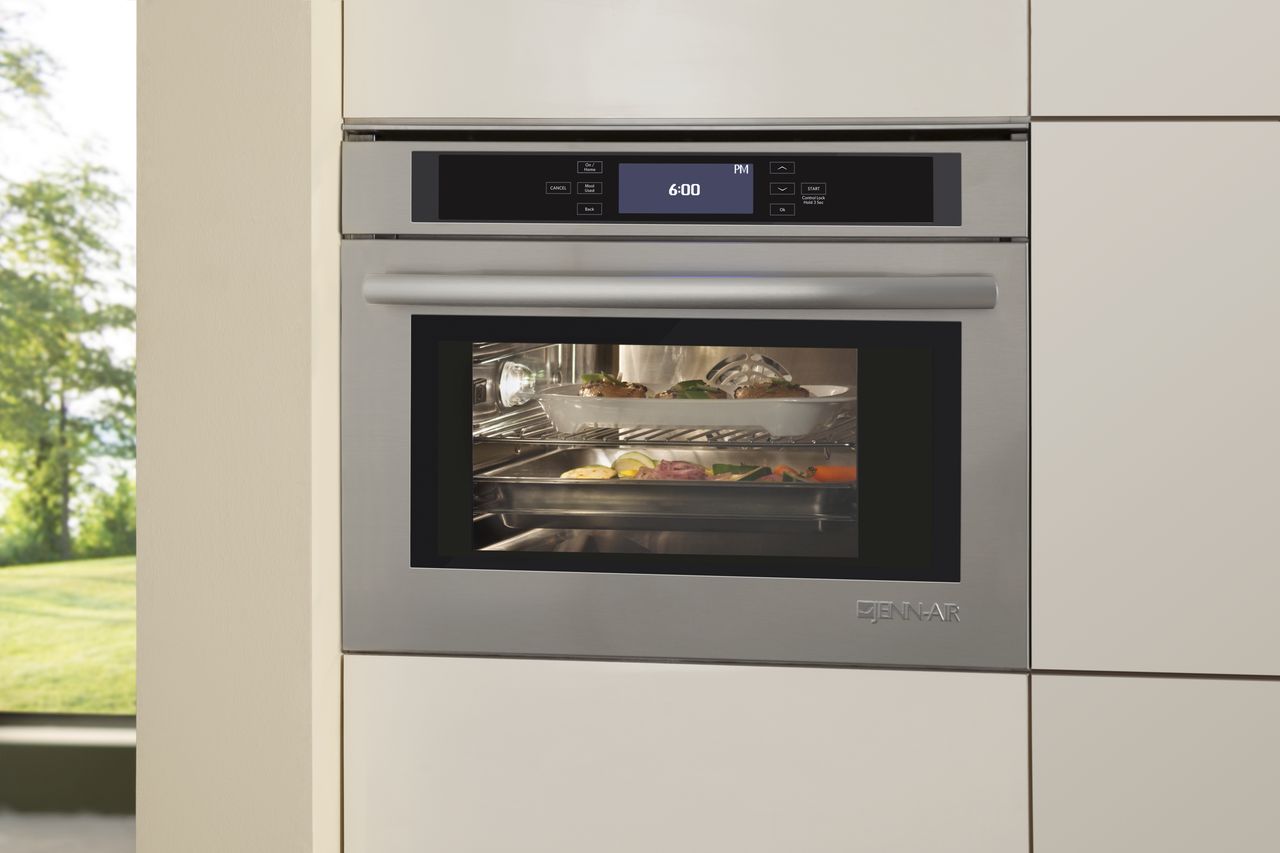
A Deep Dive into Steam Ovens

When you’re shopping for new kitchen appliances, it can be a little overwhelming when you start to look at the various types of model available. A great example of this is ovens; there are conventional ovens, convection ovens, speed ovens and steam ovens. Steam ovens are a fairly new entry into the consumer kitchen, but can be a great addition to your kitchen. So, here we’ll take a deep dive into steam ovens, their features and benefits.

The Steam Oven Basics:

Steam ovens operate in a similar way to a conventional oven. The radiant heat circulates the hot air throughout the oven interior. When you select steam mode, moisture is injected to create a more humid cooking environment. This water vapor may be added from a water line which is directly connected to your kitchen plumbing or through a water canister that requires manual filling.

While you may be tempted to attempt to recreate this by adding water to a regular oven, this could be potentially dangerous. If you pour water in the bottom of your oven, there is a risk that you will damage the baking element. Additionally, this method will not evenly distribute moisture as a steam oven does so that the food stays hydrated during the entire cooking process.

The Benefits of a Steam Oven:

There are a number of benefits of using a steam oven. These include:

  • Healthier, Better Tasting Food: Steaming is one of the healthiest methods of cooking. A steam oven provides a moist environment which prevents the food from drying out. This eliminates the need for adding fat or oil to your food. The flavor is locked in and nutrients that would be lost with convection cooking are retained.
  • Efficient Cooking: While convection ovens are considered efficient compared to standard models, steam ovens can cook meals even faster to save even more energy. For example, you can cook a chicken in approximately 20 minutes and then use the browning function to add a roasted finish.
  • Prepare Delicate Dishes: A steam oven can provide the perfect environment to bake or cook more delicate items. For example, breads, croissants and pastries can benefit from the environment which will not allow them to dry out.
  • Reheat Foods: One of the drawbacks of eating leftovers is that they can become dry and unpalatable. However, the moist conditions in a steam oven means that you can easily reheat foods without compromising on their quality.

Steam Oven vs Microwave:

If you already have a microwave in your kitchen, you may wonder if a steam oven is necessary and whether it is better than your microwave.

While microwaves are the champion of speed cooking, the texture and flavor of dishes prepared in a steam oven are far superior.

Microwaves have a reputation for producing rubbery food if it is even slightly overcooked. Since moisture is included with a steam oven, it guards the food against overcooking, so the texture remains soft and delicious.

Cleaning a Steam Oven:

Steam ovens tend to be easier to clean, due to the moist environment, as you can avoid those hard baked on food remnants. But, because of the condensation, it will need to be more frequently cleaned compared to a regular oven.

You can clean the oven by running a steam cycle for approximately 15 minutes and then wipe down the surfaces using a soft cloth. If there are any tough stains, you can use an appropriate cleaner as per your owners manual. After cleaning, run a final short steam cycle to remove any remaining residue.

If you’re considering a steam oven, you can explore the available options with our online oven and store collection. You can also speak to one of our home appliance specialists who would be happy to guide you through all the available options.
6 Exciting Kitchen Appliance Trends for 2020 and Beyond

The kitchen is the beating heart of any home, and it’s a prime location for regular updates and remodeling projects. Upgrading a kitchen is a great way to add value to your home, but it’s also an excellent way to improve the efficiency of the kitchen. If you want to enjoy cooking, eating, and socializing in your kitchen, here are six appliance trends that you may want to look out for.

  1. Steam Ovens

Many manufacturers are now making steam ovens, and this is a trend that will become more popular in the years to come. A steam oven cooks the food in a sealed steam environment to retain the flavors and reduce the cooking times. This is a very healthy way to cook because there is no need to add oils or fats required to make the food moist. A browning function can add a little color at the end for a roasted finish for your food.

  1. Refrigerators Get Upgraded

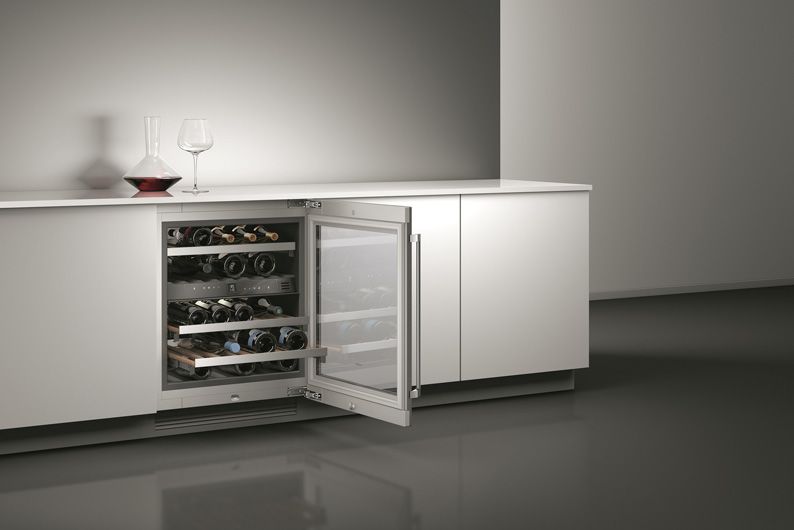
Every kitchen needs a good refrigerator, but in 2020 and the near future, we will see significant upgrades. Expect to see an exciting range of new finishes in metallic or matte finishes that you may want to show off. Hiding a refrigerator behind a cabinet front may become less popular. Another interesting development is flexible compartments that can be tailored to specific foods and ingredients. Smart features will develop even further, and new auto assist functions will allow users to streamline their kitchen.

  1. Wireless Bluetooth Synchronization

We have seen some amazing advances in wireless sync using Bluetooth devices. This trend is set to continue, and the next logical step is in your kitchen. There will be no need for extended preheating times or antiquated oven timers. An advanced range can sync to your other appliances such as the microwave for coordinated cooking times. Appliances may even perform other useful functions, such as turning on lights when the appliances are in use.

  1. Touch Screen Surfaces

We’ve seen an increasing number of touch screen surfaces replace a traditional knob and other controls. This is set to continue as we move forward with more finger touch and swiping controls on other appliances. One exciting development is a touch sensitive cooktop that uses electromagnetic heat, and the user can “draw” a cooking surface around the base of their pan. Then the heat can be adjusted by swiping the cooktop surface itself and all without risking a burn on your finger. GE is already working on this technology, and they have a prototype, so we may see this in production in the next few years.

  1. WiFi Connectivity

The smartphone has revolutionized the world of instant communication, and the rise of apps to control virtually anything has opened up an entire field of innovation. Manufacturers are now making appliances that can be controlled remotely from your smartphone. So, the user can adjust the temperature in their oven, the intensity of their kitchen lighting, and the timer on their microwave from a handy app.

  1. Multi-Cooker Evolution

One of the most popular kitchen appliances in the last few years is the versatile multi-cooker. Essentially, this is a pressure cooker with computerized controls that allows the user to make tasty and healthy meals in a fraction of the time. We will see similar WiFi connectivity allowing the user to control their multi-cooker remotely. So, you could load the ingredients into the multi-cooker before you leave, and they turn it on and control the temperature ready for your return home.

If you’re considering updating your kitchen appliances, you can explore your options with this online collection. If you need further help and guidance, speak to one of our home appliance experts today.