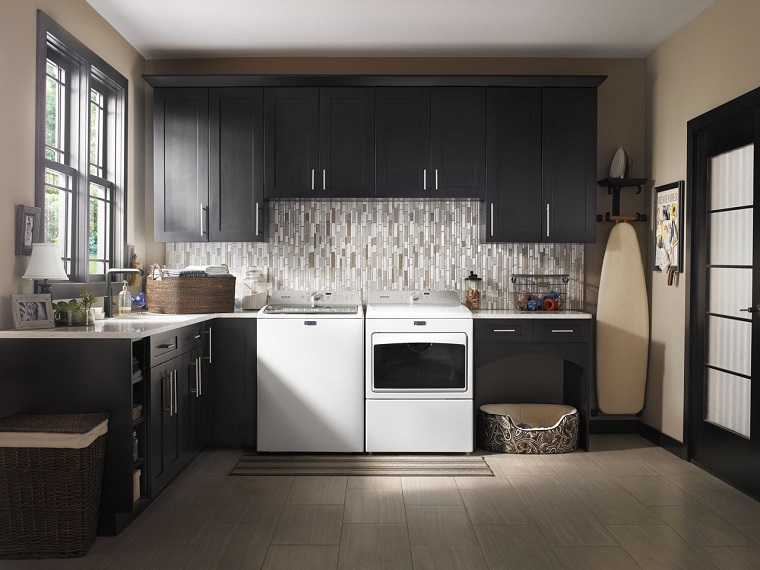
Many of us find laundry a cumbersome and annoying task. In a busy family home, it can mean doing loads of laundry every day, and when you have your washer and dryer lurking in a basement or tucked away in a garage, you may dream of creating a laundry room. This can not only make your life easier, but could add to the value of your property. In fact, a National Association of Home Builders 2017 survey found that the number one on a list of most desired features for a new home is a dedicated laundry room. It was shown to be considered desirable or essential by 90 percent of the survey respondents. The National Association of Realtors has also found that a laundry room is high on the list of must-haves for millennials, who are now representing the largest proportion of home buyers. So, here we’ll explore some tips to plan your home’s perfect laundry room.
Think Dual Purpose
In addition to being a convenient location for all your laundry related tasks, your new laundry room could also serve a second purpose as a mud room. This means that you can avoid knapsacks, shoes, jackets and muddy boots coming into your kitchen and living areas. For this sort of application, you will need a 6×12 foot area ideally, but it can be accomplished with as small a 5×8 footprint.
Test For Structurally Sound Locations
Before you make a final decision on the location of your new laundry room, you need to ensure that it is structurally sound. An engineer can help you to determine this, particularly if you want a laundry room on the first floor near your bedroom. You may also need help from an architect, who can help with any space planning concerns and the incorporation of any necessary mechanical changes to the design of an existing home.
Remember that floor joists must be able to support the additional weight of the washer and dryer, along with the associated vibrations. You will also need a clear path for venting, electrical, plumbing, and even gas lines.
Consider Noise
It is worth bearing in mind that even the most modern of washer and dryer models will still make some noise, so you need to think about whether this will interfere with the usual activities in certain areas of your home. For example, while it may seem like a great idea to have a laundry room near your bedroom, you may regret it if the spin cycle wakes your children after bedtime. Of course, you can add insulation to prevent noise from traveling to adjoining rooms and those above and below, but this will add to the costs of your renovation.
Plan For Waterproofing
One of the best ways to prevent leaks flooding the rest of your home is to create a curb across the threshold of your laundry room, install a floor drain and waterproof the floor area. Since the drain will typically be dry, you will also need a trap primer to divert a small amount of water from your supply line to keep the trap full and prevent nasty smells from rising into your home.
Choose the Right Appliances
Finally, you need to choose the best appliances for your new laundry room. To minimize vibrations, you’ll need to ensure that your appliances are level and you may want to consider stack-ability to maximize space. It is also a good idea to look for efficient, low noise appliances that can offer excellent performance. Just remember that while you need a loud chime when your washer is in the basement, it can be annoying next to your bedroom or near your living area. So, look for models that allow the audible alerts to be turned down or off.
If you’re considering installing or upgrading your laundry room, you can explore your options with this online washer and dryer collection, or speak to a home appliance professional for more specialist and expert help.