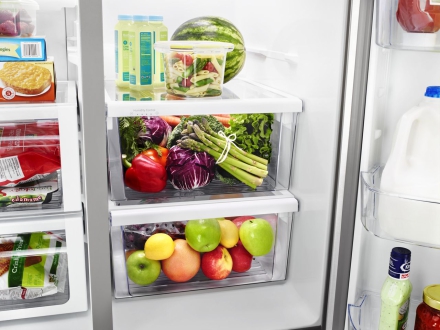
Common Questions Asked About Refrigerators

The refrigerator is essential for keeping food and drinks cool. It comes in many styles and sizes, and can be customized to suit your needs. This article will help you get the most from your refrigerator, whether you are a new homeowner or seasoned cook.

How Does the Refrigerator Work?

It is based on the idea that heat can be removed from the interior of a refrigerator by blowing a hot gas through coils at the bottom or back. As it cools, the liquid gas turns into a gas. The liquid gas then flows into the evaporator of the refrigerator and absorbs the heat to cool its interior.

Which temperature setting should I choose on my refrigerator?

For safe food storage, set your refrigerator temperature to around 37 to 40 degrees Fahrenheit (3 to 4 degrees Celsius).  This will slow down bacterial growth and keep your food fresher for longer.

Can food that is hot be put directly into the refrigerator?

Let food cool down to room temperature before placing it in the refrigerator. Putting hot food directly in the refrigerator can increase the temperatures and cause other items to work harder, increasing the refrigerator’s workload. It could result in uneven cooling of food or even spoilage.

How frequently should I clean my refrigerator?

Cleaning your refrigerator regularly is essential to prevent the spread of bacteria. You should wipe down all surfaces and shelves of your refrigerator, including the interior, drawers and exterior.

What is the purpose of a crisper drawer in my home?

The crisper is designed to maintain an optimal level of moisture for fruits and vegetables. Adjust the humidity to suit the produce that you are storing. It will preserve freshness and prevent wilting and fading.

Why does water collect at the bottom of my refrigerator?

If the drain tube is blocked or clogged it could cause water to accumulate at the bottom. Clean the drain tube regularly to ensure water generated during defrosting is properly drained. Make sure the fridge is leveled so that water does not collect.

How do I make my refrigerator more energy efficient?

To maximize energy efficiency, ensure that the door seal and coils are in good shape. Avoid overloading the refrigerator. Keep the temperature at the recommended level and close the door as little as you can.

Can I keep milk in my refrigerator’s door?

While convenient, the door is not the best place to store perishables such as milk due to the temperature fluctuations. Store perishables and milk in the main body, where the temperatures are more stable.

How can I tell if my refrigerator isn’t working properly?

Insufficient cooling, unusual noises, excessive frost accumulation or water leakage are some of the signs of a refrigerator that isn’t working correctly. Consult your user manual or call a professional to repair it.

How long does a refrigerator last on average?

A refrigerator’s lifespan can range from 10 to 15 years depending on the factors such as usage, maintenance and quality. You can extend your refrigerator’s lifespan by cleaning it regularly, maintaining it properly and making repairs quickly.

Can my freezer be used to cool down food that’s hot quickly?

You can use the freezer to cool hot food quickly. Be careful not to overload the freezer with food at once, as it can cause the entire freezer to heat up and melt frozen items. Use this method for only small amounts to avoid adverse effects.

How should I react if my refrigerator is making strange noises?

If you hear unusual sounds such as buzzing or rattling, it could be a sign that your compressor, condenser, or other components is malfunctioning. Check the manual and turn off the refrigerator if there are any loose parts or obstructions. Contact a professional if the problem persists.

Why is my refrigerator equipped with an ice-and-water dispenser?

Many modern refrigerators come with water and ice dispensers. This allows you to access filtered water and ice without having to open the fridge. These dispensers also help to reduce energy consumption.

Is it possible to use my refrigerator immediately after moving it?

It is best to let the fridge rest upright for a few hours after moving it. This will allow the refrigerant to settle, preventing damage to the compressor. The fridge can be used immediately following this time.

It is important to understand how refrigerators function and follow these guidelines to get a refrigerator that is reliable and meets your needs.


A Brief Guide to Appliance Sizes

Modern appliances are at the heart of the kitchen and they have a huge effect on how we live our lives. There are many makes and models of every appliance type, but they need to be placed in a location that can accommodate them. When you design a new kitchen, the appliances may be the last thing on your mind. This is a mistake, it’s important to make the layout of the kitchen around your new or existing appliances. An appliance specialist can help you if they are involved at an early stage. If you’re determined to go it alone, here are three appliance types and sizes to consider.

1.  Refrigerators

Modern refrigerators may have a host of useful features including door-in-door access, built-in thermometers, digital cameras and more. But, they are complex and they are available in a wide variety of styles and sizes. The more common widths are: 36”, 42” and 48”. Some suburban kitchens have narrower 36” models and a freestanding refrigerator needs a 72” tall opening for installation. If the refrigerator is built-in, the space requirements increase to an 84” tall opening. Refrigerators and freezers may be separate purchases which come in a broader size range, the widths, are: 10”, 24”, 30” and 36·. A popular combination is a 36” wide refrigerator next to a 24” wide freezer. There are also wine column refrigerators that come in 18” and 24” widths.

2.  Dishwashers

The width of a standard dishwasher is 24”, but larger homes may have a second machine for extra convenience and flexibility. This is especially true if people want to avoid an extra trip to the kitchen from a pool or bar area. In this case, an additional slimline dishwasher with a width of 18” or a dishwasher drawer may be the solution. Most full-size dishwashers have a height of 35”, but ADA models are 34” high and they can be raised or lowered to fit easily under the countertops. A key factor with dishwashers is the depth which must be carefully considered to accommodate the hoses. Most European made models have flush fit because the sleek style is an essential aspect of their design. Most American made models protrude slightly from the cabinets if the dimensions are not factored into the kitchen design. Another option is a panel that blends the dishwasher into the cabinetry and the maximum depth for this is 23⅙”. When a standard dishwasher door is fully open it will extend 27” into the kitchen and this is important if you want to avoid blocking foot traffic.

3.  A Washer and Dryer

Both washers and dryers come in a wide variety of sizes to accommodate homes with different needs. A 24” wide washer is considered to be a compact model and these are an ideal fit for smaller apartments. They are flexible, they require no venting and they can be installed under the kitchen counter, in a closet, a bathroom or behind a mudroom cabinet. The 27” wide front load washers are considered to be standard size and they are typically mounted on a pedestal draw for extra storage and easier use. The larger washers have a width of 30” and there are fewer models at this price point. These washers are harder to install and they are overkill unless you have a very large family or you like to wash rugs.

In Conclusion

Taking extra care and measuring twice is the key to success if you’re in the market for new appliances. Even if you have the available space, make sure that they will fit through the principal entryway and other points that need to be negotiated to install the appliance.

If you’re searching for new appliances, you can explore your options with our online collections or further guidance and help, speak to a home appliance specialist.

Should You Move a Fridge On Its Side?

Most refrigerator models are quite bulky, so when it comes time to move one, you may wonder if it is safe to move a fridge on its side. So, here we’ll explore this topic in more detail, so you can plan your appliance move.

What Happens If You Put a Fridge On Its Side?

The main reason why many professional movers avoid putting a fridge on its side is that there are some effects that result from this action. When a fridge is laid horizontal, the compressor oil can move around into the coolant lines, potentially clogging them.

Some manufacturers specifically warn that you should not move certain models of fridge on their side under any circumstances. For example, there may be compressor brackets that can be placed under lateral strain if there is any sideways movement.

Before you start moving your fridge, you should check if the model is suited to be moved on its side. There are some models that should never be placed horizontally including French door, compact, and bottom freezers.

Other Issues With Laying A Fridge On Its Side

Another reason why laying a fridge down can be a bad idea is the shelves. Even if you’ve removed all of the food items, most refrigerator shelves are made of glass, which may break due to shifting. The shelves are designed to slide out easily, but there is still space for them to bounce and crack if you lower the fridge into a horizontal position.

You may also create problems with the refrigerator doors. Refrigerator doors have a slight vacuum seal, but this will not prevent the doors from opening during moving.

Turning On A Fridge That’s Been On Its Side

If your manufacturer has stated that it is possible to lay your fridge horizontally, you will still need to take care before turning it on. You should avoid plugging it in immediately or you could risk damage to the compressor.

Place your fridge upright and leave it unplugged for at least the same amount of time it was horizontal. So, if it was on its side for three hours, stand it upright and unplugged for three hours. If your fridge was delivered on its side, assume it has been horizontal for a day, so allow a full 24 hours before you plug it in.

Tips for Moving a Refrigerator

If you want to properly move your fridge, there are some tips to save yourself potential problems, whether you move it standing up or on its side.

  • Unplug Overnight: It is a good idea to turn off the refrigerator and unplug it the night before you plan on moving it. Leaving it overnight will allow sufficient time for the appliance to defrost, but if you are struggling for time, two or three hours may suffice. Bear in mind that if you have any food you want to keep, you should find an alternative way to keep it cool before you start this step.
  • Remove the Shelves and Drawers: The shelves and drawers can be mostly glass, which could be damaged if there is any shifting. So, it is a good idea to remove them before you tape the fridge doors shut. This will not only protect the shelving, but also the interior and doors, which could be damaged by sharp glass fragments.
  • Keep it Fresh: If your fridge will be closed for more than a day, try putting a box of baking soda inside. This will help to absorb any odors.

If your fridge is past its best and not worth moving, consider an upgrade. You can explore your options with our online collection or speak to one of our home appliance specialists for further help.


6 Exciting Kitchen Appliance Trends for 2020 and Beyond

The kitchen is the beating heart of any home, and it’s a prime location for regular updates and remodeling projects. Upgrading a kitchen is a great way to add value to your home, but it’s also an excellent way to improve the efficiency of the kitchen. If you want to enjoy cooking, eating, and socializing in your kitchen, here are six appliance trends that you may want to look out for.

  1. Steam Ovens

Many manufacturers are now making steam ovens, and this is a trend that will become more popular in the years to come. A steam oven cooks the food in a sealed steam environment to retain the flavors and reduce the cooking times. This is a very healthy way to cook because there is no need to add oils or fats required to make the food moist. A browning function can add a little color at the end for a roasted finish for your food.

  1. Refrigerators Get Upgraded

Every kitchen needs a good refrigerator, but in 2020 and the near future, we will see significant upgrades. Expect to see an exciting range of new finishes in metallic or matte finishes that you may want to show off. Hiding a refrigerator behind a cabinet front may become less popular. Another interesting development is flexible compartments that can be tailored to specific foods and ingredients. Smart features will develop even further, and new auto assist functions will allow users to streamline their kitchen.

  1. Wireless Bluetooth Synchronization

We have seen some amazing advances in wireless sync using Bluetooth devices. This trend is set to continue, and the next logical step is in your kitchen. There will be no need for extended preheating times or antiquated oven timers. An advanced range can sync to your other appliances such as the microwave for coordinated cooking times. Appliances may even perform other useful functions, such as turning on lights when the appliances are in use.

  1. Touch Screen Surfaces

We’ve seen an increasing number of touch screen surfaces replace a traditional knob and other controls. This is set to continue as we move forward with more finger touch and swiping controls on other appliances. One exciting development is a touch sensitive cooktop that uses electromagnetic heat, and the user can “draw” a cooking surface around the base of their pan. Then the heat can be adjusted by swiping the cooktop surface itself and all without risking a burn on your finger. GE is already working on this technology, and they have a prototype, so we may see this in production in the next few years.

  1. WiFi Connectivity

The smartphone has revolutionized the world of instant communication, and the rise of apps to control virtually anything has opened up an entire field of innovation. Manufacturers are now making appliances that can be controlled remotely from your smartphone. So, the user can adjust the temperature in their oven, the intensity of their kitchen lighting, and the timer on their microwave from a handy app.

  1. Multi-Cooker Evolution

One of the most popular kitchen appliances in the last few years is the versatile multi-cooker. Essentially, this is a pressure cooker with computerized controls that allows the user to make tasty and healthy meals in a fraction of the time. We will see similar WiFi connectivity allowing the user to control their multi-cooker remotely. So, you could load the ingredients into the multi-cooker before you leave, and they turn it on and control the temperature ready for your return home.

If you’re considering updating your kitchen appliances, you can explore your options with this online collection. If you need further help and guidance, speak to one of our home appliance experts today.


Is it Time to Replace Your Home Appliances?

Appliances are designed to be tough and rugged, but this doesn’t mean that your hard working appliances don’t have an expiration date. You will need to replace your current dishwasher, refrigerator, range, washer, or dryer at some point, but how do you know when it is time? If your appliances are pushing the 10 to 15 year mark, it’s likely that it is approaching retirement, but here we’ll explore in more detail when it is time to replace your home appliances.

Refrigerators

Most refrigerators last an average of 12 years. If your refrigerator is approaching this age, it doesn’t mean that you should immediately get rid of it. You should check to see if your refrigerator is still operating effectively and efficiently. Refrigerators should cool your items to 35 to 38ºf to avoid your food going bad. At these temperatures, it is cool enough to prevent bacterial growth without being cold enough to freeze.

Even if your refrigerator is maintaining this optimum temperature, you need to consider how much energy is being used. Older appliances can use more power, causing energy bills to skyrocket. Refrigerators run 24/7, so if you notice that your energy bills keep creeping up, you may need to look at upgrading your appliance.

Dishwashers

Many of us don’t realize how much we rely on our dishwashers until they stop working. Family life can be hectic enough without needing to tackle a mountain of dishes at the end of the day. Fortunately, most dishwashers have a lifespan of up to 10 years. You can prolong the lifespan of your dishwasher by regularly cleaning the filter. This can be accomplished by removing it and soaking it in hot, soapy water for 10 to 15 minutes before replacing it. It is also a good idea to periodically sanitize your dishwasher to keep bacteria and bad smells at bay. But, if your dishwasher isn’t draining, starts making weird noises, has developed a persistent bad smell or doesn’t clean your dishes as it should, it is time to think about replacing it.

Ranges

Ranges are at the heart of our kitchens, allowing us to cook family meals and bake treats. Fortunately, most ranges can have a lifespan of up to 20 years, particularly when they are well cared for. If your range isn’t heating up properly or consistently, it is time to consider an upgrade. Fortunately, newer models offer some impressive features that can not only improve your cooking skills, but also make maintenance easier.

Washers and Dryers 

Washers and dryers tend to have a lifespan of 8 to 12 years before they need to be replaced. Fortunately, you can extend the lifespan of your washer and dryer with some basic maintenance. Even something as minor as cleaning the lint traps after every cycle can help to prolong the lifespan and efficiency of your appliance. Unfortunately, you’re likely to need an upgrade if your washer doesn’t fill up or drain properly, or your dryer fails to dry your clothes. Watch your washer and dryer during use, and if they are shaking erratically, it is a sign that they are approaching the end of their life.

Upgrade Efficiency

While no one enjoys needing to spend money on new appliances, there is a positive aspect of upgrading. New appliances offer far greater efficiency and often boast some impressive features to make your life a little easier. Although you may not have noticed the increasing energy use, you may be pleasantly surprised at the cost of your energy bills when you start using your new appliances.

If you are considering upgrading your home appliances, you can explore the options with this online collection, or speak to a home appliance specialist for professional advice and guidance.