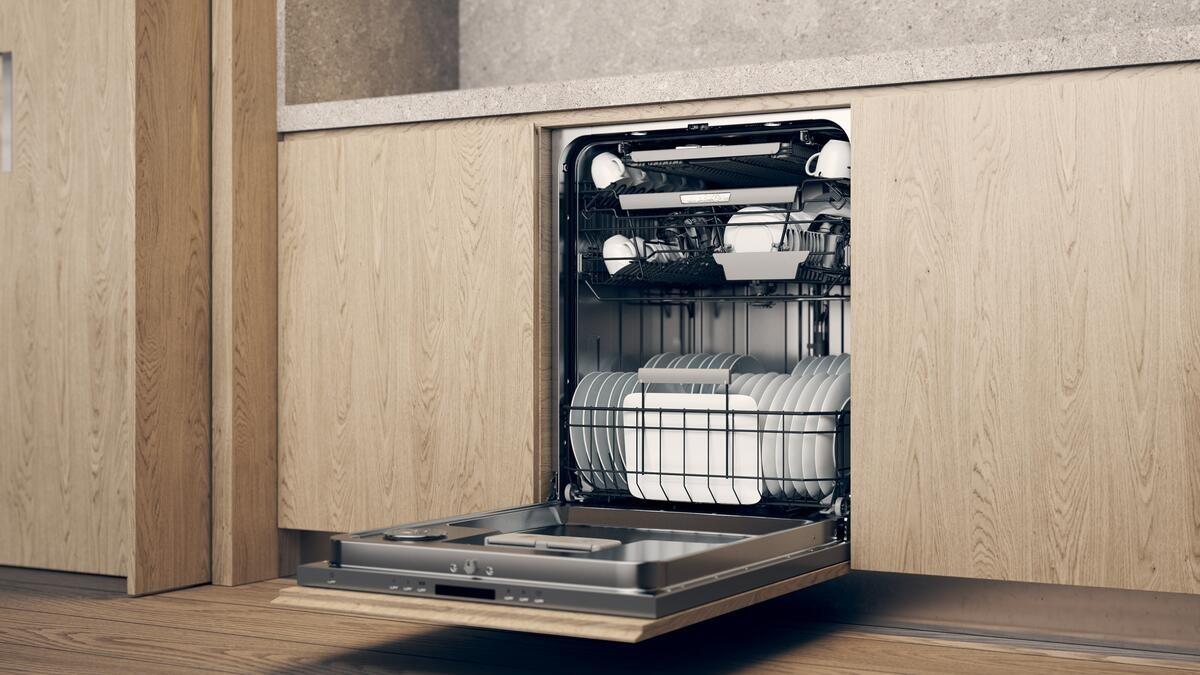
Many people were raised washing dishes as one of their chores, but this is increasingly rare as the years go by. The invention of the dishwasher, its evolution into a must-have home appliance, and its wider adoption by the public is an exciting story. The modern dishwashers we have today have a host of valuable features. But, this was not always the case, and the origins of this appliance stretch back around 160 years!
When Was the Dishwasher Invented?
Like many inventions, several people were working on similar ideas simultaneously. However, in the way we think of this appliance today, the earliest incarnation of a dishwasher was a patent issued in 1850 to Joel Houghton. This design was wooden; the dishes were placed inside, and water was sprayed. The appliance could only be cranked by hand and only splashed water on the dishes. This was extremely basic, but the principle was similar to how modern dishwashers are designed.
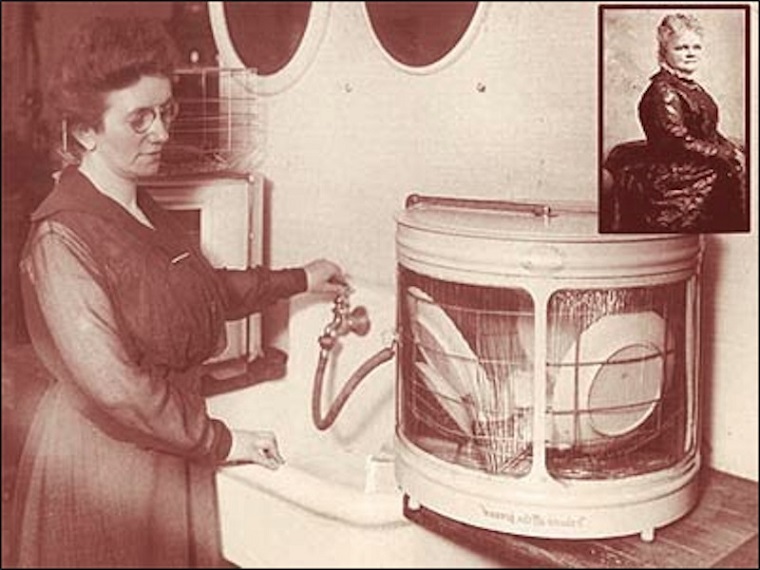
Later, a second inventor named Josephine Cochrane improved the initial design to create an automated appliance. A copper boiler with a wooden wheel could be driven by power or hand using a pulley. The dishes sat in wired compartments sprayed with hot, soapy water and spun.
The inventor created this design because she was fond of entertaining, and her servants repeatedly chipped her prized 17th-century dishes. She washed the dishes herself to mitigate the damage, but she hated it and wondered why there wasn’t an appliance to make it easier. Her dishwasher was ready for testing in 1886. It was a practical improvement on the earlier design, and people loved it.
Josephine Cochrane and George Butters built the final design in 1889, calling it the “Lavaplatos.” This dishwasher was later presented in a working format at the Chicago World’s Fair in 1893. It was a modest success among the rich who could afford this specialized appliance.
Willian Howard Livens invented the first machine-powered dishwasher in England. He created a dishwasher in 1924 powered by an electric motor spraying water over the dishes. On a darker note, Livens invented flame-based and chemical weapons that were put to horrific use in both the First and Second World Wars! Sadly, this dishwasher design was far ahead of its time, and widespread adoption would have been impossible. The design worked well; it had a front door for easier loading and a rotating spinner to spread the water equally. However, most homes didn’t have indoor plumbing, and only incredibly wealthy people could install one. In 1940, Livens added drying capabilities to his dishwasher to speed up the drying process. Commercial success still eluded him, and his invention was not affordable or practical for most households. Other inventors built on this design in the post-WW2 years to perfect and add elements that would make dishwashers viable for more people.
A dishwasher was a luxury appliance until the 1950s, when the designs began to evolve rapidly, and the prices became affordable. Drying functionality had been invented in the 1940s, but it increasingly became a necessity until it was a standard feature from the 1970s onwards. The introduction of automatic dishwashers was when these appliances began to catch the public’s imagination. These appliances had a heating element to increase the water temperature, a detergent dispenser, and multiple wash cycle modes.
7 Features That Defined the Modern Dishwasher
The technological advances found throughout the post-WW2 economic boom were gradually adopted into dishwashers and other household appliances. From the 1970s until the present, the evolution of transistors, circuit boards, computing, and other technologies facilitated rapid changes for the better. Let’s take a look at seven key features that went on to define the modern dishwasher:
- Quiet Operation: The early bulky dishwashers were loud, and you didn’t want to be in the same room as they were washing the dishes. Gradually, the designers added insulation and sound-dampening materials to soften the noise and vibrations. A modern dishwasher is quiet; you can run it anytime without disturbing anyone.
- Multiple Wash Cycles: The first dishwashers had a single wash cycle for every type of dish, no matter how soiled it may have been. The introduction of multiple wash cycles was a revelation. The wash cycle could be specified to meet a specific need, making it much easier to wash glassware and heavy-duty dishes separately.
- Adjustable Racks: The older machines were inflexible regarding efficient space management and load or unloading. Over time, many manufacturers added fold-down times and adjustable racks to make dishwashers more flexible. From that point, it was much easier to fit dishes of all shapes and sizes in the dishwasher for thorough cleaning.
- Advanced Water Filtration: The earliest dishwashers simply forced a lot of water through the appliance or circulated the increasingly dirty water multiple times. But, the addition of advanced filtration systems ensured that only clean water could circulate the dishes for the duration of the chosen cycle.
- Energy Efficiency: As dishwashers became purely electric appliances, there was always going to be a need for improved efficiency. The best modern Energy Star-certified dishwashers use less energy and water without compromising cleaning power. This reduces utility bills and lowers the environmental impact at the same time.
- Sensors: The invention and adoption of dishwasher sensors improved the wash cycle selection. A modern dishwasher can detect dish soiling and automatically adjust it to save energy and water.
- Smart Technology: Today, dishwashers have intelligent features that can be monitored and controlled via a smartphone app.
Dishwashers Making Chores Simpler
Now, around 75% of American homes have a dishwasher that is affordable and easy to use. Most are equipped with racks and removable trays; they have efficient rotating spray arms and pre-soak cycles. This appliance is an incredible invention, but its importance in the modern world is only becoming apparent to many people. One of the most exciting things about modern dishwashers is that they use 5,000 fewer gallons of water than washing dishes by hand. According to the EPA and US Department of Energy, the best ENERGY STAR models are not more eco-friendly. They are still a real time saver.
The Sanitary Benefits of Dishwashers
These earlier incarnations of the dishwasher were purely invented to deal with a troublesome chore. Most people don’t enjoy washing dishes by hand, which was equally valid in the past. But those earlier inventors didn’t know that what would become the modern dishwasher is far more sanitary than washing by hand.
A modern dishwasher uses hot water and spray nozzles that can be adjusted for different types of dishes and loads. The temperatures inside the appliance can reach up to 145ºF, and no human hand can withstand washing in hot water. Detergents used in dishwashers have also advanced. These products remove bacteria and germs from dishes better than simple soap.
Another factor affecting the cleanliness of dishes washed by hand is the sponge we use to clean them. The surface of the sponge is coated with bacteria and other microorganisms. Studies have found almost 400 bacterial species on a single household sponge used for washing dishes. This incredible density equates to around 45 billion bacteria per square centimeter.
How to Choose the Right Dishwasher
A modern dishwasher has never been more affordable. Even with the current supply chain issues, there are plenty of models to choose from. The best appliances come with features that are probably overkill for most of us. But if you want the latest smart technology to control your dishwasher remotely via WiFi, you’re good to go. Even a basic dishwasher is packed with technology that would have been impossible a few decades ago.
There are now full-sized, slim dishwashers for every kitchen space and budget. Get a full-size dishwasher if you’re single or a couple that entertains frequently or has kids that come home on weekends. But make sure it has a half-load cycle to save energy and water when you don’t need to fill it. Although an Energy Star-certified dishwasher costs more, it’s well worth the investment. These appliances use less energy and water, which more than makeup for the higher purchasing price in the medium to long term.
In Conclusion
The development of the dishwasher from its earliest beginnings to the modern day has been astonishing. A simple wooden box with a rack and hand-cranked paddles has become an efficient appliance that most of us couldn’t live without. So, if your kids start to complain about loading or emptying the dishwasher as a chore, remind them how things used to be. If you’re looking to replace an aging dishwasher with a more efficient model or need to schedule a repair for your existing model, contact a home appliance professional for further assistance.