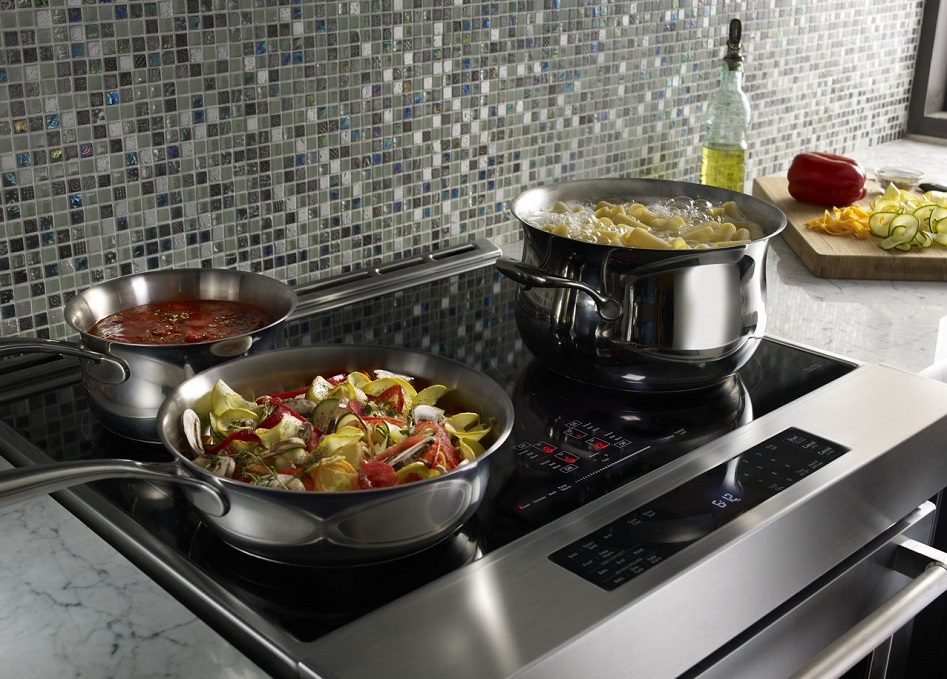
Should You Upgrade to an Induction Range?

A good range is an asset in any kitchen, but one new technology you may not have considered is an induction range. Induction technology is relatively new, but it already has a reputation for excellent energy efficiency and cooking performance. An induction range is easy to use and considerably more energy efficient compared to its electric counterpart. If you’re still unsure, here we’ll examine this type of product in more detail, so you can make an informed decision for your next range upgrade.

How Induction Cooking Works

Induction uses electric currents to heat pots and pans directly through magnetic induction. Rather than using the thermal conduction needed for gas or electric elements to transfer heat, induction heats the cooking vessel itself.

In simple terms, an electric current passes through coiled copper wire under the cook surface to create a magnetic current through the cooking pan, which produces heat. Since induction does not require an outside heat source, only the element that is being used will become warm. There is very little energy lost, as all the heat is transferred to the pan.

The Pros and Cons of Induction

There are both advantages and disadvantages of induction compared to gas or electric ranges. It is important to be aware of both the pros and cons, so you can make an informed decision.

The Pros:

  • Faster Cooking: Since induction can create instant heat inside your pots and pans, it is highly efficient. In fact, you can boil water up to 50% faster compared to using an electric cooktop.
  • Precise Control: Induction also allows you to control the heat more precisely compared to both electric and gas cooktops. With better temperature control and consistent heat, you can reduce the risk of under or overcooking.
  • Easy Clean: Induction cooktops have a smooth surface that resembles a modern electric cooktop. The key difference is that almost immediately after use, the cooktop will be cool enough to wipe away any mess. This means that any spills do not have a chance to bake on to the surface or solidify.
  • Burners that Auto Size: Since induction heats using electromagnetic currents, many induction models have auto sizing. This is a form of pan detection that ensures that heat is only placed where it is needed. So, you don’t need to worry about wasting energy by having a small pot on a large burner.

The Cons:

  • Higher Initial Cost: Induction ranges tend to be more expensive than their gas or electric alternatives. Additionally, there are only certain types of pots and pans that are compatible with this type of cooktop. So, in addition to investing in a new range, you may need to upgrade your cookware.
  • Learning Curve: When you start using an induction cooktop, you will need to be prepared for a learning curve. Many of the standard cooking techniques will not work with induction, so you will need to take some time to learn how to use the surface. The heating times are far faster, so you will need to be ready with your ingredients or you’ll risk burned food.

Other Features of Induction Ranges

In addition to an efficient cooktop, induction ranges can offer some other great features. Many induction range models feature highly efficient convection ovens with self cleaning functions. There may also be a quick preheat function, so you can get cooking and baking with no delay.

If you’re considering upgrading your range, induction ranges are a great option. If you would like to explore the options, browse our online induction range collection or speak to one of our home appliance specialists for further help and guidance.
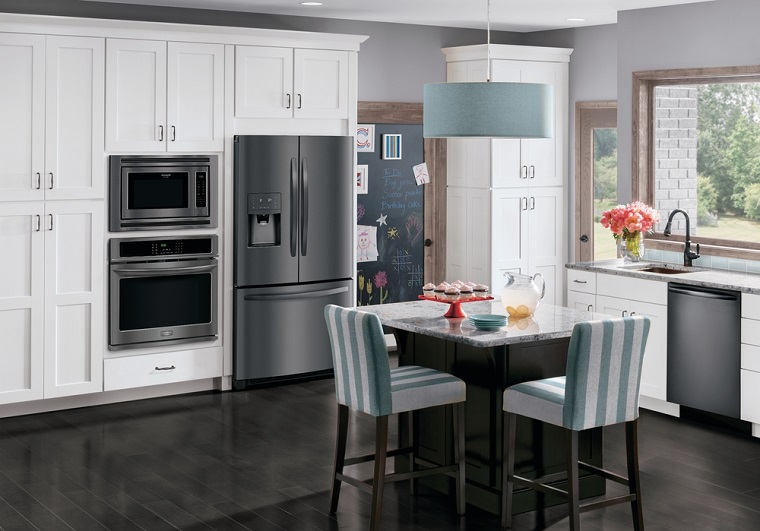
How to Choose the Best Convection Microwave

Convection microwaves or combination ovens are one of the most versatile tools in the kitchen and can be crucial if you have limited space. Whether you have a holiday home, caravan, studio apartment or simply a kitchen that cannot accommodate a full sized oven, a convection microwave can provide an excellent solution. Here we’ll explore this topic further, so you can learn how to choose the best convection microwave for your home.

The Advantages and Disadvantages of Convection Microwaves

A convection microwave combines two different appliances. It can be used as an oven, microwave or in a combination, to allow bake and grill functions. This can be a very convenient and fast method of cooking, particularly when high temperature cooking such as pizza, pastries or roasts. You can quickly preheat to oven temperatures of up to 240ºc for speedy reheating, browning or toasting. While convection microwaves are smaller than a conventional oven, most models can accommodate a large pizza or roast, making them suitable for small families. There are some models with two shelf positions for more versatility. Convection microwaves are also cheaper to run compared to a conventional oven, so you can enjoy energy cost savings.

Unfortunately, it is not all positive as there are some potential disadvantages to convection ovens. They tend to have a smaller cavity compared to conventional ovens, so you’re likely to be limited to cooking one type of food at one time. They can also be more challenging to clean. The oven cavity needs to be adequately cleaned following each use as any grease or residue will be baked on during the next use. This can also slow down microwave cooking as the residue will be cooked along with your dish. Most models feature a stainless steel interior, which can make it more difficult to clean. Oven splashes can leave difficult to remove grease marks. Fortunately, there are some simple tips and tricks to aid cleaning.

Characteristics to Look For

To choose the best convection microwave, there are a number of characteristics to look for. These include:

  • Ease of Use; Good instructions on display and easy to use controls will make using your new convection microwave a breeze. You don’t want to choose a model where you need to keep digging out the instruction manual to perform any cooking.
  • Easy Clean; As mentioned above, cleaning convection microwaves can be a challenge, so it is a good idea to look for a model that is easier to clean. Look for any seams, crevices or gaps that could trap grease or food, and smooth coatings that are easy to clean. While stainless steel can look great, remember that it will require some attention to keep it looking free of smudges and fingerprints.
  • Size; You should check that your usual cooking dishes will fit in your new convection microwave. Your oven will also need clearance for ventilation, so you’ll need a couple of inches at the sides and rear, with between five and 12 inches above.
  • Time Adjust; This feature will allow you to decrease or increase your programmed time without pausing cooking.
  • Delayed Start; This will allow you to start cooking at your programmed pre-set time, but you’ll still need to be careful not to leave your dish in the oven too long, or it may spoil.
  • Sensor Cooking; This feature takes automatic functions a step further using sensors to measure cooking vapors to monitor and control your cooking time.
  • Multi-Stage Cooking; Models with this feature allow programming to perform a sequence of cooking functions. For example, you can defrost, cook and then allow to stand without needing to intervene in the cooking process.

If you’re considering a convection microwave, you can explore your options with this online collection or speak to a home appliance expert for a more specialist service.