
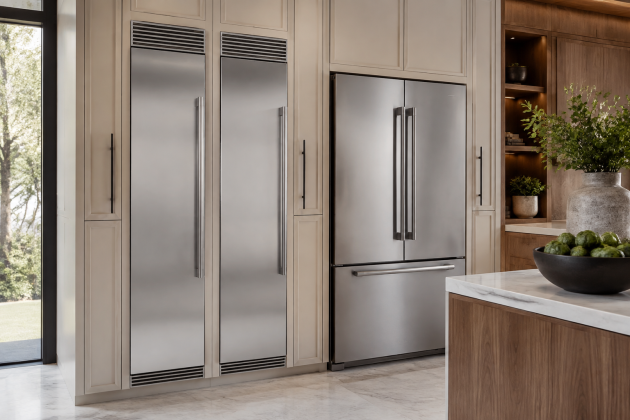
Refrigeration is one of the most important decisions in a luxury kitchen because it affects storage, cabinet design, appliance-wall symmetry, traffic flow, and how the kitchen supports daily life. Two of the most common premium choices are column refrigerators and French door refrigerators.
Quick Answer: Are Column Refrigerators or French Door Refrigerators Better?
Column refrigerators are usually better for a luxury kitchen when the homeowner wants modular fresh-food, freezer, wine, or beverage zones with a more custom built-in look. French door refrigerators are often better when the priority is familiar organization, wide fresh-food storage, lower planning complexity, and a single all-in-one appliance. The best choice depends on kitchen size, storage habits, cabinetry, budget, and whether the remodel is being designed around a complete refrigeration wall.
Both options can be premium. A French door refrigerator can be practical, spacious, and refined. Column refrigeration can feel more architectural and tailored because each function can be placed where it works best. The difference is not only style. It is how the kitchen stores fresh food, freezer items, drinks, entertaining platters, and everyday groceries.
This guide compares column refrigerators and French door refrigerators so homeowners can plan refrigeration before cabinets, utilities, panels, and appliance orders are finalized.
What Is a Column Refrigerator?
A column refrigerator is a single-purpose built-in refrigeration unit. One column may be all refrigerator. Another may be all freezer. Other columns may be designed for wine or specialty storage. Because each column is separate, the kitchen can be planned around the exact mix of cold storage the household needs.
Column refrigeration is popular in luxury kitchens because it supports symmetry and specialization. A refrigerator column can sit beside a freezer column. A wine column can be placed near entertaining space. Undercounter refrigeration can support a beverage area. The result can be more flexible than relying on one large appliance to do everything.
UAKC carries built-in refrigeration options for homeowners who want a premium appliance wall, panel-ready design, or a coordinated kitchen package.
What Is a French Door Refrigerator?
A French door refrigerator typically has two fresh-food doors on top and freezer storage below. Many homeowners like this layout because the fresh-food section is wide, visible, and easy to access. Larger platters, produce drawers, deli storage, and everyday items can be organized across a broad upper compartment.
French door models are available in freestanding, counter-depth, built-in, and panel-ready styles depending on the brand and model. This makes the category flexible. A homeowner can choose a practical stainless steel refrigerator or a more integrated premium version.
The tradeoff is that French door refrigeration is usually a single appliance with a fixed organization pattern. If the household wants separate freezer capacity, dedicated wine storage, or multiple cold zones around the kitchen, columns may be more adaptable.
Column vs French Door Refrigerator Comparison Matrix
| Feature | Column Refrigeration | French Door Refrigerator |
| Best Use | Custom refrigeration zones and luxury appliance walls | All-in-one fresh food and freezer storage |
| Design Flexibility | High; units can be placed and paired by function | Moderate; layout is mostly determined by the appliance |
| Fresh Food Access | Depends on column placement and width | Wide upper compartment is easy for daily groceries |
| Freezer Planning | Separate freezer column or alternate freezer location | Usually bottom freezer drawer |
| Cabinet Planning | Requires precise openings, panels, and utility coordination | Usually simpler, though built-in models still need planning |
Storage Planning: Capacity Is Not the Only Question
Many buyers compare refrigerators by cubic footage first, but luxury refrigeration planning should go deeper. The real question is how the household stores food. A family that shops once per week may need broad fresh-food space. A household that entertains often may need beverage refrigeration, wine storage, freezer drawers, and platter space.
Column refrigerators allow more intentional zoning. Fresh food can be near the main prep sink. Freezer storage can be placed elsewhere if that supports the workflow. Wine or beverage refrigeration can move closer to a bar, dining area, or outdoor kitchen path.
A French door refrigerator keeps the main storage functions together. That can be very efficient for everyday use. It is especially practical for homeowners who want one primary refrigerator location and do not need a full suite of separate refrigeration appliances.
Design Differences in a Custom Kitchen
Column refrigeration often creates the most custom appearance. Tall, narrow units can be installed in balanced pairs, finished with stainless panels, or integrated with custom cabinet fronts. This is a strong fit for kitchens where the appliance wall is meant to look architectural.
French door refrigerators have a more familiar appliance shape. In stainless steel, they can make a clean professional statement. In panel-ready formats, they can blend more quietly with cabinetry, though the wider doors and lower freezer drawer still reveal the appliance layout.
UAKC has also covered built-in vs freestanding refrigerators, which is useful when comparing installation depth and cabinet integration before choosing the door style.
Installation Details: Panels, Power, Water, and Door Swing
Column refrigeration requires precise planning. Each column has its own width, height, depth, hinge clearance, electrical needs, panel requirements, and ventilation details. If a refrigerator column and freezer column sit side by side, the installer and cabinet maker need the exact specifications before the opening is built.
Panel-ready columns add another layer. Cabinet panels must meet the appliance manufacturer’s size, thickness, and weight limits. Handles should be strong enough for appliance use. Reveal lines should align with the rest of the kitchen.
French door refrigerators still need careful planning. Door swing must clear islands, walls, pantry doors, and nearby handles. The freezer drawer needs pull-out clearance. Water and electrical locations must avoid conflicts with the rear of the appliance.
When Column Refrigeration Makes the Most Sense
Column refrigeration makes the most sense when the kitchen is part of a full remodel and the homeowner wants long-term design control. It is especially strong in large kitchens, open-concept homes, and projects with custom cabinetry.
Columns also work well when food storage is specialized. A homeowner may want separate refrigerator and freezer columns, a wine column, refrigerator drawers in an island, or a beverage center near the entertaining area. This approach can reduce crowding at the main refrigerator.
The downside is cost and coordination. Column refrigeration usually requires more planning, more cabinet precision, and a larger appliance budget than a single French door unit.
When a French Door Refrigerator Makes the Most Sense
A French door refrigerator makes sense when the household wants practical storage in one appliance. The upper fresh-food compartment is easy to scan, and the lower freezer keeps frozen foods grouped together. Many homeowners find the layout familiar and efficient.
French door refrigeration can also be the better choice when the kitchen does not have enough wall space for separate columns. It may reduce cabinet complexity and simplify future replacement, depending on the installation style.
For many homes, a premium French door refrigerator paired with an undercounter beverage center or wine refrigerator can provide a strong balance between convenience and specialization.
FAQs about Column Refrigerators vs French Door Refrigerators
Are column refrigerators worth it?
Column refrigerators can be worth it in luxury kitchens where design integration, separate storage zones, and custom refrigeration planning are priorities. They are most valuable when planned early with cabinetry and appliance placement.
Do column refrigerators have more storage?
Not always. Columns can provide excellent storage, but capacity depends on the number and width of units selected. Their advantage is zoning and customization, not automatically more cubic footage.
Is a French door refrigerator good for a luxury kitchen?
Yes. A premium French door refrigerator can work well in a luxury kitchen, especially when the homeowner wants wide fresh-food access and an all-in-one appliance. Built-in or panel-ready versions can create a more refined look.
Can column refrigeration be panel-ready?
Many luxury column refrigerators are available in panel-ready configurations. The cabinet maker must follow the appliance specifications for panel size, thickness, weight, handle placement, and reveals.
Pre-Purchase Checklist for Refrigeration Planning
Before ordering, confirm the exact model numbers, installation type, cabinet openings, panel requirements, hinge clearances, door swing, drawer clearance, water line location, electrical location, ventilation needs, delivery path, and service access.
For column refrigeration, confirm how fresh food, freezer, wine, and beverages will be divided across the kitchen. For French door refrigeration, confirm that the doors and freezer drawer can open fully without hitting islands or adjacent cabinetry.
Refrigeration should be planned before the cabinets are built. Once the appliance wall is framed, changing from a French door refrigerator to columns, or from columns to a French door model, can become expensive.
Refine Your Refrigeration Plan at Universal Appliance and Kitchen Center
Choosing between column refrigerators and French door refrigerators is easier when you can compare scale, door swing, interior organization, lighting, panel options, and appliance-wall layouts in person.
At Universal Appliance and Kitchen Center, homeowners, designers, and builders can review premium refrigeration options as part of a complete kitchen plan. Showroom guidance can help match storage needs, design goals, cabinet details, and appliance specifications before ordering.
Visit a Universal Appliance and Kitchen Center showroom to compare column refrigeration, French door refrigerators, and related cold-storage options for a luxury kitchen that works as well as it looks.