
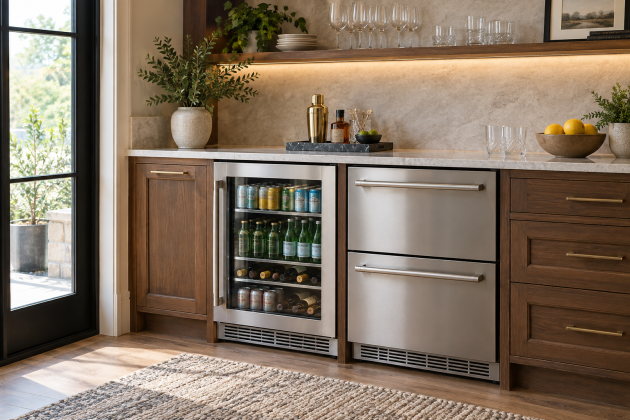
Undercounter refrigeration can keep drinks, snacks, produce, and entertaining essentials close to where they are used. The difficult part is deciding whether refrigerator drawers or a glass-front beverage center will serve the space better.
Both can reduce traffic at the main refrigerator, but they organize and present food differently. The right choice depends on what you plan to store, who needs access, whether contents should be visible, and where the appliance will sit.
Quick Answer: Refrigerator Drawers or Beverage Center?
Choose refrigerator drawers when you want flexible cold storage for food, produce, snacks, cans, bottles, and items that should stay visually concealed. Choose a beverage center when the main goal is organized drink storage with a glass door that makes bottles and cans easy to see. Refrigerator drawers are often stronger for prep kitchens and family snack zones; beverage centers are often better for bars, entertaining areas, and display-oriented drink storage.
Neither option is universally better. Temperature range, shelf configuration, ventilation, door or drawer clearance, noise, and cabinet location should be checked for the specific model.
What Are Undercounter Refrigerator Drawers?
Refrigerator drawers place cold storage in pull-out compartments below the counter. They can blend into cabinetry, keep contents hidden, and make frequently used foods accessible without opening the main refrigerator.
Drawers are useful for children’s snacks, produce near a prep sink, breakfast ingredients near a coffee station, or garnishes near a bar. Some models offer independent temperature controls, but features vary by product.
Because drawers extend into the aisle, placement and handle projection matter. The design should leave enough room for a user to open a drawer fully and stand behind it without blocking a major pathway.
What Is a Beverage Center?
A beverage center is an undercounter refrigeration appliance designed primarily for drinks. Most have a glass door and adjustable shelves for cans, water, mixers, and bottles. The visible interior makes it easy to check inventory before a party or grocery trip.
Beverage centers are often installed in wet bars, game rooms, home offices, media rooms, butler’s pantries, and secondary kitchen beverage zones. They can reduce repeated trips into the main cooking area when guests need drinks.
Explore refrigeration options while planning the main refrigerator and secondary cold-storage zones together.
Refrigerator Drawers vs Beverage Center Comparison
| Feature | Refrigerator Drawers | Beverage Center |
| Best For | Food, snacks, produce, cans, and flexible storage | Bottles, cans, mixers, and visible drink organization |
| Appearance | Contents stay concealed; panel-ready options may blend in | Glass door displays contents |
| Access | Top-down view when drawers open | Front view through the door |
| Clearance | Drawers project into the aisle | Door swing must clear cabinets and traffic |
| Typical Location | Prep kitchen, island, family snack zone | Bar, pantry, media room, entertaining zone |
Storage Flexibility and Daily Use
Refrigerator drawers are usually the more flexible format because they can hold a mix of foods and beverages. The upper drawer can support breakfast or snacks while the lower drawer holds produce, chilled serving pieces, or drinks.
A beverage center is more specialized. Adjustable shelves can organize multiple bottle and can sizes, but the interior may be less convenient for wide food containers or loose produce. Think about the actual items you buy rather than the staged contents shown in product photography.
For a household with children, drawers can make approved snacks accessible. For a home that entertains frequently, a beverage center lets guests find drinks without opening cabinetry or entering the main work triangle.
Temperature and Food-Safety Considerations
Not every beverage center is designed for the same temperature range as a full refrigerator. Some prioritize drinks rather than perishable food. Always verify the operating range and intended storage use before placing dairy, meat, prepared food, or other temperature-sensitive items inside.
Refrigerator drawers designed for food storage may be the safer choice when the appliance will hold meal ingredients or leftovers. Beverage centers are strongest when their contents match their intended purpose.
Wine storage is a separate decision. A wine refrigerator may use different temperatures, shelves, vibration control, or humidity strategies than a general beverage center.
Glass Door vs Concealed Storage
A glass door can make a bar feel polished and inviting, but it also puts organization on display. Bottles, labels, and cans become part of the room, and interior lighting may be visible at night.
Drawers offer a quieter look. Stainless fronts can coordinate with appliances, while panel-ready fronts may disappear into cabinetry. They are helpful when the kitchen already has several visible glass or stainless elements.
The visual decision should support the room. A glass-front beverage center can be attractive in a dedicated bar, while concealed drawers may be better in a formal kitchen or minimalist island.
Planning the Best Location
Place secondary refrigeration near the activity it supports. A beverage center belongs close to glassware, mixers, ice, and serving space. Refrigerator drawers can work near a prep sink, breakfast station, outdoor access door, or children’s seating area.
Avoid locations where an open door or drawer blocks the range, dishwasher, main refrigerator, or a narrow aisle. Check ventilation, electrical, leveling, toe-kick, hinge, handle, and service requirements before cabinets are ordered.
If the zone also needs dedicated ice, review UAKC’s guide to built-in ice makers versus freezer ice.
When Both Appliances Make Sense
Large homes may benefit from both formats when each has a clear job. A beverage center can hold water, mixers, and entertaining drinks in the bar, while refrigerator drawers keep food and garnishes near the prep area.
The key is avoiding redundant storage. Map the contents of every refrigerator, freezer, wine column, beverage center, and drawer before committing cabinet space. Each appliance should shorten a routine or reduce traffic.
FAQs About Refrigerator Drawers and Beverage Centers
Can a beverage center store food?
Only if the specific model is rated for the temperature and type of food being stored. Check the manufacturer’s operating range and use instructions.
Are refrigerator drawers worth it?
They can be valuable when they support a defined zone, such as meal prep, children’s snacks, breakfast, or entertaining. They are less useful when they simply duplicate unused space in the main refrigerator.
Can either appliance be panel-ready?
Some refrigerator drawers and beverage appliances accept custom panels, while others use stainless steel or glass fronts. Panel dimensions and ventilation requirements are model-specific.
Where should an undercounter refrigerator be installed?
Common locations include islands, wet bars, butler’s pantries, prep kitchens, media rooms, home offices, and areas near outdoor entertaining spaces.
Pre-Purchase Checklist
Before ordering, confirm the intended contents, temperature range, interior dimensions, shelf or drawer layout, panel compatibility, door swing or drawer extension, handle projection, cabinet opening, front ventilation, electrical location, noise, leveling, toe-kick alignment, floor transitions, and service access.
Measure bottles, food containers, and the aisle itself. A secondary refrigerator should make daily life easier, not add an appliance that is difficult to load or awkward to open.
Compare Undercounter Refrigeration at Universal Appliance and Kitchen Center
The best way to compare drawers and beverage centers is to open them, test the storage layout, and see how much aisle space the doors and drawers use.
At Universal Appliance and Kitchen Center, homeowners and design professionals can compare undercounter refrigeration, ice makers, wine storage, and full-size refrigerators as one coordinated plan. Visit a showroom before cabinet dimensions and appliance locations are finalized.