
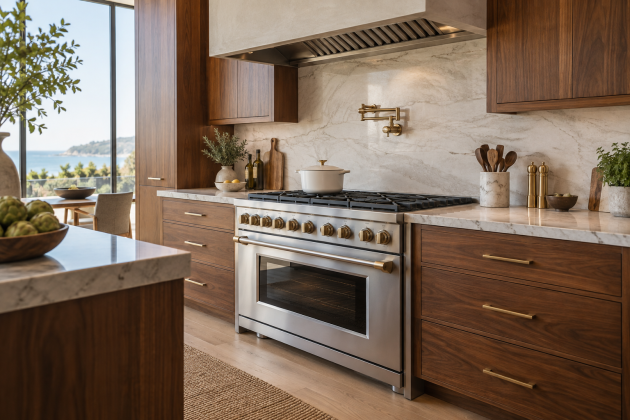
Choosing between a 36-inch and 48-inch professional range is not simply a question of buying the larger appliance. Range width affects the cooking surface, oven configuration, ventilation, cabinetry, counter space, delivery path, and the way people move through the kitchen.
The right choice should support how the household actually cooks. A 36-inch range can deliver serious performance while preserving prep space, while a 48-inch range can add cooking zones and oven flexibility for frequent entertainers and ambitious home cooks.
Quick Answer: Should You Choose a 36-Inch or 48-Inch Range?
Choose a 36-inch professional range when you want premium cooking performance, a generous cooktop, and a substantial oven without giving up too much cabinetry or counter space. Choose a 48-inch professional range when multiple people cook at once, large meals are common, or you want room for options such as a griddle, grill, or secondary oven cavity. The decision should be based on workflow and verified model specifications, not size alone.
In many kitchens, 36 inches is the balanced choice. A 48-inch range makes the most sense when the larger appliance, ventilation system, and surrounding clearances have been planned together from the beginning.
What Is the Main Difference Between 36-Inch and 48-Inch Ranges?
The obvious difference is width, but that extra foot can change the entire cooking wall. A wider range may provide more burners or specialty cooking zones and may include two oven cavities, depending on the model. It also requires a wider hood, more cabinet space, and careful attention to nearby walkways.
A 36-inch range usually fits more remodels and replacement projects. It offers more cooking area than a standard 30-inch range while leaving room for drawers, spice storage, landing space, or a larger cabinet run.
Explore current professional ranges by size, fuel type, configuration, and finish before finalizing the opening.
36-Inch vs 48-Inch Range Comparison
| Decision Factor | 36-Inch Range | 48-Inch Range |
| Best Fit | Premium kitchens that need balance and flexibility | Large kitchens and frequent high-volume cooking |
| Cooking Surface | Generous room for everyday and serious cooking | More space for simultaneous pans or specialty zones |
| Oven Options | Often one main oven, depending on model | May offer multiple oven cavities, depending on model |
| Cabinet Impact | Preserves more drawers and counter space | Uses a larger portion of the cooking wall |
| Ventilation | Requires properly sized, model-specific planning | Typically demands a larger, more carefully coordinated system |
When a 36-Inch Professional Range Makes Sense
A 36-inch range works well for households that cook often but do not need every burner occupied at the same time. It can anchor a luxury kitchen without overpowering a modest cooking wall, and it leaves useful space for storage and food preparation.
This size is also easier to integrate into many remodels. The homeowner may be able to create a wider landing zone beside the range, preserve a bank of drawers, or keep an island aisle more comfortable.
Do not assume that choosing 36 inches means settling. Fuel type, burner design, simmer control, oven modes, griddle options, and cleaning features can matter more than the twelve-inch width difference.
When a 48-Inch Professional Range Makes Sense
A 48-inch range is compelling when the kitchen regularly supports holiday meals, large families, catered-style entertaining, or two cooks working together. The wider surface can make it easier to separate high-heat cooking, simmering, and specialty tasks.
Some 48-inch models offer a second oven cavity or integrated griddle or grill. These configurations vary, so buyers should compare the exact products rather than assuming every 48-inch range has the same layout.
The visual scale is also different. A 48-inch range and hood can become the architectural focal point of the room. That effect works best when the appliance, hood, backsplash, cabinetry, and island proportions feel intentional.
Cabinet, Countertop, and Walkway Planning
Range width affects more than the opening between cabinets. Designers should account for the door swing, handle projection, nearby drawers, countertop landing areas, combustible clearances, and the path between the range and island.
A wider appliance can reduce storage on the cooking wall. Before choosing it, decide where pots, pans, utensils, oils, spices, baking sheets, and small appliances will live. Extra burners are less helpful when the layout removes the drawers needed to support cooking.
Always use the installation instructions for the exact model. Nominal width does not replace manufacturer cutout, clearance, utility, and anti-tip requirements.
Ventilation Planning for a Professional Range
Ventilation should be selected with the range, not after the cabinets are built. Fuel type, total cooking output, hood width, capture area, duct route, blower location, ceiling height, and local makeup-air requirements can all influence the system.
A 48-inch range generally creates a larger ventilation assignment because the cooking surface is wider and may include more high-output elements. Bigger is not automatically better, however. A well-designed hood and duct path should capture smoke and heat without creating unnecessary noise.
Compare range hoods alongside the appliance and involve the appropriate contractor or ventilation professional early.
Fuel Type and Oven Configuration
Both sizes may be available in gas, dual-fuel, or induction configurations. Gas offers familiar visual flame control, dual fuel pairs a gas cooking surface with an electric oven, and induction provides fast response with a smooth surface and different electrical requirements.
Oven configuration deserves equal attention. A large single cavity can be useful for oversized cookware, while two smaller cavities may support different temperatures at the same time. Check usable interior dimensions and rack positions rather than comparing exterior width alone.
For a broader look at available formats, review UAKC’s guide to the best luxury ranges in 2026.
FAQs About 36-Inch and 48-Inch Ranges
Is a 48-inch range better than a 36-inch range?
Not automatically. It offers more width and may add cooking zones or oven flexibility, but it also uses more cabinet space and requires more extensive ventilation planning.
Is a 36-inch range large enough for serious cooking?
Yes. Many 36-inch professional ranges provide ample cooking space for experienced home cooks. The best fit depends on pan count, oven needs, preferred fuel, and cooking style.
Does a 48-inch range need a 48-inch hood?
Hood sizing depends on the appliance and installation. Many designs use a hood wider than the cooking surface for improved capture, but the exact solution should follow manufacturer guidance and local requirements.
Should cabinets be ordered before the range?
The specific range should be selected first. Cabinet drawings, utilities, ventilation, and countertop details should be coordinated around the final model specifications.
Pre-Purchase Checklist
Before ordering, confirm the exact model dimensions, door and handle clearance, fuel or electrical requirements, gas and power locations, ventilation plan, duct route, makeup-air needs, cabinet opening, countertop landing space, delivery path, flooring, anti-tip hardware, service access, and cookware storage.
Also test the decision against a normal week, not only a holiday meal. The best professional range is the one that improves everyday cooking without making the rest of the kitchen less functional.
Compare Professional Ranges at Universal Appliance and Kitchen Center
The difference between 36 and 48 inches is easier to understand when you can stand in front of both sizes, open the oven doors, compare burner layouts, and see how the handles and controls feel.
At Universal Appliance and Kitchen Center, homeowners, designers, and builders can compare professional ranges, ventilation, refrigeration, and complete kitchen packages in one place. Visit a showroom before cabinetry and utility decisions are finalized.