
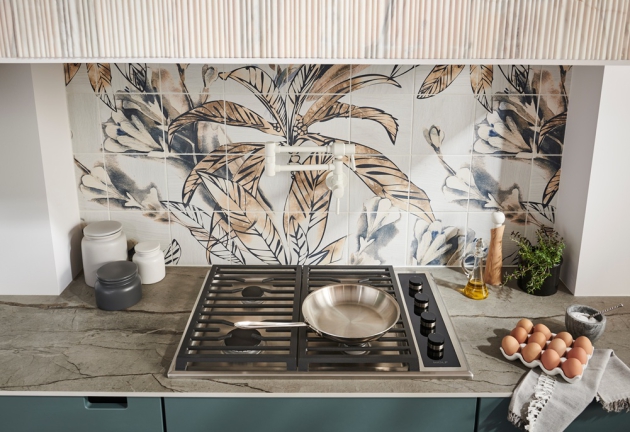
A pot filler faucet is usually installed on the wall above the stovetop so that pot fillers can be directly used to fill pots with water right where cooking takes place. Instead of going back and forth to the sink and bringing filled water pots to the stovetop, homeowners can place the kitchen pot filler on the stove and fill it right where it’ll be used using the pot filler.
Adding a pot filler faucet is a great small kitchen upgrade and helps improve the safety and ease of everyday cooking. Saving you from the hassle of lifting heavy pots when you want to add water to the pot while cooking large meals, soups, or pastas. The pot fill faucet above your stove lets you easily add water directly to your pot. This will improve your kitchen workflow.
Many homeowners consider new fixture options and layouts when planning kitchen renovations. While comparing sink fixtures and other plumbing options, they often consider modern kitchen faucets and how a pot filler would complement the main sink faucet and enhance the kitchen’s overall functionality.
What Is a Pot Filler Faucet?
The pot filler faucet definition refers to a kitchen faucet that fills cooking pots directly at the stove. Unlike typical faucets that are installed at the sink, pot fillers are mounted on the wall behind the cooktop. A wall-mounted pot filler faucet is attached to the plumbing inside the wall, providing water at the exact location where cooking takes place.
One of the most common and recognizable features of a pot filler faucet is the articulated arm design. The faucet arm is designed to be pulled to the front to reach pots that are on the burners. When the faucet is not in use, the arm folds neatly back to the wall, providing a clear and organized cooking area.
The most common design of pot fillers is that they have dual shut-off valves. One valve will be at the wall connection of the pot filler, and the second valve is at the tip of the pot filler. With this design, water flow can be managed safely above the range when filling pots. This design gives pot fillers an extra level of control when filling pots above the cooktop.
Why Pot Fillers Are Popular in Modern Kitchens
When planning a kitchen renovation, many homeowners consider adding a pot filler because it streamlines daily cooking tasks and complements modern style features. In practice, pot fillers have become trendy kitchen upgrades that prioritize both function and style.
Convenience for Cooking
The ease of cooking is one of the most important kitchen pot filler benefits. With a pot filler, homeowners no longer have to constantly transport sink water to the stove. They fill pots directly at the stove, making the prep process safer and saving time.
Modern Kitchen Functionality
Modern kitchens are more about flow and functionality, making the cook’s job much more efficient. A pot filler allows the cook to stay in one area while prepping the meal by eliminating multiple trips to the sink to fill pots.
Design Appeal in Remodeled Kitchens
Pot fillers can also enhance the overall look of a kitchen remodel. Mounted on the wall, they stand out as a unique fixture above the cooking surface and complement the backsplash and range hood design. For this reason, they feature prominently in current luxury kitchen faucet trends for renovated kitchens.
Design Impact in Contemporary Kitchens
In many kitchen remodels, pot fillers are chosen for both their practicality and their aesthetic appeal. Because pot fillers are installed above the cooktop, these faucets are among the features that help create a more sophisticated, pot filler kitchen design.
Statement Fixtures
Because pot fillers are installed on the wall over the range, they tend to act as decorative elements in the kitchen. Their long reach and simple design grab attention at the cooktop location, which is one of the reasons they are suited for modern kitchen faucet design.
Coordination with Range Hoods
Designers usually plan the pot filler and range hood for installation in an aesthetically pleasing way. Because the pot filler is installed under the hood, this positioning results in a cooking wall that is centered and balanced. Their coordination contributes to an organized and well-designed kitchen.
Matching Finishes with Other Fixtures
The pot filler’s finish is typically selected to match the other fixtures in the kitchen. Homeowners usually match it to the main sink faucet, cabinet hardware, or appliance accents. Matched finishes help create a consistent look in the kitchen and allow the cooking zone to appear united.
Installation Requirements for Pot Fillers
Before deciding on including a pot filler in a kitchen design, homeowners should take into account the specific plumbing requirements and modifications needed for proper pot filler installation. Below are the most common installation requirements for preliminary kitchen plumbing planning.
Dedicated Water Supply Line
A pot filler requires a dedicated water supply line installed behind the cooktop, inside the wall. They differ from sink faucets, which connect under the counter; pot fillers are outfitted with a pot filler plumbing fixture embedded within the wall. The separate line allows the pot filler faucet to deliver water directly above the stove.
Wall Plumbing Access
Because the faucet is wall-mounted, the plumber needs to access the wall during installation. They have to determine the best route for the pipes to take to ensure the faucet connects properly. Proper access to the wall helps keep the fixture and plumbing connections secure.
Installation During Remodels
Pot fillers are installed when a kitchen is remodeled or during new builds. Since the walls are open during remodeling, it is easier for the plumber to add the water line and set the faucet to the right height for the cooktop.
When a Pot Filler Makes the Most Sense
Kitchens designed for ease of use and frequent cooking can benefit greatly from a pot filler. When homeowners think about a pot filler kitchen upgrade, they think about their cooking frequency and kitchen layouts. Here are some scenarios where this feature can offer the most benefit.
Frequent Home Cooking
Pot fillers are most beneficial in homes where cooking is done every day. For cooking large family meals, a pot filler is ideal because large pots are often used for pasta and soup. In this case, homeowners often ask who should install a pot filler, as it makes meal preparation much easier.
Large Cookware Use
If large, heavy pots and pans are used regularly, a pot filler can be a handy addition. It can be difficult to transport a pot filled with water, and it makes a mess. Instead, water can be added to the pot right on the stove, and that will make cooking a lot easier.
Expansive Kitchen Layouts
The distance between the sink and the stove may be slightly longer in big kitchens. Walking across the kitchen several times with a big pot is frustrating. The problem is solved with pot fillers because the water source is at the cooking area, and it increases the efficiency of the kitchen.
When a Pot Filler May Not Be Necessary
Although pot fillers can be a great addition to many kitchens, there are also a lot that do not need them. When doing renovations, many people create a list of pot filler pros and cons to decide whether they need to install a pot filler or not. Below are a few examples of when you may not need a pot filler.
Compact Kitchens
In small kitchens, the distance between the sink and cooktop is often just a few steps. Therefore, moving a filled pot from the sink to the cooktop requires only a few steps. Because of this convenience, homeowners may search for do you need a pot filler.
Occasional Cooking
A pot filler may seem unnecessary in a home where cooking is infrequent. If only simple meals are made, or if large types of cookware are infrequently used, it is not worth installing another faucet above the stove.
Plumbing Limitations
The current condition of the plumbing can also affect the decision because installing a pot filler means an additional water line has to go into the wall behind the cooktop. Homeowners may consider the upgrade not worth the additional work if the layout of the kitchen or the distribution of the walls hinders access to the plumbing.
Popular Finishes and Design Styles
Pot fillers come in various finishes that let them blend in with the other hardware in the kitchen. When choosing pot filler faucet finishes, homeowners often try to match them with other kitchen faucet finishes so the entire kitchen looks coordinated.
Stainless Steel
Stainless steel is a classic choice for pot fillers. It’s especially suited for modern kitchens with stainless steel appliances and minimalist cabinetry. It offers a practical and clean aesthetic, which is easy to incorporate into various kitchen styles.
Brushed Nickel
Brushed nickel is a popular choice and creates a soft and neutral look. Homeowners choose this finish when they want the pot filler to coordinate with the main sink faucet or cabinet hardware, as it blends with all color schemes and kitchen materials.
Matte Black
With modern kitchen design, matte black finishes are also a growing trend. Because of the color of the finish, pot fillers can stand out against any light-colored backsplashes or cabinetry. The finish also fits well with kitchens when used with any contemporary or industrial design styles.
Brass Finishes
Brass finishes bring warmth and personality into the space. Many remodeled kitchens feature these brass fixtures, as they provide the perfect combination of finishes that are both modern and timeless. A brass pot filler paired with other matching cabinet pulls, or lighting fixture finishes, can help create a cohesive look in the kitchen.
Choosing a High-Quality Pot Filler Faucet
When selecting a pot filler, it is important to consider the quality of the faucet and how well it will be able to withstand the test of time. Since the faucet will be located over the cooktop and used for everyday cooking, it is important to select fixtures that are easy to use and operate without problems.
Construction Materials
One of the first things to consider when buying the best pot filler faucet is its construction material. Better quality models are typically made of solid brass or other solid metals that resist corrosion and deterioration. Durable materials allow the filler to continue to perform optimally, even with frequent use in the kitchen.
Smooth Arm Movement
An ideal pot filler extends and folds back effortlessly. The articulated arm moves with ease, allowing it to reach pots and pans on different burners. The arm moves freely, allowing the pot filler to stay folded against the wall when not in use, clearing the workspace.
Durable Valves
Reliable shut-off valves are also extremely important. Good valves will control the water flow and also prevent the faucet from dripping and leaking. The pot filler is mounted over the stove, so good valves are important for long-term safety and performance.
Homeowners looking for premium kitchen faucets generally compare premium brand faucet fixtures before making a selection. For example, when some homeowners are looking for options, they check out collections from Brizo kitchen faucets for designs that offer a balance between modern design and sturdy construction.
Some people looking for European-style fixtures search for Dornbracht plumbing fixtures because of their modern aesthetics and excellent engineering. For a more timeless design, some homeowners opt for Newport Brass faucets, renowned for their solid construction and abundant finish selection.
Explore Premium Kitchen Faucets at UAKC
Selecting the right fixtures is an essential part of planning a kitchen remodel. At Universal Appliance and Kitchen Center, we recognize that homeowners want fixtures that merge everyday usability with smart design and longevity. When planning renovations with additions like pot fillers, we also advise looking at other premium plumbing fixtures so all aspects of the kitchen work together seamlessly.
In a thoughtfully designed kitchen, all the fixtures and appliances work in harmony and are coordinated in both style and finish. A cohesive design where all fixtures, such as the sink and pot filler faucet, are integrated into one design scheme means that the kitchen will perform at its optimum when preparing and cleaning up after meals.
At Universal Appliance and Kitchen Center, we have a large collection of luxury kitchen faucets to suit contemporary and classical styles. Our luxury kitchen faucet collections offer a multitude of finishes and designs with a variety of functional attributes, enabling renovators to align their faucets with their design objectives.
If you are thinking of upgrading your kitchen, you can contact UAKC showroom specialists, and we will assist you. Universal Appliance and Kitchen Center showroom specialists are available to help with kitchen layout and the selection of faucets and fixtures to achieve the right blend between aesthetic design and functional performance.